



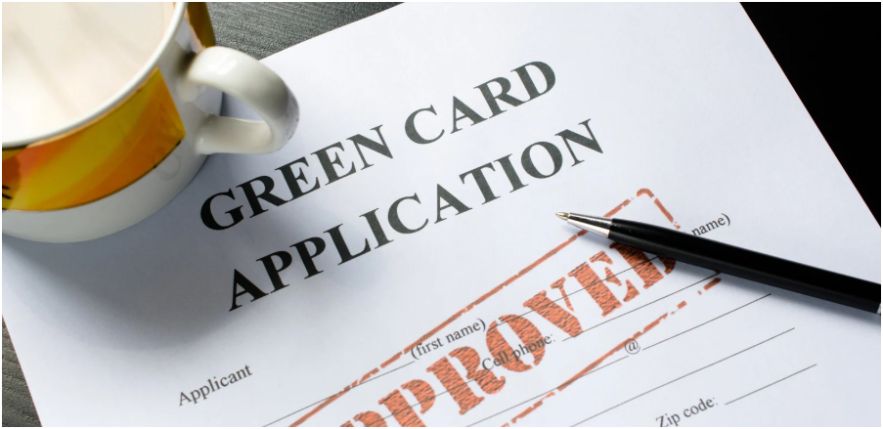
The United States immigration system offers several pathways to lawful permanent residency, and family-based petitions are one of the most common. This process allows U.S. citizens and lawful permanent residents to sponsor certain relatives for a green card.
While the concept is straightforward, the application process itself is detailed and requires careful attention to rules and deadlines.
A successful application hinges on understanding the requirements, gathering the correct documentation, and navigating the system accurately.
Understanding Eligibility and Preference Categories

The foundation of any family-based petition is the relationship between the sponsor (the U.S. citizen or green card holder) and the beneficiary (the family member seeking a green card). These relationships are divided into two main groups: immediate relatives and family preference categories.
Immediate Relatives
Immediate relatives of U.S. citizens have the highest priority, and there is no annual limit on the number of visas available to them. This category includes:
- Spouses of U.S. citizens
- Unmarried children under 21 of U.S. citizens
- Parents of U.S. citizens (if the citizen is 21 or older)
Because visas are always available for this group, the process is generally faster than for other categories.
Family Preference Categories
All other qualifying family relationships fall into a preference system, which has annual numerical limits. This means applicants often have to wait for a visa to become available. The wait time depends on the category and the beneficiary’s country of origin.
The family preference categories include:
- First Preference (F1): Unmarried sons and daughters (21 or older) of U.S. citizens.
- Second Preference (F2): Spouses and children (F2A), and unmarried sons and daughters (F2B) of lawful permanent residents.
- Third Preference (F3): Married sons and daughters of U.S. citizens.
- Fourth Preference (F4): Brothers and sisters of U.S. citizens (if the citizen is 21 or older).
The Application Process: A Step-by-Step Overview

The application journey involves several key steps handled by different government agencies. It requires diligence and patience from both the sponsor and the beneficiary.
Step 1: The Initial Petition
The process begins when the U.S. citizen or permanent resident sponsor files Form I-130, Petition for Alien Relative, with U.S. Citizenship and Immigration Services (USCIS).
This form establishes the existence of a qualifying family relationship. The sponsor must submit evidence to prove their status and their relationship to the beneficiary.
This includes documents like birth certificates, marriage certificates, and proof of U.S. citizenship or permanent residency.
Step 2: Waiting for Visa Availability
Once USCIS approves the I-130 petition, the case moves forward. For immediate relatives, there is no wait. For family preference categories, the approved petition is sent to the National Visa Center (NVC).
The NVC holds the case until a visa number becomes available according to the Visa Bulletin, which is updated monthly. Beneficiaries must monitor their priority date to know when they can proceed.
Step 3: Adjustment of Status or Consular Processing
The final step depends on whether the beneficiary is inside or outside the United States.
- Adjustment of Status: If the beneficiary is already in the U.S. legally, they may be eligible to file Form I-485, Application to Register Permanent Residence or Adjust Status. This is often done concurrently with the I-130 for immediate relatives.
- Consular Processing: If the beneficiary is outside the U.S., their case will be processed through a U.S. embassy or consulate in their home country. The NVC will collect the necessary fees and documents, including the Affidavit of Support, before scheduling an interview.
Key Documents and Requirements
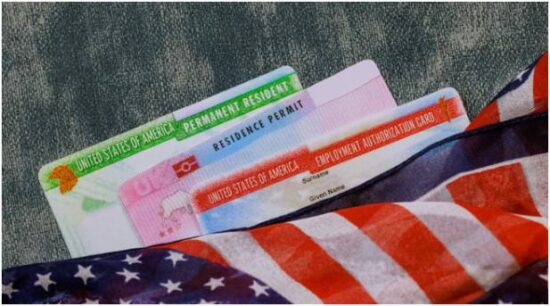
A successful application is built on thorough and accurate documentation. While requirements can vary, some documents are universally needed.
The sponsor must provide an Affidavit of Support (Form I-864), which is a legally binding contract demonstrating they have the financial means to support the beneficiary.
This prevents the sponsored individual from becoming a public charge. The beneficiary will need to provide their passport, birth certificate, and police clearance certificates from any country they have lived in for a significant time.
The complexity of these steps can be challenging. For instance, an individual seeking an immigration lawyer in Salt Lake City for assistance would find that professional guidance helps ensure all paperwork is filed correctly, which can prevent costly delays or denials.
Final Steps and The Interview
The last stage for most applicants is the green card interview. For those adjusting their status, the interview takes place at a USCIS field office. For those undergoing consular processing, it occurs at a U.S. embassy abroad.
During the interview, an officer will review the application and ask questions to verify the legitimacy of the relationship and ensure the beneficiary is admissible to the United States.
Upon successful completion of the interview and all background checks, the beneficiary will be granted lawful permanent resident status. Their green card will be mailed to them shortly after, marking the successful end of a long but rewarding journey.