




analytics = 833.322.6760, 8448520347, 800 notes, 7168738800, 8005113030, 8662783536, 9525620902, 8333163276, 9133123280, 8558425860, 8777640833, 2567447500, 18669852273, 8559977348, 8775895169, 6123010199, 8777458562, 8447297641, 8556792141, 5018218349, 6468760617, 8559712260, 8557390856, 8339310230, 3106677534, 8339842440, 9547875035, 6163306276, 18004441676, 8558348495, 7864225581, 9094067513, 8602739995, 18339793337, 8553020376, 9513245248, 5164226400, 2675259887, 8339060641, 8139469478, 2486022768, 2064395787, 5595330138, 5127649161, 8163354148, 5165660135, 9723750568, 2085144125, 18559694636, 5028227768, 5104709740, 2107644963, 9513947262, 8772865954, 6266570594, 8442891118, 8008280146, 7714445409, 8664368150, 18006951063, 8779140059, 8017425882, 2245434298, 4234820546, 8442712583, 9547434255, 8445073876, 18662058022, 18004367961, 8445369495, 8448747445, 9513895348, 8017835887, 9136778319, 5095810139, 18005271339, 6178265171, 8338428100, 4699988648, 8337030945, 5132830807, 8669072272, 7027650554, 18003959733, 8882288896, 8007017918, 8882961958, 9164315240, 3134238040, 8333859445, 8885090457, 8008399369, 9183984181, 6125681561, 8555737348, 7035746171, 9804026136, 3392036535, 8014388165, 8339124265, 2484556960, 8652940491, 6788532772, 18002319631, 4432611224, 5174402172, 5166448345, 8574156189, 9208318998, 2814084487, 3237827205, 9035937800, 6147636366, 8886375121, 18667153526, 6156855230, 9133120992, 6027675274, 8326849631, 6363626977, 8014388261, 6163306271, 5128465056, 6164252258, 8008994047, 6506189519, 5133970850, 8006601779, 8668010144, 8555894252, 6163177933, 4079466140, 8655460256, 18884209943, 3464268887, 8442449538, 7043866623, 8444211229, 8102759257, 4345281742, 9493175442, 4123879299, 8382211532, 3309133963, 5109849896, 8556482575, 7072899821, 2014658491, 6032157860, 7628001252, 2082327328, 3522492899, 972-476-8208, +1 (800) 555-0433, 7753840563, 4694890551, 8327349150, 2702971125, 8008545695, 6106006953, 2146516900, 9037651217, 7047058890, 8668219635, 8033391481, 9592307317, 8595594907, 8332685291, 8555710330, 8778334675, 2102440850, 18008778623, 9513387286, 4029339118, 6103444430, 8662222197, 7273618338, 6159840902, 8555154190, 8668418679, 8338780449, 5417666200, 9185121419, 3237160444, 3606338450, 6198259510, 8888570668, 8083399481, 18668404246, 9032130471, 18007457354, 8662900505, 9512277184, 14075830183, 877-613-7414, 8669145806, 8884135452, 8339870385, 5412621272, 4085397900, 4049960554, 9043278492, 8008109337, 3148962604, 2625778200, 2533722173, 7702240355, 2602796153, 8442568097, 4045674598, 8778135595, 6627789116, 8666148679, 432.535.3346, 8552199473, 18008784733, 8656696225, 4172640211, 2694480187, 8004800186, 8728107133, 8554290124, 8445417310, 8088094977, 3854774827, 6149229865, 8558318013, 8886227328, 8669289240, 2162086661, 8449263585, 8656868483, 9126165004, 4342647097, 4698902115, 9738424694, 8009249033, 8662962852, 8004836205, 7637606200, 9549534317, 9085288998, 8665592621, 9097290670, 8885365114, 6282074108, 9515725134, 9725268500, 18886918661, 4028589809, 5135840000, 9542026998, 3606338409, 3392120655, 9375304801, 4699825009, 7158365720, 7133540191, 5176576800, 7015400761, 8007620276, 7314100312, 8133644313, 4014142386, 8556829141, 18003473764, 5163279500, 2177711746, 8338394140, 8008442881, 8442356275, 9737509291, 8053218829, 5138030600, 866.266.1445, 18667066894, 18448302149, 9592998000, 8668518500, 3618257777, 8132108253, 9134285296, 18667331800, 6182062806, 6196931509, 5052530598, 2692313137, 8322632311, 4089635659, 3122340781, 8665270007, 8884315114, 8327010295, 8886230286, 18337632033, 7276978680, 8662847625, 7046297142, 5709082790, 6176829138, 18663243120, 18888447979, 833-793-2634, 3146280822, 2817169800, 8003966861, 2092152027, 8772379648, 8779100501, 6304497394, 6613686626, 7864325077, 8667061341, 8443168434, 18007793351, 2816679193, 6182213001, 8165459795, 800-660-1779, 3865648082, 4057539884, 6304757000, 8665212613, 8339014153, 4018686200, 7177263148, 8446717272, 6026889985, 6122950822, 18775007697, 8727025274, 877-870-8046, 4107533411, 8594902586, 3175548779, 4023164651, 8442409757, 6155909241, 4692706636, 8447089406, 2183167675, 9367097999, 18003239865, 5107750767, 8336411330, 8666136856, 8776137414, 5048420550, 8174924769, 409-761-7631, 8772810415, 6175170000, 6176447300, 516-644-8345, 8014388150, 8014363101, 8446600349, 8445720731, 8446012486, 9529772019, 8004160599, 2105867691, 8174761844, 8777665220, 3606338365, 2159873706, 8126413070, 7578520784, 2155830758, 2133442341, 8014388461, 8556302480, 9013702057, 6467622601, 7083655202, 1-877-870-8046, 2505814253, 8152877145, 2173264646, 7654422019, 8442677109, 844-306-7833, 8775787552, 8624140848, 8555422416, 9544406856, 8009410164, 2193102036, 3237460973, 8332178326, 8133207059, 18003105587, 8178548532, 8772595779, 8044452446, 8336852203, 5136555021, 8042933450, 713-332-2838, 8556769075, 8447100373, 8446180908, 6512551000, 6144058912, 8332891205, 8336370667, 8124350998, 7133537813, 312-653-2073, 7083919045, 5403084012, 9529790948, 2177491008, 4079466142, 8333880562, 6183319022, 8776363716, 8012367598, 2816916103, 5165029686, 6087759139, 9045699303, 5614348400, 9085056898, 9297441323, 18002201614, 844-391-1092, 3364387172, 4708878685, 9803167472, 2093324588, 4052173481, 3055038807, 9044785041, 7137309500, 9513707315, 18002378990, 6232238196, 5026653794, 4057240741, 9543793034, 8884700655, 9512521067, 5703752113, 9299952002, 2565103546, 8134486919, 6266390332, 4049650560, 5303227024, 5106464099, 4075457432, 18663524737, 8887278618, 8084899138, 5082518001, 3183544193, 8037168112, 4807508966, 8586578575, 2095506110, 18008898740, 5416448102, 8666687301, 919.214.5402, 5864987122, 6302429143, 9547459648, 4844836206, 7145099696, 8665838119, 8004439164, 8007082736, 8779949115, 8003280355, 4085982269, 424.385.0597, 4054483292, 4694096508, 18884534330, 4844522185, 3606338412, 7133322838, 8007430511, 4703975724, 8082130841, 18662916365, 8664482002, 5707403282, 4072037536, 8332665655, 8557074599, 18555013051, 8668446972, 5128425148, 8337932634, 8329751010, 6156759252, 7173219013, 5165660134, 6152482618, 888-785-2471, 8553395442, 7204563710, +1 (312) 653-2073, 8339833264, 8555159372, 8448348551, 8665207789, 4072357388, 8883237625, 8014388316, 5622422106, 412-405-6064, 7657513244, 4089773512, 4176225719, 866.376.4584, 8166310333, 4122148544, 5702803018, 8667677603, 5407317304, 8054296716, 9712734028, 5102572527, 18776898870, 2075485013, 8559590200, 9545058434, 9089558128, +1 (320) 207-5189, 8447553258, 8662261020, 7135568949, 6303879597, 4149558701, 7209152170, 8008298374, 8558078675, 8666136857, 8669972488, 2014623980, 8013365041, 7083164009, 6622553743, 4158519136, 8339721292, 18008994047, 201-462-3963, 8887852471, 7702823288, 18007450572, 2672232367, 8333425412, 8008423225, 6516034340, 9044210685, 3032423254, 8777708065, 8043123644, 5138600470, 4073030519, 18009359935, 9152453436, 3308355902, 4125577457, 5183636075, 3362525901, 18663902348, 8143590227, 18009145582, 8172104278, +1 (866) 593-3926, 2105201454, 8332316512, 866.914.5806, 866-613-6857, 7819276501, 8332819623, +1 (866) 613-6857, 5135696117, 6506819470, 6147320721, 866-702-4725, 6266577222, 4055638384, +1 (614) 890-1025, 9036860067, 2816701587, 2487855500, 8442006330, +1 (623) 462-7106, 8666746861, 7158988041, 877 770 8125, 7343485117, 9727530822, 8776380175, +1 (866) 914-5806, 6126721631, 18003653234, 9512237966, 5702771040, 5025155312, 7172515048, 18005303790, 214-226-9139, 8889764904, 4025595100, 8448439155, 8016192557, 6083255121, 2403122052, 8335841371, 4044133261, 8324583317, 6233529406, 5208663325, 8776421554, 8014075254, 877 613 7414, 18005284800, 5135723375, 5034614545, 206-453-2329, 801-413-7200, +1 (855) 283-3957, 8004351415, 18888002527, 8776236765, 5094747159, 6036681119, 4086921193, +1 (877) 647-8551, 8087680000, 8337002510, 7174070772, maxwell and bryant group, 8668594380, 7177896033, 7208481788, 866-914-5806, 18009220204, +1 (888) 994-2320, 18003683110, 8666484519, 2107829213, 8882795504, 662-255-3743, 5052779866, 7172968088, 7756877101, 800-276-3744, 18004321000, 8883731969, +1 (800) 530-3790, 6157471813, 6788062977, 402-220-1248, 9525630843, 8662855312, 8776918086, 877-417-4551, 877-770-8125, 8884640727, 8435820002, 8884141045, 5202263623, 8339901915, 8559731040, 4043853637, 888-991-5696, +1 (877) 770-8125, 6158007010, 888-250-7027, 8889346489, +1 (888) 993-2902, 8003318859, 2252143974, 8442449425, 7144490377, 8014137200, 8333725815, +1 (800) 435-1415, 6097982556, 8155179338, 3158495499, 4014446877, 9472221080, 18009454701, +1 (888) 611-6904, 8553308653, 855-581-1994, 4243459294, 866-716-9062, 6468882001, 866-680-8628, +1 (978) 938-4194, 201-462-3980, 855-419-7365, +1 (847) 426-9203, 7033320600, +1 (800) 988-8019, 8888922253, 888 266 2278, 8003973342, 8884864722, 8009220204, 7205366300, 7136965500, 866-593-3926, 9514254239, 2069220880, 5732452104, +1 (800) 654-8818, 7632743899, 916-545-8389, 888 934 6489, 5627253046, 7175316640, 877-556-9255, +1 (540) 546-0824, 978 444 5700, 8888023080, 4014303033, 8008757159, 206 453 2329, 855-330-8653, 3462149844, 8659469900, 1-800-388-5512, +1 (206) 922-0880, 4433979200, 8667620558, +1 (866) 348-6231, 5712932365, 6786662731, 1-800-432-1000, 5043842543, 8434384166, +1 (888) 899-6650, 8777284206, 6152130831, 8002760901, 8663486231, 2128459525, 8009520270, 8885130708, 18004365657, 888-899-6650, 8005550433, 8338950323, 8559422422, 8009552292, 4845263150, 8595929161, 3602199415, 402 935 7733, 8558998232, 8888426328, 18009398164, 18002818274, 4122676767, 4179900203, +1 (800) 528-4800, 18886166411, 8004517269, 5705590121, 5157353419, 921 area code, +1 (888) 373-1969, 8015260950, 4077322416, 6788532430, 513-831-2600, 888-373-1969, 18003801196, 8442437370, +1 (404) 806-4811, 8886890122, area code 531, +1 (800) 946-0332, 707, 888 373 1969, 6178788190, 8558369705, 248-434-5508, 844 area code, 8552073383, 1111111111, 2257653120, 6189446426, 6292588750, 800-922-0204, 18009346489, 407-732-2416, 5136961920, 18669544405, 9199147004, 8442069035, 480, 18335421564, 6148901025, +1 (800) 608-2581, 800 922 0204, +1 (888) 486-4722, po box 247001, 9043807465, 612-815-5000, 6105462466, 18336421007, 18009228228, 235 area code, 18002823214, +1 (877) 647-8552, 8777335189, 3333, 8009200482, 8552780432, 8332076202, 365 area code, 639 area code, 18666201302, 18003472275, 763-274-3899, 8558590047, 18003047265, 8886116904, 7139369494, 18008887243, 6126722492, 3139607914, 8665160115, area code 639, +1 (800) 955-6600, 8009888019, 18005237020, 8669288598, 3372695110, 18448238902, 8666808628, 8336977328, 8774220763, 5107474557, 9133863627, 8008420588, 8556148530, 8009420854, 8663287946, 8888399638, 18005567677, 2069267485, 1-800-745-7354, 5405460589, 8654706200, 8664683371, 18003973342, 3202075189, 8009200477, 800-528-4800, area code 825, +1 (800) 943-2189, 5095528142, 438, 984, 18662525777, 18002965598, 18003151907, 18887291404, 8005284800, 8003371809, 8008870224, 8779020006, 844-206-9035, 8655237183, 7342320000, 9999999999, 888-611-6904, 18009001361, 18007771681, 8002149506, 999-999-9999, 8009556500, 5039458199, callerescort, 2815176333, 18667465501, 18006347404, 6233529402, 8552296544, 8889942320, 18009556600, 8008693557, 8664548855, 5405460824, 8665933926, 8554197365, 8448268400, area code 204, 8667679323, 8665728798, 8008456167, 6303837266, 9512432271, 866 area code, 8664084070, 8002799032, 888-802-3080, 781-694-9000, 18005328082, 888-934-6489, 8666740156, 8056377243, 1223, 2163489700, 8339342639, 18887106818, 8004633339, 2064532329, 8004321000, 18003145524, 18002045785, 7817966000, 8339140595, 8668586729, 18002763214, 8889417233, 8557077328, 226 area code, 8009460332, 805-637-7243, 866-712-7753, 781-566-8000, 204 area code, 18882662278, 800-845-6167, 8008600644, 877.714.1509, 18003182596, 201, 8776478552, 8008520411, 8009666546, 7816569000, 800-463-3339, 9784445700, 800 955 6600, 1-800-865-9408, 800-966-6546, 8664300311, 844-466-5519, 800-655-2265, 5138312600, 1-800-522-5633, 8556248963, 8665359492, 8882662278, 800-227-4825, 1-800-227-4825, 8882804331, 1-833-275-3287, 800-955-6600, 3343963000, 855-707-7328, 866-858-6729, 8662581104, 18007332767, 3123804033, 800-288-2020, 8337351894, 7815668000, 6174885400, 410-965-1234, 1-800-925-6278, portfoliorecov, 8009432189, 8667127753, 833-267-6094, 888-266-2278, 8883347978, 866-258-1104, 8009505114, 8884694520, 800-292-7508, 877-242-7372, 813 area code, 8662387212, 1-800-955-6600, 8553376884, 609 area code, 8008413000, *86, 1-800-937-8997, 5278, 8009556600, 888-469-4520, 312-380-4033, 8009557070, 470 area code, 800-279-9032, 18003280355, 844-227-5237, 1-800-841-3000, 8167127753, 1-800-528-4800, 1-800-463-3339, 1-800-935-9935, 71924449671, 8882211161, 18007241633, 8008232318, 1-800-837-4966, 402-935-7733, 18002241591, 800-823-2318, 21038516219, 1-877-825-3242, 800-925-6278, 1-833-873-8237

How Sorority Stoles Help Celebrate Chapter Identity at Graduation

Graduation is one of the few moments when personal achievement and collective identity can be honored at the same time. For sorority members, that balance matters. A degree reflects years of effort, but the chapter experience often shapes the journey in equally meaningful ways. That is why sorority stoles have become such a powerful part of commencement regalia: they do more than decorate a cap-and-gown look. They turn a private milestone into a public statement of sisterhood, legacy, and belonging.

For organizations that care about presentation, consistency, and symbolism, the right stole does real strategic work. It signals unity in photos, strengthens chapter recognition on stage, and gives graduates a way to carry their affiliation forward with pride. Greek Graduate understands that role well, offering officially licensed, made-to-order options that help chapters mark the occasion with intention rather than improvisation.

Why Chapter Identity Matters More at Graduation Than Most People Realize

Graduation compresses years of experience into a few visible minutes. That makes every detail more important than it might seem on an ordinary day. In a crowded commencement setting, chapters are often seen first through visual cues: color, lettering, crest placement, and the way graduates present themselves as a group. A well-chosen stole makes that identity legible immediately.

This is not just about aesthetics. It is about giving a chapter a coordinated presence at a moment when every graduate is also standing as an individual. The best sorority stoles solve that tension elegantly. They honor the sisterhood without overpowering the achievement. They say, in a subtle but unmistakable way, that the graduate did not arrive alone.

That distinction matters because chapter identity is part of the story being celebrated. Graduation marks academic accomplishment, but for many members it also reflects leadership, service, friendship, and shared growth. A stole helps translate those intangible values into something visible, memorable, and worthy of the occasion.

The Difference Between Generic Regalia and Meaningful Representation

Standard graduation regalia communicates that a student has completed a degree. Custom Greek regalia communicates something more specific: the graduate also belongs to a tradition, a network, and a chapter with its own symbols and standards.

That difference becomes especially important in group settings. When multiple members cross the stage or pose for photos together, matching chapter identifiers create a sense of continuity. The result is not uniformity for its own sake. It is a coherent visual language that reflects collective pride.

Greek Graduate leans into that idea by producing custom graduation stoles that can include organization-specific colors, letters, and embroidered crests. Those details help chapters move beyond generic accessories and toward regalia that feels earned, intentional, and aligned with their identity.

What Makes Sorority Stoles a Stronger Chapter Statement

What Makes Sorority Stoles a Stronger Chapter Statement

The strength of sorority stoles is that they operate on several levels at once. They are ceremonial, personal, and organizational. A graduate wears one at a defining moment, but the symbolism reaches far beyond a single day.

When a stole is customized with official colors, letters embroidered, or crest embroidered elements, it becomes more than a fashion accessory. It becomes a recognized marker of membership. For chapters that value consistency, that recognition matters because it preserves how the group presents itself publicly.

A thoughtful stole also respects the tone of commencement. This is not a place for excess. It is a place for clarity, dignity, and meaning. At all time favorite commencements, the best designs strike that balance by reinforcing identity without distracting from the gown, the degree, or the moment itself.

For chapters planning together, there is also a practical advantage. Coordinated regalia reduces guesswork. Instead of each graduate sourcing something different, the chapter can create a shared look that supports both individual pride and group cohesion.

How Custom Details Change the Message

The value of customization is not just in appearance. It is in what the details communicate.

A chapter crest signals heritage. Greek letters signal affiliation. Organizational colors create immediate recognition. Together, these elements tell a story in a way that a plain stole cannot.

That story becomes especially meaningful in photos, alumni circles, and family celebrations. Years later, a graduate may not remember the exact wording of a commencement program, but she will remember the visual symbolism of wearing something that reflected her chapter and her achievement at the same time.

Greek Graduate’s made-to-order approach strengthens that experience because each piece is created after the order is placed rather than pulled from generic surplus. That matters for chapters that want a deliberate, organization-specific result instead of a one-size-fits-all accessory.

How Strong Chapters Use Regalia to Build a Better Graduation Experience

The most effective chapter leaders think ahead. They do not treat graduation as a last-minute styling issue. They treat it as a coordinated milestone that deserves planning, consistency, and shared purpose.

That usually starts with a simple question: what should this moment say about our chapter? Once that is clear, the regalia choice becomes easier. The stole should reflect the organization’s identity, align with its symbols, and fit the tone of the ceremony.

A chapter order can also make the process more practical. Greek Graduate offers bulk discounts for orders of 10 or more, which makes coordinated planning more accessible for groups preparing multiple graduates at once. That is especially useful for chapters with several seniors or for celebrations that include members earning advanced degrees, including a Doctor of Philosophy.

The larger strategic point is this: strong chapter presentation creates a better experience for everyone involved. Graduates feel recognized. Families understand the significance of the affiliation. The chapter itself is remembered as organized, cohesive, and proud of its legacy.

Here are a few ways chapters commonly use custom stoles well:

  • Coordinate a unified look for all graduating seniors
  • Highlight official letters and crests in ceremony photos
  • Give members a keepsake that reflects both school and chapter identity
  • Support group purchasing when multiple graduates are ordering together
  • Maintain visual consistency across alumni events and graduation portraits

Why Licensing and Made-to-Order Production Should Not Be Afterthoughts

Why Licensing and Made-to-Order Production Should Not Be Afterthoughts

In Greek life, authenticity matters. That is one reason licensing should never be treated as a detail to worry about later. Officially licensed products show respect for the organization and help ensure that the visual identity being represented is handled properly.

Greek Graduate positions itself as an officially licensed supplier, which gives chapters a more credible foundation for graduation purchases. That matters not only for branding, but also for confidence. When a chapter invests in regalia, it should know the product is being created with the organization’s identity in mind.

Made-to-order production is equally important. It prevents the common problem of settling for something generic simply because it is available immediately. A chapter milestone deserves more than convenience shopping. It deserves a piece created with the event, the members, and the organization in view.

Greek Graduate’s approach is especially useful because it combines official licensing with chapter-specific customization. That makes it easier for sororities to choose pieces that feel celebratory and aligned with the organization’s standards. A chapter that supports a structured living program for teenage boys, for example, could choose to honor its service work through an approved detail on the stole.

When Custom Ordering Makes the Most Sense

Custom ordering is most valuable when the chapter wants more than a symbolic nod to affiliation. It is the better choice when the goal is to create a unified appearance, honor multiple graduates, or preserve a consistent visual record for chapter archives.

It is also the smarter option when the chapter expects different members to wear the same symbol in different settings. A thoughtfully designed stole can work for graduation day, senior portraits, chapter recognition events, and alumni-focused keepsakes. That flexibility increases its long-term value.

The point is not simply to buy something that looks good. The point is to choose something that still feels relevant after the ceremony is over.

What Graduation Pride Looks Like When It Is Done Well

The most memorable graduation moments usually share the same quality: they feel specific. You can tell who the graduate is, where she came from, and what communities helped shape her path. That is what makes sorority stoles so effective when they are designed well. They do not try to replace the degree or the ceremony. They frame both with meaning.

For chapters, that framing matters because it protects legacy. It gives current members a way to honor the women who came before them while celebrating the ones stepping forward next. As academic pathways for students take graduates in different directions, a shared stole also reinforces a standard of presentation that reflects well on the group as a whole.

If your chapter is planning for commencement, the smartest approach is to treat regalia as part of the story, not an accessory after the fact. Greek Graduate makes that easier through custom Greek graduation regalia that is officially licensed, made to order, and designed to reflect chapter identity with clarity.

In the end, the real value of sorority stoles is not that they make graduation look more polished, though they often do. It is that they give sisterhood a visible place in a defining personal milestone. That is a meaningful distinction, and for many chapters, it is exactly what the day should represent.


More From Author

Creative Ways Honors Graduation Stoles Can Recognize Student Achievements

Creative Ways Honors Graduation Stoles Can Recognize Student Achievements

Creative Ways Honors Graduation Stoles Can Recognize Student Achievements

A graduation stole is more than an accessory. When used well, it becomes a clear visual record of effort, identity, leadership, and achievement. That is why honors graduation stoles have become such a meaningful part of commencement regalia: they do a job that a diploma alone cannot do. They help students, families, and institutions recognize distinction in a way that is immediate, personal, and celebratory.

The strongest stole programs are not random add-ons. They are deliberate systems for acknowledging what a student has earned, represented, or overcome. For Honors Graduation, that means creating stoles that can communicate academic standing, organizational involvement, cultural pride, and milestone moments with the kind of polish graduation day deserves. The result is both practical and symbolic, which is exactly what makes the format so effective.

Why Stoles Work Better Than Generic Recognition Alone

Recognition is most powerful when it is visible and specific. A sash or stole sits at the center of the graduation outfit, which makes it one of the few regalia pieces people notice instantly. That visibility matters because students want their achievements acknowledged in the ceremony itself, not just in a record book or program note.

Unlike broad honors language, a stole can say exactly what a student has done. One design can highlight a degree, while another can mark a club leadership role, Greek affiliation, cultural heritage, or a service commitment. That flexibility is what makes honors graduation stoles so useful across grade levels and institutions. They can be adapted for a kindergarten celebration, a high school awards event, or a university commencement without losing their purpose.

There is also a strategic advantage for schools and organizations. A consistent stole program creates a repeatable recognition standard. Instead of improvising every year, administrators can align design, messaging, and award criteria in a way that feels intentional. Honors Graduation supports that kind of structure with customizable options that work for individual orders and bulk institutional needs.

The Most Effective Recognition Is Specific, Not Generic

The best stole concepts are the ones that make the achievement unmistakable at a glance. That does not mean every student needs the same wording or the same visual treatment. It means the stole should match the story being told.

For example, an academic honor may call for a clean design with a graduation year or degree title. A student leadership award may be better served by a bold logo or a short title that stands out from a distance. Cultural recognition may deserve a different silhouette, color palette, or woven pattern. The key is to let the design reflect the type of achievement rather than forcing one format to do all the work.

Honors Graduation makes that easier by offering multiple stole styles and decoration methods. Embroidery suits intricate details and multi-color artwork. Screen printing works well when the goal is bold visibility. Vinyl press is useful for simpler text, initials, or years. Each approach serves a different recognition need, which means the stole becomes a tool, not just decoration.

Academic Milestones That Deserve Their Own Visual Language

Academic Milestones That Deserve Their Own Visual Language

Academic recognition is often the most traditional use case, but it can still be handled creatively. A stole can be used to distinguish honor roll students, degree recipients, honor society members, scholarship winners, or students completing a special program. Recognition can also complement personalized academic pathways for every student. The value is in making the distinction visible without making it complicated.

For institutions, this creates a better ceremony experience. Students know why they are being honored. Families can see the distinction clearly. Faculty can reinforce standards with a design that feels consistent year after year. And because Honors Graduation offers customization on both sides, the stole can carry more than one message without looking crowded when planned well.

Cultural and Identity-Based Recognition With Real Meaning

Some achievements are not just earned; they are deeply personal. Heritage, cultural pride, and community identity deserve representation that feels thoughtful rather than decorative. This is where Country Flag stoles and Kente stoles become especially important.

A Country Flag stole can recognize national identity or family heritage in a way that is direct and respectful. A Kente stole carries a distinct traditional visual presence that can honor African heritage and cultural continuity. These are not generic design choices. They are meaningful forms of acknowledgment that students often remember long after the ceremony ends.

For Honors Graduation, the value here is not simply product variety. It is the ability to provide a format that lets students show who they are while participating in a shared institutional moment. That balance is powerful because it makes recognition more inclusive without making it less formal.

Design Choices That Make Recognition Feel Premium

A strong stole is not only about what it says. It is also about how it presents the achievement. Material, silhouette, length, and color all influence whether the final result feels ordinary or truly special.

Honors Graduation uses crepe back satin, which gives the stole a polished appearance suitable for commencement. The company also offers 20 standard colors, with custom color matching available for bulk or recurring orders when planned in advance. That matters because schools often want a visual system that connects directly to their brand, while student organizations may want a color identity that aligns with their tradition.

The stole shape matters too. Classic, Classic with Trim, Angled, Angled with Trim, V-Neck, Country Flags, and Kente each create a different impression. An Angled stole feels more modern. A V-Neck design can feel more distinctive. Trim adds a refined edge that helps the stole look more formal. These details are not minor; they shape how the recognition is perceived.

A useful way to think about design is by audience:

  • For schools, prioritize consistency, readability, and brand alignment.
  • For student groups, prioritize identity, logo placement, and visual impact.
  • For cultural recognition, prioritize symbolism and respectful presentation.
  • For individual graduates, prioritize personalization and commemorative value.

That framework helps keep the design focused on the achievement itself rather than on ornament for its own sake.

Ordering and Production Need to Match the Recognition Goal

Recognition only works when the product arrives on time and fits the person wearing it. That is one reason Honors Graduation stands out for institutions and families that need both quality and process discipline.

The available lengths range from 35 inches to 72 inches, which supports graduates from kindergarten through university. That range is a practical advantage because ceremonies are not limited to one age group or one body type. It also means schools can standardize their recognition program across multiple levels without hunting for separate vendors.

Production logic matters as much as sizing. Outside of peak graduation season, custom stole orders are eligible for same-week turnaround, and custom stoles start at $18 with pricing tiered by order quantity. For schools and organizations, the ability to order in bulk with PO support reduces administrative friction. For families or individual students, retail ordering keeps the process straightforward. Honors Graduation also offers worldwide shipping, which broadens access for programs with distributed communities.

One-Student Orders and Combined Bulk Orders Serve Different Needs

One-Student Orders and Combined Bulk Orders Serve Different Needs

It helps to separate individual use from combined use. A single student may need one stole for a personal honor, leadership role, or cultural celebration. That order should be simple and focused.

Combined orders serve a different purpose. A school, honor society, fraternity, student council or even sorority stoles,  may need multiple stoles that share a theme while still allowing for names, logos, or role-based distinctions. In those cases, bulk purchasing and advance planning are what make the program efficient. Honors Graduation is built to support both paths without treating them as the same buying decision.

A Smarter Way to Turn Achievement Into Ceremony Presence

The most effective stole programs do more than decorate graduates. They shape the ceremony into a clearer statement of what the institution values. They tell students that effort matters, identity matters, and recognition should be visible when the moment arrives. Schools can connect recognition with individualized academic pathways for students.

That is why creative use of honors graduation stoles is ultimately a strategy, not just a style choice. A well-designed stole can honor academic excellence, celebrate leadership, reinforce heritage, and give the graduate a keepsake worth preserving. When the design is intentional and the process is organized, the result feels earned rather than manufactured.

For schools, organizations, and families looking for that balance of symbolism and practicality, Honors Graduation offers a strong foundation. Their graduation stoles collection brings together customization, variety, and reliable ordering in a way that supports meaningful recognition at every level.

In the end, the best stole is the one that says something true. Not just that a student graduated, but that the student achieved something worth seeing, remembering, and celebrating.

More From Author

EDC Knife Blade Shapes and What Each One Does Best

EDC Knife Blade Shapes and What Each One Does Best

How Sorority Stoles Help Celebrate Chapter Identity at Graduation

How Sorority Stoles Help Celebrate Chapter Identity at Graduation

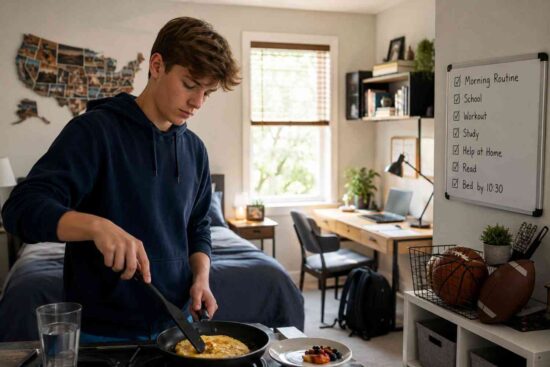
How a Structured Living Program for Teenage Boys Builds Accountability and Independence

For many families, the hardest part of adolescence is not a lack of potential. It is the gap between what a teenage boy can do in theory and what he consistently does in daily life. That gap often shows up in missed assignments, poor routines, emotional reactivity, digital dependence, and a growing reliance on parents to manage tasks that should be becoming more self-directed. A structured living program for teenage boys addresses that gap directly.

The value of structure is often misunderstood. Some people hear the phrase and picture control for its own sake. Structure is about building the conditions where a young man can practice responsibility until it becomes internal. That is the central idea behind Live Strong House and similar relational programs: a predictable environment can create the stability needed for real growth.

Why Structure Matters More Than Willpower

Why Structure Matters More Than Willpower

Teen boys who struggle with anxiety, depression, ADHD, executive functioning deficits, trauma, or technology dependence rarely need a lecture about trying harder. They usually need a better system. Willpower is too inconsistent when a student is overwhelmed, underdeveloped in self-management, or caught in a cycle of avoidance. Structure gives the brain fewer opportunities to drift and more chances to succeed through repetition.

This is why daily routines matter so much. When a young man knows what happens next, he spends less energy on uncertainty and more on follow-through. He is not constantly negotiating with himself, his parents, or his environment. That reduced friction is not a small thing. It creates the mental space required for emotional regulation, academic focus, and healthier decision-making.

Live Strong House uses that principle in a practical way. By pairing routine with mentorship, the program helps boys experience consistency without feeling disconnected from real life. The goal is not compliance for its own sake. The goal is next-step readiness.

Structure Reduces Decision Fatigue

A teenager who has to invent his own routine every morning is already behind. By contrast, a clear schedule for waking, cleaning, studying, eating, and resting removes unnecessary decision fatigue. That matters because many boys in crisis are not short on intelligence. They are short on capacity.

When structure is dependable, boys can spend less time fighting the day and more time learning how to manage it. Over time, that shift builds confidence. A young man starts to see that he can handle more than he thought.

Repetition Turns External Support Into Internal Habits

The best programs do not merely supervise behavior. They teach patterns. Repeating small responsibilities—making a bed, preparing a meal, arriving on time, organizing schoolwork, following a budget—builds memory, sequence, and self-correction. These are the same skills that support adulthood.

That is the deeper promise of a structured living model: the environment does not just contain problems; it trains capability.

Accountability Becomes Real When Consequences Are Immediate and Relational

Accountability Becomes Real When Consequences Are Immediate and Relational

Accountability sounds simple, but it becomes meaningful only when it is specific, timely, and connected to actual behavior. In many homes, accountability breaks down because the follow-up is inconsistent. Parents are exhausted. The teen is resistant. Everyone knows the issue, but nothing changes the pattern. A strong residential setting solves that by making expectations visible and response immediate.

Live Strong House emphasizes a relational mode because accountability works better when it is paired with trust. A boy is more likely to accept correction from adults who know him well, see him daily, and help him recover after mistakes. That is where live-in Life Coaches become central. They are not distant supervisors. They are active mentors who model how to respond to frustration, handle conflict, and reset after a poor choice.

A 3:1 student-to-life-coach ratio is strategically important here. It means students do not disappear into the background. They are known. Their habits are observed. Their progress is tracked. That level of attention makes accountability concrete rather than abstract.

A practical accountability system in this kind of environment usually includes:

  • Clear expectations for chores, schoolwork, and personal conduct
  • Immediate feedback when a task is missed or done well
  • Support that helps the student repair mistakes instead of avoiding them
  • Daily rhythms that make follow-through measurable
  • Adult modeling that shows what responsible behavior looks like in real time

This is where Live Strong House distinguishes itself. The point is not to punish a boy into adulthood. The point is to coach him into it.

Independence Is Taught Through Daily Life, Not Just Talk

Independence is often discussed as if it begins when a teenager turns 18. In reality, independence is a skill set built long before then. It grows through everyday responsibilities that seem ordinary on the surface but are foundational in practice. Cooking, budgeting, laundry, time management, planning ahead, and cleaning shared spaces all teach a young man that his choices affect his outcomes.

In a relational transitional living model, these tasks are not side notes. They are the curriculum of maturity. Students learn how to participate in a household, not just how to complete assignments. That distinction matters. A boy who can finish homework but cannot manage his own morning routine is not truly ready for adult life. A boy who can communicate needs, keep commitments, and take care of shared responsibilities is moving toward independence in a meaningful way.

Live Strong House builds this gradually. Students live in community-integrated townhomes rather than in a detached, overly clinical setting. That choice helps them practice real-world living in a setting that still offers guidance. It is a bridge, not a shortcut.

Real-World Skills Build Confidence Faster Than Abstract Advice

Real-World Skills Build Confidence Faster Than Abstract Advice

A student who learns to prepare a meal, track money, or plan his week gains something advice alone cannot provide: proof. He can see the results of his own action. That evidence is powerful for boys who have spent too long feeling incapable or criticized.

Small wins accumulate. A successful grocery plan can lead to better self-trust. A completed chore without reminder can lead to more self-respect. A week of consistent study habits can restore academic momentum. These are not trivial outcomes. They are the building blocks of adult identity.

Personalized Academics Prevent the “I’m Already Behind” Spiral

Academic frustration often feeds emotional withdrawal. Once a teenager believes he is too far behind, he stops engaging. A strong program interrupts that narrative with personalized support, personalized academic pathways for every student, low student-to-teacher ratios, and credit recovery where needed. That matters because academic confidence and personal confidence are often linked.

When a student begins to perform again, even in small ways, he starts to see his future differently. That shift can be more important than any single grade.

Why the Environment Matters as Much as the Curriculum

A boy does not only learn from direct instruction. He learns from the setting around him. A chaotic environment teaches reactivity. A sterile or detached environment can make growth feel artificial. A home-like setting, by contrast, supports practice without stripping away real-life texture.

Live Strong House uses a community-integrated housing model that places students in townhomes within residential neighborhoods. That is more than a design choice. It supports the therapeutic purpose of the program. Boys learn in a context that resembles life after treatment, which reduces the shock of transition and strengthens transferability of skills.

This environment also supports emotional clarity. Utah’s mountain setting and outdoor recreation opportunities offer a healthier rhythm than constant digital stimulation. For many boys, the reduction in screen distraction is not a luxury. It is a necessity. When digital noise drops, real thought often becomes easier.

The program’s high-acuity therapeutic environment is designed for boys who need more than encouragement. It combines clinical therapy, personalized academics, and hands-on mentorship with enough structure to be stabilizing and enough humanity to feel workable. That combination is what makes the model effective.

The Long-Term Measure Is Not Compliance but Next-Step Readiness

The Long-Term Measure Is Not Compliance but Next-Step Readiness

A young man does not succeed because he followed rules for a season. He succeeds because he leaves with habits that hold up under pressure. That is the real standard. Families should ask whether a program is building behavior that can survive ordinary life: school deadlines, job schedules, peer pressure, conflict, disappointment, and freedom.

Live Strong House appears to measure success by that standard. Its focus on accountability, life skills, academics, and relational support is aligned with long-term development rather than short-term containment. The reported 100% graduation rate among participating high school seniors is one sign that academic continuity is not being treated as an afterthought. Its Cognia accreditation and compliance with the Utah State Board of Education and the Utah Department of Health and Human Services further reinforce the program’s credibility.

For parents exploring a structured living program for teenage boys, the key question is not whether structure feels strict. It is whether the structure is useful. Good structure helps a boy become more capable, more responsible, and more prepared to live independently without losing himself in the process.

That is the strategic value of this kind of model. It does not ask a teenager to become self-sufficient overnight. It teaches him, step by step, how to become someone who can stand on his own.

More From Author

Denied Unemployment Benefits in Utah

Denied Unemployment Benefits in Utah? Steps to Take Next With a Utah Unemployment Lawyer

EDC Knife Blade Shapes and What Each One Does Best

EDC Knife Blade Shapes and What Each One Does Best

Benefits Of Choosing Purpose-Built Student Housing

Finding a good place to live can shape the entire student experience. According to the Australian Government Department of Education, thousands of students move each year for study, and housing remains one of the biggest concerns for student wellbeing and academic success. A comfortable and secure place helps students focus better, sleep better, and manage daily routines with less stress.

Many students start by comparing rent, travel time, and safety before making a decision. During this process, some also explore options listed on sites like varsitytowers.com.au as an example of purpose-built student housing designed around student needs. This article explains the practical benefits of choosing this type of housing and how it supports student life.

Designed for Student Life

Designed for Student Life

Purpose-built student housing is planned with student routines in mind. Study areas, quiet zones, and shared spaces are usually part of the design. This makes it easier to balance study and social life without leaving the building.

These buildings are usually located near universities and public transport. This reduces travel time and helps students stay consistent with classes and study schedules. A well-planned environment can make daily student life more organised and less stressful.

Safety and Security Features

Safety is a major reason many students choose purpose-built housing. These buildings usually include secure entry, CCTV, and on-site staff. This creates a safer environment compared to many private rentals.

Common safety features include:

  • Secure building access
  • Security cameras in common areas
  • On-site support staff
  • Well-lit entrances and hallways

These features help students feel more comfortable, especially when returning home late after classes or study sessions.

Simple Bills and Clear Costs

Managing money is an important part of student life. Purpose-built student housing usually includes bills in the rent, which makes budgeting easier each month. Students know what they will pay and can plan their expenses better.

Costs usually included:

  1. Electricity and water
  2. Internet
  3. Furniture
  4. Maintenance

This setup reduces the stress of managing multiple bills and unexpected costs during the semester.

Study Friendly Environment

Study Friendly Environment

A good study environment plays a big role in academic success. Purpose-built housing includes study rooms, fast internet, and quiet areas. These spaces help students focus without distractions.

Living around other students can also create a study-focused atmosphere. When people around you are studying, it becomes easier to stay motivated and follow a routine. This kind of environment supports both personal academic pathway and time management.

Support From Housing Staff

Many purpose-built student buildings have support staff who help students settle in and manage common issues. This support can be helpful for students who are living away from home for the first time.

Staff can help with:

  • Maintenance requests
  • Room changes
  • Lease questions
  • General support

Having someone available to help makes the living experience smoother and less stressful for students.

Opportunities to Meet Other Students

Student life is not only about classes and assignments. Meeting new people and building friendships is also important. Purpose-built student housing typically includes shared kitchens, lounges, and common areas where students can interact.

These shared spaces help students make friends, study together, and feel less alone in a new city. A strong social environment can improve mental well-being and make student life more enjoyable.

A good living space can shape a student’s daily routine in many ways. When safety, cost, and study spaces are planned well, life becomes more organised and less stressful. Purpose-built housing is designed to match student needs and schedules. With the right research and planning, students can find a place that supports both study and personal life.

More From Author

Workers' Compensation Attorney in Colorado After a Workplace Injury

Workers’ Compensation Attorney in Colorado After a Workplace Injury

Common Reasons Homeowners Choose Direct Property Buyers

Common Reasons Homeowners Choose Direct Property Buyers

Why Stormwater Compliance Matters for the Environment

When rain falls on natural landscapes like forests or meadows, it soaks into the ground, where it is filtered by soil and plants before slowly replenishing aquifers and streams. In urban and suburban areas, this natural process is disrupted. Impermeable surfaces like pavement, rooftops, and sidewalks prevent water from being absorbed.

Instead, the rainfall becomes stormwater runoff, a powerful force that picks up pollutants and carries them directly into local waterways. Stormwater compliance is the framework of regulations and practices designed to manage this runoff, and its importance for environmental health cannot be overstated.

Following these regulations is not just about avoiding fines; it is about actively protecting our shared natural resources for future generations.

Preventing Water Pollution

As stormwater flows over developed land, it collects a wide range of contaminants. These include oil and grease from roadways, chemical fertilizers and pesticides from lawns, heavy metals from industrial sites, and bacteria from pet waste.

Unlike the water that goes down the drain in your home, stormwater is rarely treated at a wastewater plant. It is typically channeled through storm drains directly into rivers, lakes, and oceans.

Preventing Water Pollution

This polluted runoff has severe consequences for water quality. It can make bodies of water unsafe for swimming and fishing, contaminate drinking water sources, and harm aquatic life.

Effective stormwater management plans use best management practices (BMPs) to capture and filter runoff before it reaches natural water systems. These practices help trap sediment and break down pollutants, ensuring that the water re-entering the environment is significantly cleaner.

Protecting Aquatic Ecosystems

The health of aquatic ecosystems is directly tied to water quality. When pollutants enter a stream or lake, they can disrupt the delicate balance of that environment. For example, excess nutrients from fertilizers can trigger massive algae blooms.

When these blooms die and decompose, they consume large amounts of oxygen in the water, creating “dead zones” where fish and other organisms cannot survive.

Sediment is another major threat. Runoff from construction sites and other disturbed land can carry large amounts of dirt and sand into waterways. This sediment clouds the water, which blocks sunlight from reaching aquatic plants.

It can also smother fish eggs and destroy the habitats of bottom-dwelling organisms. Stormwater compliance measures, such as installing silt fences and maintaining vegetation, are critical for keeping soil in place and protecting these fragile ecosystems from harm.

Reducing Flooding and Erosion

In developed areas, large volumes of stormwater are quickly funneled into drainage systems that can become overwhelmed during heavy rain events. When this happens, localized flooding can damage property and create public safety hazards.

The high velocity of concentrated runoff also causes significant erosion along stream banks. This erosion destabilizes the land, destroys habitats, and adds even more sediment to the water.

Modern stormwater management focuses on slowing down and spreading out runoff. Techniques like green infrastructure, which includes rain gardens, permeable pavements, and vegetated swales, help mimic the natural water cycle

. These systems allow water to soak into the ground close to where it falls, which recharges groundwater, reduces the volume of runoff, and mitigates both flooding and erosion.

The Role of Proper Planning

Effective stormwater management begins long before construction starts. It requires careful planning and a commitment to implementing and maintaining control measures.

A Stormwater Pollution Prevention Plan (SWPPP) is a site-specific document that outlines how a project will address runoff. Creating and following this plan is a key part of compliance.

The Role of Proper Planning

During a project, all control measures must be working correctly. This is why a qualified professional, such as a certified SWPPP inspector, performs regular site evaluations to identify and correct any deficiencies.

This oversight ensures that the plan is not just a document on a shelf but a living strategy that actively protects the environment throughout the project’s lifecycle.

Supporting Sustainable Communities

Stormwater compliance is a cornerstone of sustainable development. By managing runoff effectively, communities can protect their natural resources, enhance public spaces, and improve their resilience to the effects of a changing climate.

Clean rivers and healthy green spaces increase property values and provide recreational opportunities, which contributes to a higher quality of life for residents.

Making stormwater management a priority is a proactive choice to preserve the environment. It ensures that development and ecological health can coexist, creating communities that are not only prosperous but also responsible stewards of the natural world.

More From Author

Why Some Skin Marks Fade, and Others Need Guidance

Why Some Skin Marks Fade, and Others Need Guidance

Fixed vs. Removable Dentures Finding Your Best Smile Solution

Fixed vs. Removable Dentures: Finding Your Best Smile Solution

Personalized Academic Pathways for Every Student

Education is no longer a one-size-fits-all model. As we move further into the 21st century, the need to tailor learning experiences to individual students has become not just a luxury, but a necessity. The days of rigid, standardized curricula are giving way to dynamic, personalized academic pathways that recognize the unique strengths, interests, and needs of every learner.

In this guide, we will explore how personalized education is reshaping the academic landscape. From leveraging technology to fostering student agency, you will discover the key components of creating a learning environment where every student can thrive. By understanding these principles, educators and parents can better support students in achieving their full potential.

1. The Evolution of Academic Personalization

Historically, education systems were designed for efficiency, treating students as a collective group rather than individuals. Everyone learned the same subject, at the same pace, using the same textbook. However, research into cognitive science and pedagogy has shifted this paradigm. We now understand that students process information differently and that engagement skyrockets when learning is relevant to their personal goals.

The evolution of personalization isn’t just about tweaking a lesson plan; it’s about a fundamental shift in philosophy. It moves the focus from “what is being taught” to “who is learning.” This evolution requires schools to rethink schedules, assessment methods, and classroom environments to accommodate diverse learning trajectories.

2. Understanding Individual Learning Styles

Understanding Individual Learning Styles

At the heart of personalized pathways is the recognition of individual learning styles. While the strict categorization of “visual” or “auditory” learners is often debated, there is no denying that students have distinct preferences and strengths. Some excel in collaborative group settings, while others thrive in quiet, independent study.

To create true pathways, educators must first understand the learner. This goes beyond academic grades. It involves identifying a student’s passions, their preferred pace of learning, and the environmental factors that help them focus. By gathering this data, educators can tailor instruction that resonates with the student, making abstract concepts more concrete and accessible.

3. Leveraging Technology for Tailored Education

Technology has been a game-changer in making personalized learning scalable. Adaptive learning software, for instance, can assess a student’s current understanding of a topic and adjust the difficulty of subsequent questions in real-time. This ensures that a student is never bored by material they already know or overwhelmed by concepts they haven’t yet mastered.

Furthermore, digital platforms allow for a “flipped classroom” model, where students can review lectures or reading materials at home at their own pace. This frees up classroom time for deep dives, discussions, and hands-on projects, allowing teachers to provide targeted support where it is needed most.

4. The Role of Mentors and Advisors

While technology provides the tools, human connection provides the guidance. Mentors and academic advisors are crucial in helping students navigate their personalized pathways. They act as compasses, helping students align their academic choices with their long-term career goals and personal interests.

Effective advisories go beyond course selection. They involve regular check-ins to discuss well-being, social development, and academic hurdles. For example, a middle school in Salt Lake City might utilize advisors to help students design a schedule that balances core requirements with specialized interests like arts or technology. This human element ensures that personalization doesn’t lead to isolation, but rather to a supported and guided journey.

5. Creating Flexible Curricula

A rigid curriculum is the enemy of personalization. To truly serve every student, schools must offer flexibility in how credits are earned and how mastery is demonstrated. This might look like competency-based education, where students progress based on their ability to demonstrate skills rather than the amount of time spent in a seat.

Flexible curricula also open the door for interdisciplinary learning. A student interested in architecture might combine math, physics, and art into a single project-based learning experience. This approach blurs the lines between subjects, mirroring real-world problem solving and keeping students deeply engaged in their work.

6. Fostering Student Ownership and Agency

Personalized learning is not something done to a student; it is done with them. Fostering student agency means giving learners a voice and a choice in their education. When students feel a sense of ownership over their academic path, their motivation shifts from extrinsic (getting a grade) to intrinsic (wanting to learn).

Schools can encourage agency by involving students in goal-setting conferences and allowing them to choose how they demonstrate their learning. Whether it’s writing an essay, building a model, or recording a podcast, giving students autonomy empowers them to take responsibility for their own success.

7. Assessing Progress and Adapting Strategies

Assessing Progress and Adapting Strategies

In a personalized model, assessment is continuous and formative rather than sporadic and summative. It’s not just about the final exam; it’s about the daily feedback loop. Educators use data from quizzes, projects, and observations to constantly refine the learning pathway.

If a strategy isn’t working, the flexibility of the personalized model allows for a pivot. Maybe a student needs more visual aids, or perhaps they need to move to a more advanced group. This agility ensures that no student falls through the cracks and that high achievers are consistently challenged.

Conclusion: The Future of Personalized Learning

The shift toward personalized academic pathways represents a bright future for education. It promises a system where equity is achieved not by giving everyone the same thing, but by giving everyone what they need. As schools continue to embrace flexible schedules, technology, and student-centered philosophies, we can expect to see a generation of learners who are more engaged, self-aware, and prepared for the complexities of the modern world.

If you are interested in seeing how these principles are applied in a real-world setting, consider visiting a local school that champions personalized learning to witness the difference it makes firsthand.

More From Author

How Manufacturers Improve Product Longevity

Built to Last: How Manufacturers Improve Product Longevity

Is Your Car Road Trip-Ready Your Essential Checklist

Is Your Car Road Trip-Ready? Your Essential Checklist