





When families begin the hunt for a new home, the focus often lands squarely on the structure itself. We obsess over the square footage, the number of bedrooms, the modernity of the kitchen, and whether the backyard has enough room for a swing set.
While these are undeniably critical factors, they only tell half the story. The other half—the one that arguably has a greater impact on your day-to-day happiness and your children’s upbringing—is the neighborhood itself.
But we aren’t just talking about “good schools” or “low crime rates,” although those are standard baselines. We are talking about thoughtful design.
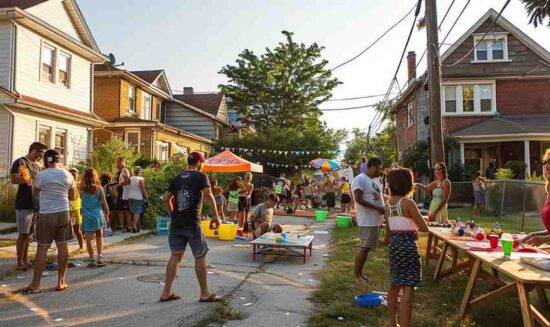
Urban planners and developers are increasingly recognizing that the physical layout of a community dictates how neighbors interact, how safe children feel playing outside, and how connected residents feel to their environment.
A truly family-friendly neighborhood isn’t an accident; it is a result of intentional infrastructure that prioritizes people over cars and connection over isolation.
If you are looking for a place where your family can put down roots, look beyond the floor plan. Here are four essential design elements that define the most sought-after family-friendly communities today.
1. Pedestrian-First Infrastructure and Walkability
One of the strongest indicators of a family-friendly environment is how it treats pedestrians. In decades past, suburban design often prioritized the automobile, resulting in wide streets, high speed limits, and a lack of safe walking paths. Today, the most desirable communities are flipping the script.
Thoughtful design emphasizes “walkability,” which refers to how safe and easy it is to walk to various amenities.
This includes wide, well-maintained sidewalks that are separated from the road by a “buffer zone” of grass or trees, which adds a layer of safety for young children on tricycles or scooters.
It also involves an interconnected network of trails that might cut through the neighborhood, allowing kids to walk to a friend’s house without ever having to navigate a busy street.

Why it matters:
Data consistently shows that walkable neighborhoods encourage physical activity and social interaction. When it is safe to walk, neighbors meet each other on evening strolls. Children gain a sense of independence earlier because they can safely navigate their immediate surroundings.
Practical Tip:
When touring a potential neighborhood, look for “traffic calming” measures. These include speed bumps, roundabouts, and narrower streets, all of which naturally force drivers to slow down, making the streets safer for outdoor play.
2. Integrated Green Spaces and “Pocket Parks”
Access to nature is non-negotiable for childhood development, but having to drive twenty minutes to a state park doesn’t help on a Tuesday afternoon.
The best-designed neighborhoods integrate nature directly into the residential fabric. This concept goes beyond having one massive park at the edge of the development. Instead, it favors the inclusion of smaller “pocket parks” scattered throughout the community.
These green spaces act as communal backyards. They are close enough that parents might feel comfortable supervising from a distance, or neighbors might spontaneously gather for a picnic. Thoughtful landscaping also plays a role here; mature trees provide shade (cooling the neighborhood significantly in summer) and act as natural sound barriers.
Why it matters:
Studies in environmental psychology suggest that even visual access to green space reduces stress and mental fatigue. For families, these spaces serve as “third places”—neutral grounds distinct from work or home where community bonds are forged.
Practical Tip:
Check the ratio of green space to pavement. Ideally, a family-friendly community should have a park or green area within a 5-to-10-minute walk of every home.
3. Community-Centric Architecture and Layouts
The way homes are positioned relative to the street and to each other has a profound psychological effect on residents. In the mid-20th century, the “front porch culture” dominated, where families spent evenings watching the street and chatting with passersby. As architectural trends shifted toward prominent garages and backyard privacy, that casual social interaction declined.
Now, many new developments are returning to neo-traditional design principles. This includes bringing porches back to the front of the house to encourage socialization and pushing garages to the rear or side (often accessible by alleyways). Furthermore, modern townhome and single-family developments often include shared amenities like clubhouses, fire pits, or pools that act as social anchors.
When you look at a thoughtfully designed new townhome community in Payson, for example, you often see this principle in action: the layout is specifically engineered to reduce isolation and foster a village-like atmosphere where neighbors know each other’s names.
Why it matters:
Social isolation is a growing concern for modern families. Architecture that encourages visibility—like porches or communal courtyards—removes the friction of meeting new people. It creates a “passive social” environment where interaction happens naturally rather than requiring planned events.
Practical Tip:
Look for “eyes on the street.” This is an urban design concept where windows and porches face the sidewalks and public spaces, creating a natural surveillance system that increases safety and discourages crime.
4. Strategic Location and Connectivity
Finally, thoughtful design extends beyond the borders of the neighborhood to where it sits within the larger region. The concept of “smart growth” prioritizes placing residential areas near essential services to minimize commute times and reduce environmental impact.
A well-designed family-friendly neighborhood isn’t an island; it connects seamlessly to the wider world. This means proximity to high-quality schools is paramount, but so is access to grocery stores, medical centers, and employment hubs.
The goal is to minimize the “commuter tax” on family time—the hours lost sitting in a car that could be spent at the dinner table or helping with homework.
Why it matters:
Time is a family’s most valuable resource. A neighborhood located near major transit corridors or within a short drive of daily necessities returns hours to your week. It also reduces the stress of logistics, making the chaotic schedule of school runs and extracurriculars more manageable.
Practical Tip:
Test the commute during peak hours before you commit. A neighborhood might feel peaceful at 11:00 AM on a Sunday, but you need to know what the connectivity looks like at 8:00 AM on a Monday.
Finding Your Foundation
Choosing a home is about more than selecting a backdrop for your life; it is about choosing the stage upon which your family’s memories will play out.
By prioritizing thoughtful design elements like walkability, integrated nature, social architecture, and strategic connectivity, you ensure that your environment supports your family’s well-being rather than working against it.
If you are ready to find a community that prioritizes these values, take the time to explore the layout and amenities of new developments in your area. The right design can turn a simple neighborhood into a true home.