




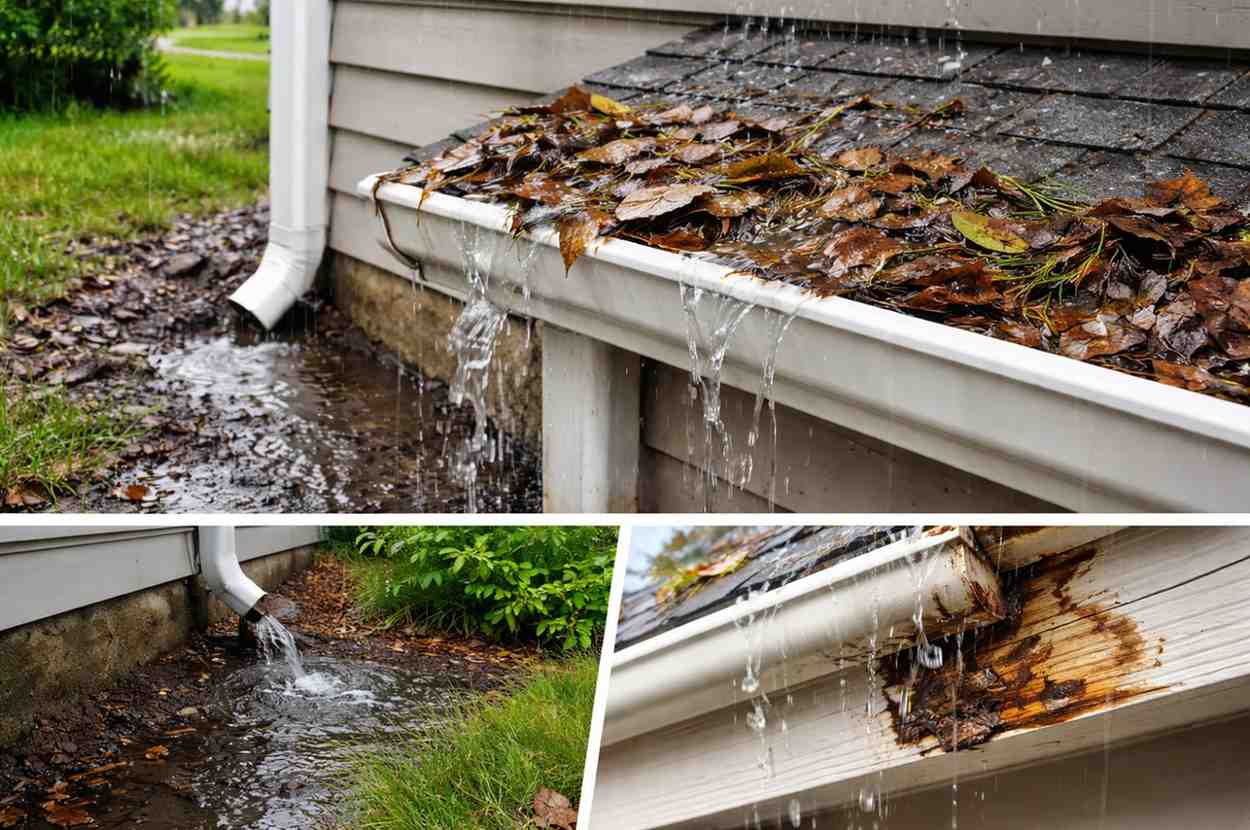
Rainwater can do a lot of harm when it falls in the wrong places around a house. Gutters are supposed to guide that water away, yet small failures can send it right back toward the structure. The result may start as a nuisance, then turn into stains, rot, and soil erosion.
A quick inspection after rainfall can reveal problems that are easy to fix early. When symptoms show up, gutter repair can restore proper drainage and prevent further damage to exterior surfaces. The signs below help you spot trouble before it affects your home’s structure.
Water Pooling Near the Foundation
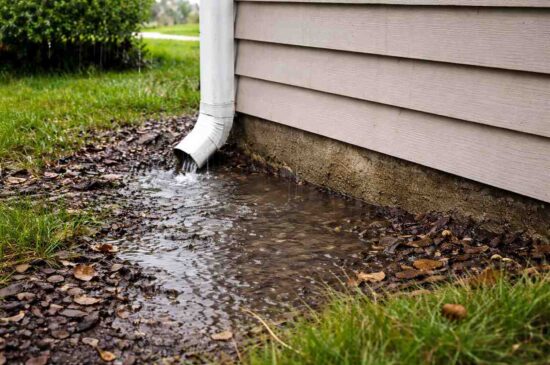
Puddles near the base of the house suggest water does not flow away as intended. This moisture can soften soil and raise pressure against foundation walls over time. Downspouts may be too short or clogged, which forces water to spill close to the home.
Wet soil near the foundation can also attract pests and create muddy walkways after storms. Over time, repeated saturation can lead to cracks and uneven settling. Redirecting discharge farther from the home can reduce these risks quickly.
Overflow During Rain and Visible Spill Marks
Overflow during normal rain can signal clogs, poor slope, or undersized gutters. Water may run over the front edge and leave streaks on the fascia and siding. These marks show repeated overflow that can rot trim boards and stain exterior finishes.
Check for leaves, granules, and debris that block water flow near corners and downspout entries. A misaligned section can also hold standing water and push overflow at the wrong spot. Early cleanup and adjustment can prevent bigger issues later.
Sagging Sections and Loose Fasteners
Gutters that sag or pull away from the fascia cannot carry water with a proper slope. Loose brackets can shift the channel and create low spots that trap water. This added weight can bend sections and open seams along joints.
Professional help matters when sagging repeats after simple tightening or when fasteners no longer hold in place. A contractor can replace hidden hangers, correct the slope, and secure the fascia so the run stays stable. This approach reduces repeat failures and protects the roof edge from water intrusion.
Peeling Paint and Rot on Trim Boards
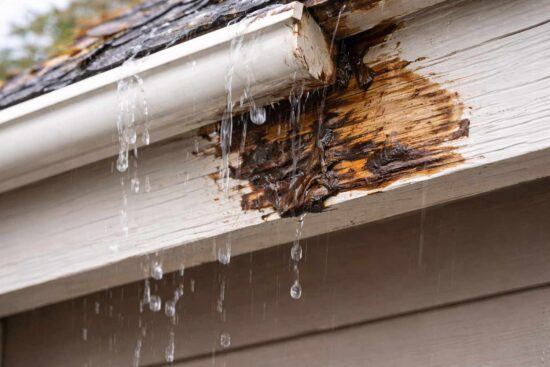
Peeling paint near the roofline can point to repeated water exposure along fascia and soffits. When gutters overflow, water can soak wood and cause soft spots near nail heads. These areas can spread rot and require carpentry work if ignored.
Look for dark staining, bubbling paint, and warped trim near corners and downspouts. These signs suggest water does not drain cleanly off the roof edge. An expert roofing specialist offering gutter repair can stop the source before rot reaches larger sections.
Basement Dampness and Musty Odors
Basement dampness can occur when roof runoff saturates soil near the foundation. Moisture can seep through small cracks and leave a musty smell that lingers. These conditions can also damage stored items and raise indoor humidity levels.
Check downspout discharge paths and confirm that water moves away on a clear slope. If runoff flows toward the house, drainage problems can persist during every heavy rain. Correcting gutter flow can reduce basement moisture pressure.
Gutter problems can show up as foundation puddles, overflow streaks, sagging runs, and rotting trim. Quick action protects your home’s exterior and reduces the risk of structural moisture damage. Regular checks and timely repairs keep water moving where it belongs.