




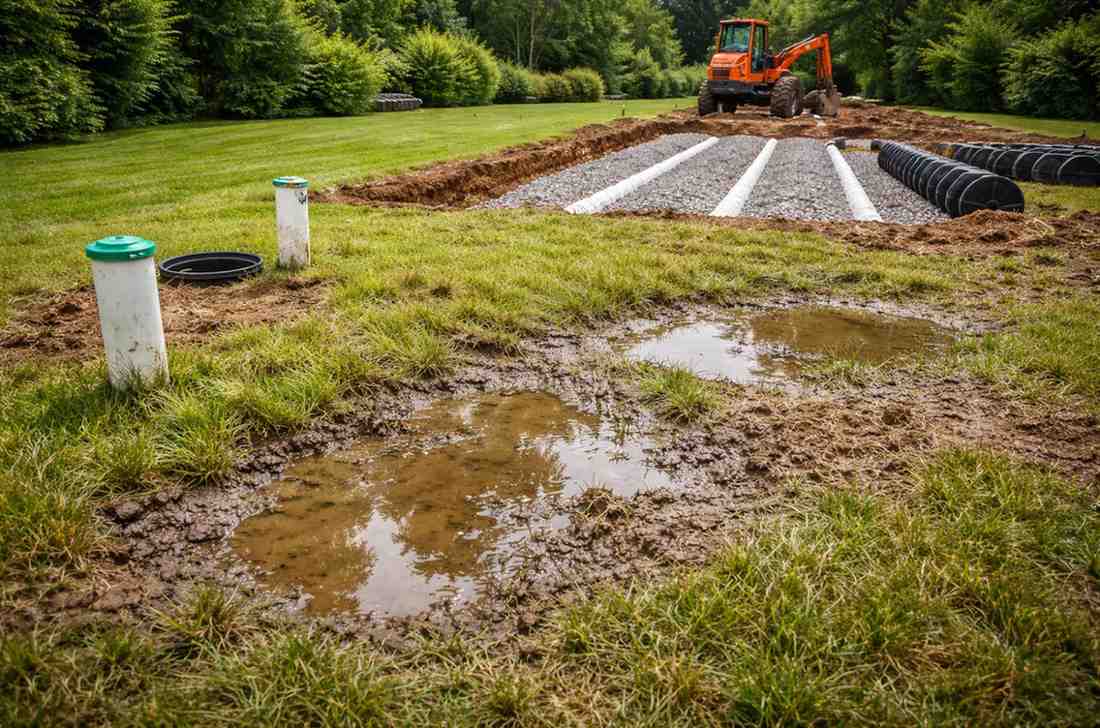
A wastewater system uses an underground tank and a drain field to process household waste. In the tank, solids settle while the remaining liquid moves to the drain field, which releases it into the soil for filtration. If the drain field fails, raw sewage can back up into the home or yard. Understanding the causes of failure is crucial for preventing costly repairs.
Primary Causes of System Failure
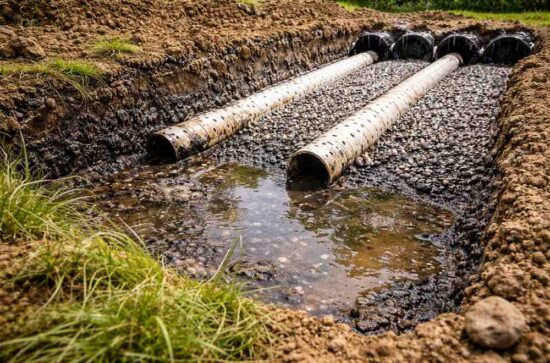
Drain fields are designed to handle a specific volume of liquid over a given period. When you exceed this capacity, the system begins to fail. The most common culprit behind this breakdown is hydraulic overloading.
Hydraulic overloading happens when too much water enters the septic system at once. If you do five loads of laundry in a single day, take multiple long showers, and run the dishwasher simultaneously, the tank cannot process the liquid fast enough. The excess water rushes into the drain field, flooding the perforated pipes. The soil becomes fully saturated and loses its ability to absorb and filter any more liquid.
Over time, this constant flooding causes a thick, slimy layer of bacteria called a biomat to grow aggressively along the trench walls. While a thin biomat is normal and helps filter the water, a waterlogged system allows the biomat to grow out of control. It eventually seals the soil completely, preventing any water from escaping the trenches.
Watch Out for These Warning Signs
Catching a failing drain field early can save you thousands of dollars in replacement costs. Your yard and plumbing will usually give you a few subtle hints before a complete breakdown occurs.
Slow Drains and Gurgling Pipes
One of the first signs of trouble happens right inside your home. If your sinks, showers, and toilets are draining noticeably slower than usual, the drain field might be struggling to accept new water. You might also hear a distinct gurgling sound coming from your plumbing fixtures. This noise happens when trapped air is forced back up through the pipes because the water has nowhere else to go.
Unusually Lush Grass
You might think having the greenest lawn in the neighborhood is a good thing. However, if there are specific patches of grass over your drain field that look significantly taller, greener, and healthier than the rest of your yard, you have a problem. This lush growth indicates that nutrient-rich wastewater is pushing its way up to the surface instead of draining downward into the soil.
Unpleasant Odors
A healthy, functioning wastewater system should never smell. If you step outside and notice a persistent scent of rotten eggs or raw sewage lingering near your yard, the system is failing to treat the waste properly. The smell often accompanies patches of soggy, spongy ground over the trench lines.
Hidden Threats: Roots and Soil Compaction
Sometimes the problem comes from the surrounding environment rather than the water flowing out of your house. Physical damage to the pipes and trenches can ruin even the best-maintained systems.
Tree Root Intrusion
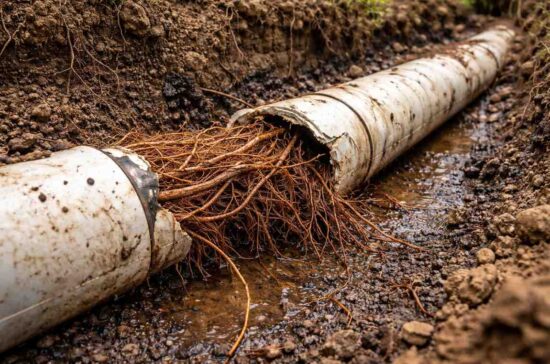
Trees and large shrubs are naturally drawn to sources of water and nutrients. The pipes in your yard provide a steady supply of both. Even a tiny crack or loose joint in a pipe can allow a tiny hair-like root to enter. Once inside, the root grows rapidly, feeding on the continuous supply of water. Eventually, the root mass becomes large enough to block the pipe completely or physically break the plastic apart.
Soil Compaction from Heavy Weight
The soil in your drain field needs to remain loose and porous to absorb water effectively. Applying heavy weight to the surface compresses the dirt, destroying the tiny air pockets necessary for proper drainage. Parking cars, driving heavy construction equipment, or even building a heavy patio over the area will compact the soil. Once the ground is compacted, the trenches will flood, and the pipes may even collapse under the pressure.
How to Extend the Life of Your Septic System
Preventing drain field failure is entirely possible with a few simple lifestyle adjustments and routine maintenance habits. Follow these steps to keep your plumbing flowing smoothly for decades.
1. Conserve water daily: Spread your heavy water usage out over the entire week. Do one load of laundry a day instead of saving it all for Saturday. Install high-efficiency showerheads and low-flow toilets to reduce the overall volume of water entering the tank.
2. Protect the pipes from clogs: Never treat your toilet or kitchen sink like a trash can. Avoid flushing paper towels, wet wipes, feminine hygiene products, or dental floss. In the kitchen, keep liquid grease, coffee grounds, and harsh chemical drain cleaners out of the sink. These items kill the beneficial bacteria in the tank and cause solid blockages in the field lines.
3. Landscape carefully: Map out exactly where your underground components are located. Never plant trees or large bushes within thirty feet of the trenches. Stick to planting shallow-rooted grass over the area to prevent erosion without risking root intrusion.
4. Schedule regular maintenance: Solids will naturally build up at the bottom of the holding tank over time. If these solids get too high, they will spill over into the drain field and clog the soil. You should hire a professional to pump out the solid waste every three to five years. If you live in Utah County, finding reliable septic tank pumping services in Spanish Fork can help you maintain a regular pumping schedule and avoid irreversible damage.
Knowing When to Call a Professional
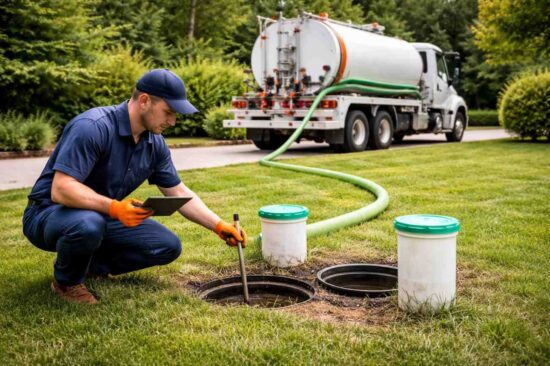
A well-maintained wastewater system should quietly process your household water for twenty to thirty years. However, if you notice slow drains, foul odors, or mysterious puddles of water in your grass, you need to act quickly. Ignoring these early warning signs will only lead to catastrophic pipe failures and extensive property damage.
Reach out to a certified technician the moment you suspect an issue. They can inspect the biomat levels, clear out intrusive roots, and evaluate the soil’s absorption rate. Taking swift action and keeping up with regular pumping will protect your yard, your wallet, and your home’s sanitation.
Conclusion
Now that you understand the importance of septic tank maintenance, you can take the necessary steps to keep your system functioning properly. Be sure to schedule regular inspections and pumping appointments with a certified technician, and be on the lookout for any warning signs of potential issues.