



For many families, the hardest part of adolescence is not a lack of potential. It is the gap between what a teenage boy can do in theory and what he consistently does in daily life. That gap often shows up in missed assignments, poor routines, emotional reactivity, digital dependence, and a growing reliance on parents to manage tasks that should be becoming more self-directed. A structured living program for teenage boys addresses that gap directly.
The value of structure is often misunderstood. Some people hear the phrase and picture control for its own sake. Structure is about building the conditions where a young man can practice responsibility until it becomes internal. That is the central idea behind Live Strong House and similar relational programs: a predictable environment can create the stability needed for real growth.
Why Structure Matters More Than Willpower

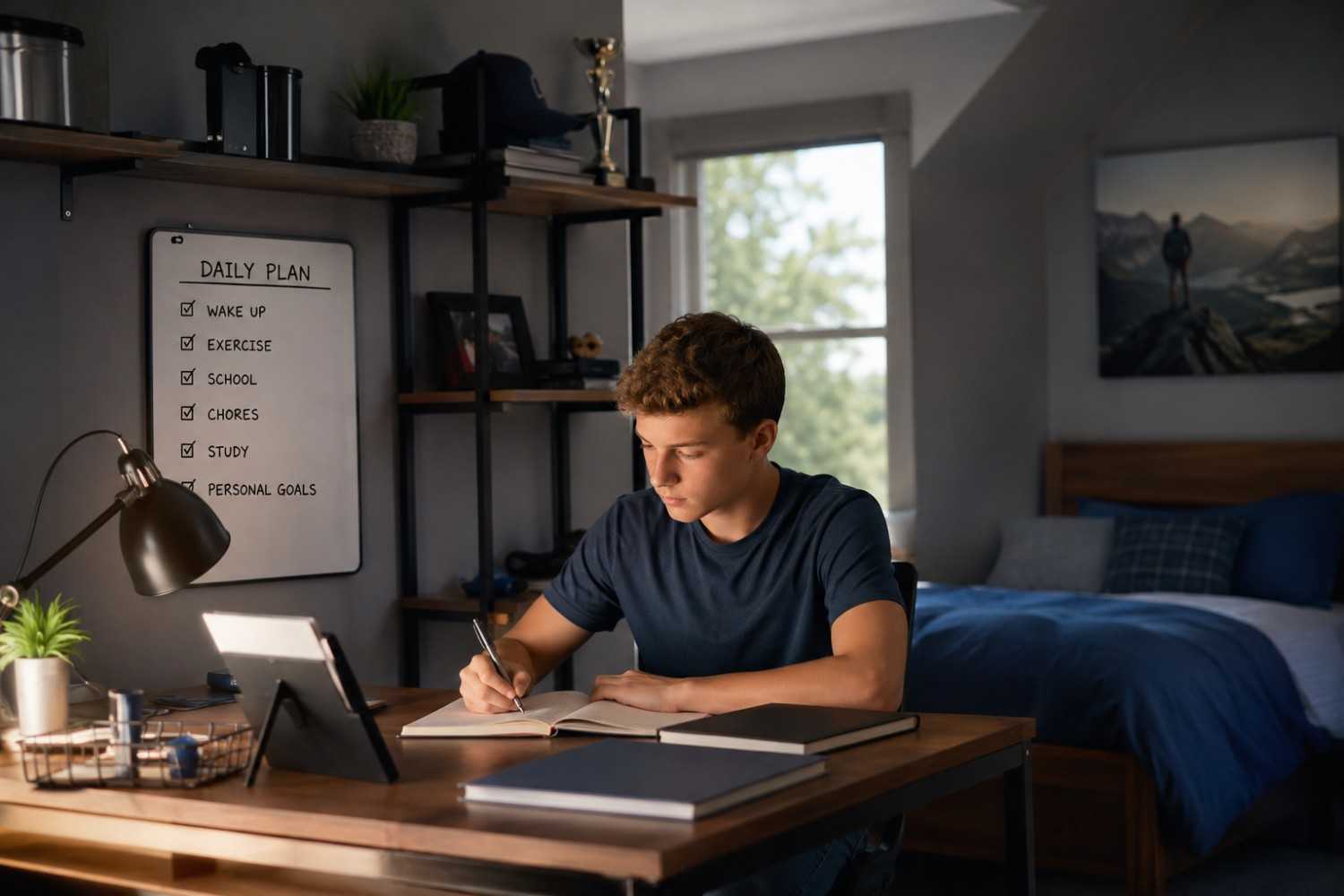
Teen boys who struggle with anxiety, depression, ADHD, executive functioning deficits, trauma, or technology dependence rarely need a lecture about trying harder. They usually need a better system. Willpower is too inconsistent when a student is overwhelmed, underdeveloped in self-management, or caught in a cycle of avoidance. Structure gives the brain fewer opportunities to drift and more chances to succeed through repetition.
This is why daily routines matter so much. When a young man knows what happens next, he spends less energy on uncertainty and more on follow-through. He is not constantly negotiating with himself, his parents, or his environment. That reduced friction is not a small thing. It creates the mental space required for emotional regulation, academic focus, and healthier decision-making.
Live Strong House uses that principle in a practical way. By pairing routine with mentorship, the program helps boys experience consistency without feeling disconnected from real life. The goal is not compliance for its own sake. The goal is next-step readiness.
Structure Reduces Decision Fatigue
A teenager who has to invent his own routine every morning is already behind. By contrast, a clear schedule for waking, cleaning, studying, eating, and resting removes unnecessary decision fatigue. That matters because many boys in crisis are not short on intelligence. They are short on capacity.
When structure is dependable, boys can spend less time fighting the day and more time learning how to manage it. Over time, that shift builds confidence. A young man starts to see that he can handle more than he thought.
Repetition Turns External Support Into Internal Habits
The best programs do not merely supervise behavior. They teach patterns. Repeating small responsibilities—making a bed, preparing a meal, arriving on time, organizing schoolwork, following a budget—builds memory, sequence, and self-correction. These are the same skills that support adulthood.
That is the deeper promise of a structured living model: the environment does not just contain problems; it trains capability.
Accountability Becomes Real When Consequences Are Immediate and Relational
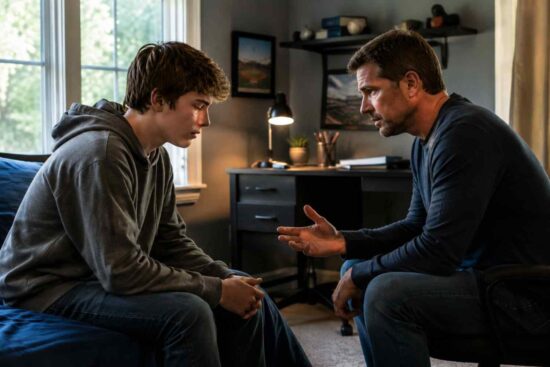
Accountability sounds simple, but it becomes meaningful only when it is specific, timely, and connected to actual behavior. In many homes, accountability breaks down because the follow-up is inconsistent. Parents are exhausted. The teen is resistant. Everyone knows the issue, but nothing changes the pattern. A strong residential setting solves that by making expectations visible and response immediate.
Live Strong House emphasizes a relational mode because accountability works better when it is paired with trust. A boy is more likely to accept correction from adults who know him well, see him daily, and help him recover after mistakes. That is where live-in Life Coaches become central. They are not distant supervisors. They are active mentors who model how to respond to frustration, handle conflict, and reset after a poor choice.
A 3:1 student-to-life-coach ratio is strategically important here. It means students do not disappear into the background. They are known. Their habits are observed. Their progress is tracked. That level of attention makes accountability concrete rather than abstract.
A practical accountability system in this kind of environment usually includes:
- Clear expectations for chores, schoolwork, and personal conduct
- Immediate feedback when a task is missed or done well
- Support that helps the student repair mistakes instead of avoiding them
- Daily rhythms that make follow-through measurable
- Adult modeling that shows what responsible behavior looks like in real time
This is where Live Strong House distinguishes itself. The point is not to punish a boy into adulthood. The point is to coach him into it.
Independence Is Taught Through Daily Life, Not Just Talk
Independence is often discussed as if it begins when a teenager turns 18. In reality, independence is a skill set built long before then. It grows through everyday responsibilities that seem ordinary on the surface but are foundational in practice. Cooking, budgeting, laundry, time management, planning ahead, and cleaning shared spaces all teach a young man that his choices affect his outcomes.
In a relational transitional living model, these tasks are not side notes. They are the curriculum of maturity. Students learn how to participate in a household, not just how to complete assignments. That distinction matters. A boy who can finish homework but cannot manage his own morning routine is not truly ready for adult life. A boy who can communicate needs, keep commitments, and take care of shared responsibilities is moving toward independence in a meaningful way.
Live Strong House builds this gradually. Students live in community-integrated townhomes rather than in a detached, overly clinical setting. That choice helps them practice real-world living in a setting that still offers guidance. It is a bridge, not a shortcut.
Real-World Skills Build Confidence Faster Than Abstract Advice
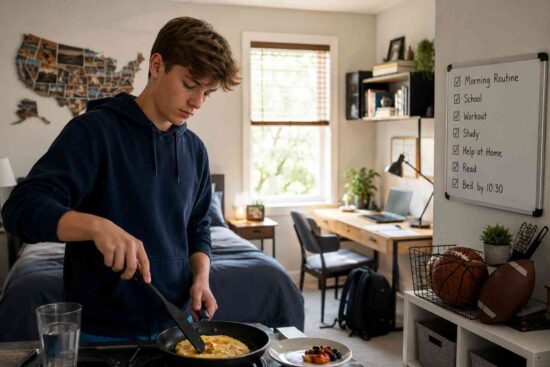
A student who learns to prepare a meal, track money, or plan his week gains something advice alone cannot provide: proof. He can see the results of his own action. That evidence is powerful for boys who have spent too long feeling incapable or criticized.
Small wins accumulate. A successful grocery plan can lead to better self-trust. A completed chore without reminder can lead to more self-respect. A week of consistent study habits can restore academic momentum. These are not trivial outcomes. They are the building blocks of adult identity.
Personalized Academics Prevent the “I’m Already Behind” Spiral
Academic frustration often feeds emotional withdrawal. Once a teenager believes he is too far behind, he stops engaging. A strong program interrupts that narrative with personalized support, personalized academic pathways for every student, low student-to-teacher ratios, and credit recovery where needed. That matters because academic confidence and personal confidence are often linked.
When a student begins to perform again, even in small ways, he starts to see his future differently. That shift can be more important than any single grade.
Why the Environment Matters as Much as the Curriculum
A boy does not only learn from direct instruction. He learns from the setting around him. A chaotic environment teaches reactivity. A sterile or detached environment can make growth feel artificial. A home-like setting, by contrast, supports practice without stripping away real-life texture.
Live Strong House uses a community-integrated housing model that places students in townhomes within residential neighborhoods. That is more than a design choice. It supports the therapeutic purpose of the program. Boys learn in a context that resembles life after treatment, which reduces the shock of transition and strengthens transferability of skills.
This environment also supports emotional clarity. Utah’s mountain setting and outdoor recreation opportunities offer a healthier rhythm than constant digital stimulation. For many boys, the reduction in screen distraction is not a luxury. It is a necessity. When digital noise drops, real thought often becomes easier.
The program’s high-acuity therapeutic environment is designed for boys who need more than encouragement. It combines clinical therapy, personalized academics, and hands-on mentorship with enough structure to be stabilizing and enough humanity to feel workable. That combination is what makes the model effective.
The Long-Term Measure Is Not Compliance but Next-Step Readiness

A young man does not succeed because he followed rules for a season. He succeeds because he leaves with habits that hold up under pressure. That is the real standard. Families should ask whether a program is building behavior that can survive ordinary life: school deadlines, job schedules, peer pressure, conflict, disappointment, and freedom.
Live Strong House appears to measure success by that standard. Its focus on accountability, life skills, academics, and relational support is aligned with long-term development rather than short-term containment. The reported 100% graduation rate among participating high school seniors is one sign that academic continuity is not being treated as an afterthought. Its Cognia accreditation and compliance with the Utah State Board of Education and the Utah Department of Health and Human Services further reinforce the program’s credibility.
For parents exploring a structured living program for teenage boys, the key question is not whether structure feels strict. It is whether the structure is useful. Good structure helps a boy become more capable, more responsible, and more prepared to live independently without losing himself in the process.
That is the strategic value of this kind of model. It does not ask a teenager to become self-sufficient overnight. It teaches him, step by step, how to become someone who can stand on his own.