




analytics = 833.322.6760, 8448520347, 800 notes, 7168738800, 8005113030, 8662783536, 9525620902, 8333163276, 9133123280, 8558425860, 8777640833, 2567447500, 18669852273, 8559977348, 8775895169, 6123010199, 8777458562, 8447297641, 8556792141, 5018218349, 6468760617, 8559712260, 8557390856, 8339310230, 3106677534, 8339842440, 9547875035, 6163306276, 18004441676, 8558348495, 7864225581, 9094067513, 8602739995, 18339793337, 8553020376, 9513245248, 5164226400, 2675259887, 8339060641, 8139469478, 2486022768, 2064395787, 5595330138, 5127649161, 8163354148, 5165660135, 9723750568, 2085144125, 18559694636, 5028227768, 5104709740, 2107644963, 9513947262, 8772865954, 6266570594, 8442891118, 8008280146, 7714445409, 8664368150, 18006951063, 8779140059, 8017425882, 2245434298, 4234820546, 8442712583, 9547434255, 8445073876, 18662058022, 18004367961, 8445369495, 8448747445, 9513895348, 8017835887, 9136778319, 5095810139, 18005271339, 6178265171, 8338428100, 4699988648, 8337030945, 5132830807, 8669072272, 7027650554, 18003959733, 8882288896, 8007017918, 8882961958, 9164315240, 3134238040, 8333859445, 8885090457, 8008399369, 9183984181, 6125681561, 8555737348, 7035746171, 9804026136, 3392036535, 8014388165, 8339124265, 2484556960, 8652940491, 6788532772, 18002319631, 4432611224, 5174402172, 5166448345, 8574156189, 9208318998, 2814084487, 3237827205, 9035937800, 6147636366, 8886375121, 18667153526, 6156855230, 9133120992, 6027675274, 8326849631, 6363626977, 8014388261, 6163306271, 5128465056, 6164252258, 8008994047, 6506189519, 5133970850, 8006601779, 8668010144, 8555894252, 6163177933, 4079466140, 8655460256, 18884209943, 3464268887, 8442449538, 7043866623, 8444211229, 8102759257, 4345281742, 9493175442, 4123879299, 8382211532, 3309133963, 5109849896, 8556482575, 7072899821, 2014658491, 6032157860, 7628001252, 2082327328, 3522492899, 972-476-8208, +1 (800) 555-0433, 7753840563, 4694890551, 8327349150, 2702971125, 8008545695, 6106006953, 2146516900, 9037651217, 7047058890, 8668219635, 8033391481, 9592307317, 8595594907, 8332685291, 8555710330, 8778334675, 2102440850, 18008778623, 9513387286, 4029339118, 6103444430, 8662222197, 7273618338, 6159840902, 8555154190, 8668418679, 8338780449, 5417666200, 9185121419, 3237160444, 3606338450, 6198259510, 8888570668, 8083399481, 18668404246, 9032130471, 18007457354, 8662900505, 9512277184, 14075830183, 877-613-7414, 8669145806, 8884135452, 8339870385, 5412621272, 4085397900, 4049960554, 9043278492, 8008109337, 3148962604, 2625778200, 2533722173, 7702240355, 2602796153, 8442568097, 4045674598, 8778135595, 6627789116, 8666148679, 432.535.3346, 8552199473, 18008784733, 8656696225, 4172640211, 2694480187, 8004800186, 8728107133, 8554290124, 8445417310, 8088094977, 3854774827, 6149229865, 8558318013, 8886227328, 8669289240, 2162086661, 8449263585, 8656868483, 9126165004, 4342647097, 4698902115, 9738424694, 8009249033, 8662962852, 8004836205, 7637606200, 9549534317, 9085288998, 8665592621, 9097290670, 8885365114, 6282074108, 9515725134, 9725268500, 18886918661, 4028589809, 5135840000, 9542026998, 3606338409, 3392120655, 9375304801, 4699825009, 7158365720, 7133540191, 5176576800, 7015400761, 8007620276, 7314100312, 8133644313, 4014142386, 8556829141, 18003473764, 5163279500, 2177711746, 8338394140, 8008442881, 8442356275, 9737509291, 8053218829, 5138030600, 866.266.1445, 18667066894, 18448302149, 9592998000, 8668518500, 3618257777, 8132108253, 9134285296, 18667331800, 6182062806, 6196931509, 5052530598, 2692313137, 8322632311, 4089635659, 3122340781, 8665270007, 8884315114, 8327010295, 8886230286, 18337632033, 7276978680, 8662847625, 7046297142, 5709082790, 6176829138, 18663243120, 18888447979, 833-793-2634, 3146280822, 2817169800, 8003966861, 2092152027, 8772379648, 8779100501, 6304497394, 6613686626, 7864325077, 8667061341, 8443168434, 18007793351, 2816679193, 6182213001, 8165459795, 800-660-1779, 3865648082, 4057539884, 6304757000, 8665212613, 8339014153, 4018686200, 7177263148, 8446717272, 6026889985, 6122950822, 18775007697, 8727025274, 877-870-8046, 4107533411, 8594902586, 3175548779, 4023164651, 8442409757, 6155909241, 4692706636, 8447089406, 2183167675, 9367097999, 18003239865, 5107750767, 8336411330, 8666136856, 8776137414, 5048420550, 8174924769, 409-761-7631, 8772810415, 6175170000, 6176447300, 516-644-8345, 8014388150, 8014363101, 8446600349, 8445720731, 8446012486, 9529772019, 8004160599, 2105867691, 8174761844, 8777665220, 3606338365, 2159873706, 8126413070, 7578520784, 2155830758, 2133442341, 8014388461, 8556302480, 9013702057, 6467622601, 7083655202, 1-877-870-8046, 2505814253, 8152877145, 2173264646, 7654422019, 8442677109, 844-306-7833, 8775787552, 8624140848, 8555422416, 9544406856, 8009410164, 2193102036, 3237460973, 8332178326, 8133207059, 18003105587, 8178548532, 8772595779, 8044452446, 8336852203, 5136555021, 8042933450, 713-332-2838, 8556769075, 8447100373, 8446180908, 6512551000, 6144058912, 8332891205, 8336370667, 8124350998, 7133537813, 312-653-2073, 7083919045, 5403084012, 9529790948, 2177491008, 4079466142, 8333880562, 6183319022, 8776363716, 8012367598, 2816916103, 5165029686, 6087759139, 9045699303, 5614348400, 9085056898, 9297441323, 18002201614, 844-391-1092, 3364387172, 4708878685, 9803167472, 2093324588, 4052173481, 3055038807, 9044785041, 7137309500, 9513707315, 18002378990, 6232238196, 5026653794, 4057240741, 9543793034, 8884700655, 9512521067, 5703752113, 9299952002, 2565103546, 8134486919, 6266390332, 4049650560, 5303227024, 5106464099, 4075457432, 18663524737, 8887278618, 8084899138, 5082518001, 3183544193, 8037168112, 4807508966, 8586578575, 2095506110, 18008898740, 5416448102, 8666687301, 919.214.5402, 5864987122, 6302429143, 9547459648, 4844836206, 7145099696, 8665838119, 8004439164, 8007082736, 8779949115, 8003280355, 4085982269, 424.385.0597, 4054483292, 4694096508, 18884534330, 4844522185, 3606338412, 7133322838, 8007430511, 4703975724, 8082130841, 18662916365, 8664482002, 5707403282, 4072037536, 8332665655, 8557074599, 18555013051, 8668446972, 5128425148, 8337932634, 8329751010, 6156759252, 7173219013, 5165660134, 6152482618, 888-785-2471, 8553395442, 7204563710, +1 (312) 653-2073, 8339833264, 8555159372, 8448348551, 8665207789, 4072357388, 8883237625, 8014388316, 5622422106, 412-405-6064, 7657513244, 4089773512, 4176225719, 866.376.4584, 8166310333, 4122148544, 5702803018, 8667677603, 5407317304, 8054296716, 9712734028, 5102572527, 18776898870, 2075485013, 8559590200, 9545058434, 9089558128, +1 (320) 207-5189, 8447553258, 8662261020, 7135568949, 6303879597, 4149558701, 7209152170, 8008298374, 8558078675, 8666136857, 8669972488, 2014623980, 8013365041, 7083164009, 6622553743, 4158519136, 8339721292, 18008994047, 201-462-3963, 8887852471, 7702823288, 18007450572, 2672232367, 8333425412, 8008423225, 6516034340, 9044210685, 3032423254, 8777708065, 8043123644, 5138600470, 4073030519, 18009359935, 9152453436, 3308355902, 4125577457, 5183636075, 3362525901, 18663902348, 8143590227, 18009145582, 8172104278, +1 (866) 593-3926, 2105201454, 8332316512, 866.914.5806, 866-613-6857, 7819276501, 8332819623, +1 (866) 613-6857, 5135696117, 6506819470, 6147320721, 866-702-4725, 6266577222, 4055638384, +1 (614) 890-1025, 9036860067, 2816701587, 2487855500, 8442006330, +1 (623) 462-7106, 8666746861, 7158988041, 877 770 8125, 7343485117, 9727530822, 8776380175, +1 (866) 914-5806, 6126721631, 18003653234, 9512237966, 5702771040, 5025155312, 7172515048, 18005303790, 214-226-9139, 8889764904, 4025595100, 8448439155, 8016192557, 6083255121, 2403122052, 8335841371, 4044133261, 8324583317, 6233529406, 5208663325, 8776421554, 8014075254, 877 613 7414, 18005284800, 5135723375, 5034614545, 206-453-2329, 801-413-7200, +1 (855) 283-3957, 8004351415, 18888002527, 8776236765, 5094747159, 6036681119, 4086921193, +1 (877) 647-8551, 8087680000, 8337002510, 7174070772, maxwell and bryant group, 8668594380, 7177896033, 7208481788, 866-914-5806, 18009220204, +1 (888) 994-2320, 18003683110, 8666484519, 2107829213, 8882795504, 662-255-3743, 5052779866, 7172968088, 7756877101, 800-276-3744, 18004321000, 8883731969, +1 (800) 530-3790, 6157471813, 6788062977, 402-220-1248, 9525630843, 8662855312, 8776918086, 877-417-4551, 877-770-8125, 8884640727, 8435820002, 8884141045, 5202263623, 8339901915, 8559731040, 4043853637, 888-991-5696, +1 (877) 770-8125, 6158007010, 888-250-7027, 8889346489, +1 (888) 993-2902, 8003318859, 2252143974, 8442449425, 7144490377, 8014137200, 8333725815, +1 (800) 435-1415, 6097982556, 8155179338, 3158495499, 4014446877, 9472221080, 18009454701, +1 (888) 611-6904, 8553308653, 855-581-1994, 4243459294, 866-716-9062, 6468882001, 866-680-8628, +1 (978) 938-4194, 201-462-3980, 855-419-7365, +1 (847) 426-9203, 7033320600, +1 (800) 988-8019, 8888922253, 888 266 2278, 8003973342, 8884864722, 8009220204, 7205366300, 7136965500, 866-593-3926, 9514254239, 2069220880, 5732452104, +1 (800) 654-8818, 7632743899, 916-545-8389, 888 934 6489, 5627253046, 7175316640, 877-556-9255, +1 (540) 546-0824, 978 444 5700, 8888023080, 4014303033, 8008757159, 206 453 2329, 855-330-8653, 3462149844, 8659469900, 1-800-388-5512, +1 (206) 922-0880, 4433979200, 8667620558, +1 (866) 348-6231, 5712932365, 6786662731, 1-800-432-1000, 5043842543, 8434384166, +1 (888) 899-6650, 8777284206, 6152130831, 8002760901, 8663486231, 2128459525, 8009520270, 8885130708, 18004365657, 888-899-6650, 8005550433, 8338950323, 8559422422, 8009552292, 4845263150, 8595929161, 3602199415, 402 935 7733, 8558998232, 8888426328, 18009398164, 18002818274, 4122676767, 4179900203, +1 (800) 528-4800, 18886166411, 8004517269, 5705590121, 5157353419, 921 area code, +1 (888) 373-1969, 8015260950, 4077322416, 6788532430, 513-831-2600, 888-373-1969, 18003801196, 8442437370, +1 (404) 806-4811, 8886890122, area code 531, +1 (800) 946-0332, 707, 888 373 1969, 6178788190, 8558369705, 248-434-5508, 844 area code, 8552073383, 1111111111, 2257653120, 6189446426, 6292588750, 800-922-0204, 18009346489, 407-732-2416, 5136961920, 18669544405, 9199147004, 8442069035, 480, 18335421564, 6148901025, +1 (800) 608-2581, 800 922 0204, +1 (888) 486-4722, po box 247001, 9043807465, 612-815-5000, 6105462466, 18336421007, 18009228228, 235 area code, 18002823214, +1 (877) 647-8552, 8777335189, 3333, 8009200482, 8552780432, 8332076202, 365 area code, 639 area code, 18666201302, 18003472275, 763-274-3899, 8558590047, 18003047265, 8886116904, 7139369494, 18008887243, 6126722492, 3139607914, 8665160115, area code 639, +1 (800) 955-6600, 8009888019, 18005237020, 8669288598, 3372695110, 18448238902, 8666808628, 8336977328, 8774220763, 5107474557, 9133863627, 8008420588, 8556148530, 8009420854, 8663287946, 8888399638, 18005567677, 2069267485, 1-800-745-7354, 5405460589, 8654706200, 8664683371, 18003973342, 3202075189, 8009200477, 800-528-4800, area code 825, +1 (800) 943-2189, 5095528142, 438, 984, 18662525777, 18002965598, 18003151907, 18887291404, 8005284800, 8003371809, 8008870224, 8779020006, 844-206-9035, 8655237183, 7342320000, 9999999999, 888-611-6904, 18009001361, 18007771681, 8002149506, 999-999-9999, 8009556500, 5039458199, callerescort, 2815176333, 18667465501, 18006347404, 6233529402, 8552296544, 8889942320, 18009556600, 8008693557, 8664548855, 5405460824, 8665933926, 8554197365, 8448268400, area code 204, 8667679323, 8665728798, 8008456167, 6303837266, 9512432271, 866 area code, 8664084070, 8002799032, 888-802-3080, 781-694-9000, 18005328082, 888-934-6489, 8666740156, 8056377243, 1223, 2163489700, 8339342639, 18887106818, 8004633339, 2064532329, 8004321000, 18003145524, 18002045785, 7817966000, 8339140595, 8668586729, 18002763214, 8889417233, 8557077328, 226 area code, 8009460332, 805-637-7243, 866-712-7753, 781-566-8000, 204 area code, 18882662278, 800-845-6167, 8008600644, 877.714.1509, 18003182596, 201, 8776478552, 8008520411, 8009666546, 7816569000, 800-463-3339, 9784445700, 800 955 6600, 1-800-865-9408, 800-966-6546, 8664300311, 844-466-5519, 800-655-2265, 5138312600, 1-800-522-5633, 8556248963, 8665359492, 8882662278, 800-227-4825, 1-800-227-4825, 8882804331, 1-833-275-3287, 800-955-6600, 3343963000, 855-707-7328, 866-858-6729, 8662581104, 18007332767, 3123804033, 800-288-2020, 8337351894, 7815668000, 6174885400, 410-965-1234, 1-800-925-6278, portfoliorecov, 8009432189, 8667127753, 833-267-6094, 888-266-2278, 8883347978, 866-258-1104, 8009505114, 8884694520, 800-292-7508, 877-242-7372, 813 area code, 8662387212, 1-800-955-6600, 8553376884, 609 area code, 8008413000, *86, 1-800-937-8997, 5278, 8009556600, 888-469-4520, 312-380-4033, 8009557070, 470 area code, 800-279-9032, 18003280355, 844-227-5237, 1-800-841-3000, 8167127753, 1-800-528-4800, 1-800-463-3339, 1-800-935-9935, 71924449671, 8882211161, 18007241633, 8008232318, 1-800-837-4966, 402-935-7733, 18002241591, 800-823-2318, 21038516219, 1-877-825-3242, 800-925-6278, 1-833-873-8237

Loan Approval Made Simple: From Application to Cash in Hand

Applying for a loan often feels like sending your financial history into a black hole. You fill out endless forms, upload sensitive documents, and then simply wait. The anxiety of not knowing what happens behind closed doors can be the hardest part of the process. Is a human reviewing it? Is an algorithm deciding your fate? Why does it take so long?

Stage 1: The Application Submission

The journey begins with the application. While this step seems straightforward, it is where many borrowers make critical errors that cause delays later on. The application is your financial resume. It tells the lender who you are, how much you earn, and what you own.

Depending on the lender and the type of loan, this process might be entirely digital or involve a stack of physical paperwork. Regardless of the medium, accuracy is paramount. You will typically need to provide:

  • Proof of Identity: A driver’s license, passport, or state ID.
  • Proof of Income: Pay stubs for the last 30 days, W-2 forms for the last two years, or tax returns if you are self-employed.
  • Asset Documentation: Bank statements to show you have cash reserves or a down payment.
  • Debt Information: Details on current loans, credit cards, and other liabilities.

Lenders use this initial data to determine if you meet their basic eligibility criteria. Whether you are seeking a traditional mortgage or looking into title loans in Salt Lake City, providing accurate and honest information at this stage is crucial to avoiding immediate rejection.

Stage 2: The Credit Inquiry

The Credit Inquiry

Once your application is in the system, the lender will initiate a credit score check. This is usually a “hard inquiry,” which means it is recorded on your credit report and may temporarily lower your score by a few points.

The lender requests your credit report from one or more of the major bureaus (Equifax, Experian, or TransUnion). They aren’t just looking at your FICO score, though that three-digit number is a major filter. They are looking for patterns in your behavior.

What lenders look for in a report:

  • Payment History: Do you pay your bills on time? Late payments, especially recent ones, are a major red flag.
  • Credit Utilization: Are your credit cards maxed out? High utilization suggests you might be overextended financially.
  • Length of Credit History: How long have you been managing credit? A longer history provides more data for the lender to analyze.
  • Recent Inquiries: Have you applied for ten different loans in the last week? This can signal financial desperation.

If your credit report reveals unpaid collections, bankruptcies, or judgments, the process might stop here. However, if your history meets the lender’s standards, your file moves to the most critical stage: underwriting.

Stage 3: The Underwriting Process

Underwriting is the heart of the loan approval engine. This is where the lender verifies every piece of information you provided and assesses the risk of lending to you. In modern lending, this can be done by automated underwriting systems (algorithms) or by human underwriters—often a combination of both.

The underwriter acts as a financial detective. Their job is to ensure you have the “Ability to Repay” (ATR). To do this, they often rely on the “Five Cs of Credit”:

1. Capacity

This measures your ability to repay the loan based on your income and employment stability. Underwriters calculate your Debt-to-Income (DTI) ratio. They add up your monthly debt payments and divide them by your gross monthly income. Most lenders prefer a DTI below 36%, though some loan programs allow for higher ratios.

2. Capital

Lenders want to see that you have “skin in the game.” Capital refers to your savings, investments, or down payment. If you lose your job, do you have enough cash reserves to keep making payments for a few months?

3. Collateral

For secured loans (like auto loans or mortgages), the asset itself serves as security. The underwriter will order an appraisal to ensure the car or home is actually worth the amount you want to borrow. If you default, the lender needs to know they can sell the asset to recoup their loss.

4. Conditions

This refers to the purpose of the loan and outside factors like the economy. A loan to buy a primary residence usually has better interest rates than a loan for an investment property because owners are less likely to default on the roof over their heads.

5. Character

While less subjective than it sounds, character refers to your track record of managing debt, which brings the underwriter back to your credit history and employment longevity.

During this stage, the underwriter might ask for additional documents or explanations. They might ask why there was a large deposit in your bank account last month or why there is a gap in your employment history. This is normal—respond quickly to keep the process moving.

Stage 4: Approval, Conditions, or Denial

Approval, Conditions, or Denial

After the underwriter completes their review, a decision is made. It usually falls into one of three categories:

Unconditional Approval

This is the “clear to close.” The lender is satisfied with your file, and you are ready to move to the final funding stage.

Conditional Approval

This is very common. The lender is saying, “Yes, we will give you the loan, BUT we need a few more things first.” Conditions might include:

  • Providing an updated pay stub.
  • Explaining a specific credit inquiry.
  • Providing proof of homeowners insurance.
    Once you satisfy these conditions, your status changes to full approval.

Denial

If the application is rejected, the lender is required by law to provide an “Adverse Action Notice.” This letter explains exactly why you were denied (e.g., “High Debt-to-Income Ratio” or “Delinquent Past Credit Obligations”). While discouraging, this document provides a roadmap for what you need to fix before applying again.

Stage 5: Funding and Disbursement

You have been approved. Now comes the paperwork. Before money changes hands, you must sign the loan agreement. This contract outlines the final terms:

  • Interest Rate: The percentage of the principal charged by the lender.
  • Annual Percentage Rate (APR): The cost of the loan including interest and fees.
  • Repayment Schedule: When payments are due and for how long.
  • Fees: Origination fees, closing costs, or prepayment penalties.

Read this document carefully. Ensure the interest rate matches what you were quoted and that there are no surprise fees.

Once signed, the lender initiates funding.

  • For Personal Loans: The funds are typically deposited directly into your bank account via ACH transfer. This can happen as quickly as the same day or take up to a week.
  • For Auto Loans: The lender might send a check directly to the dealership or give you a “blank check” (up to an approved limit) to buy a car.
  • For Mortgages: Funding occurs at “closing.” The money is wired to the closing agent (usually a title company or attorney), who then distributes funds to the seller and pays off any existing liens.

Conclusion

The loan approval process is rigorous, but it is not arbitrary. It is a system designed to measure stability and reliability. By understanding the steps—from the initial application to the underwriter’s deep dive—you can approach lenders not as a supplicant, but as a prepared partner.


More From Author

Your Child's First Dental Visit Explained

Creating Healthy Smiles: Your Child’s First Dental Visit Explained

Why Some Skin Marks Fade, and Others Need Guidance

Why Some Skin Marks Fade, and Others Need Guidance

Debt Management 101: A Beginner’s Guide to Financial Freedom

Feeling weighed down by debt can be stressful, but gaining control over your finances is an achievable goal. Debt management is the process of creating a strategic plan to pay off what you owe. By understanding the fundamentals and applying proven methods, you can pave a clear path toward financial freedom. This guide provides the essential first steps for anyone looking to tackle their debt and build a more secure future.

The journey begins with a clear assessment of your financial situation and a commitment to making positive changes. It is not about quick fixes but about developing sustainable habits that will serve you for years to come.

Assess Your Financial Landscape

Assess Your Financial Landscape

Know Exactly What You Owe

The first step toward managing debt is to get a complete picture of it. You cannot create an effective plan without knowing the full extent of your obligations. Start by making a comprehensive list of all your debts. Include credit card balances, personal loans, student loans, auto loans, and any other money you owe.

For each debt, note the following details:

  • The total amount owed
  • The interest rate (APR)
  • The minimum monthly payment

This information will give you a clear and honest starting point. It removes the guesswork and allows you to confront the numbers head-on, which is an empowering first move.

Choose a Repayment Strategy

Once you have a full inventory of your debts, you can decide how to approach paying them off. Two of the most popular and effective methods are the debt snowball and the debt avalanche.

The Debt Snowball Method

With the debt snowball method, you focus on paying off your smallest debts first, regardless of their interest rates. You continue to make minimum payments on all your larger debts while putting any extra money toward the smallest one. Once that debt is paid off, you roll the payment you were making into the next-smallest debt. This creates a “snowball” effect, building momentum and motivation as you cross each debt off your list. This method is great for those who need early wins to stay encouraged.

The Debt Avalanche Method

The debt avalanche method prioritizes paying off debts with the highest interest rates first. You make minimum payments on all debts but direct any extra funds toward the one with the highest APR. Once that high-interest debt is eliminated, you move to the one with the next-highest rate. This approach can save you a significant amount of money on interest over time, although it may take longer to see the first debt completely paid off.

Create a Realistic Budget

Create a Realistic Budget

A successful debt management plan requires a solid budget. A budget is simply a plan for your money, ensuring your income covers your expenses with some left over for your financial goals.

Start by tracking your income and spending for a month to see where your money is going. Identify areas where you can cut back, such as dining out, subscriptions, or entertainment. Redirecting this money toward your debt repayment plan will accelerate your progress. A budget is not about restriction; it is about control. It empowers you to direct your money where it matters most.

Some individuals may explore options like a debt consolidation loan, which combines multiple debts into a single loan, often with a lower interest rate. A local financial institution, such as a credit union in Detroit, can often provide information on these types of financial tools.

Stay Consistent and Patient

Paying off debt is a marathon, not a sprint. There will be challenges along the way, but consistency is key. Stick to your budget and your chosen repayment strategy. Celebrate small victories to keep your motivation high, whether it’s paying off a small balance or making an extra payment.

Remember that every payment brings you one step closer to financial freedom. By taking control of your finances with a clear and deliberate plan, you are not just paying off balances; you are investing in a future with less stress and more opportunities.

More From Author

How to Choose the Right Material for Project Demands

How to Choose the Right Material for Project Demands

Restore Indoor Warmth

Restore Indoor Warmth With Trusted Boiler Experts

The Power of Parks: Why Investing in Public Spaces Benefits Us All

Public parks are much more than simple patches of green in our cities and towns. They are vital community assets that provide a wide range of benefits for people of all ages. From promoting physical health to fostering social bonds, the positive impact of well-maintained public spaces is undeniable. Investing in these areas is an investment in the overall well-being of the entire community.

Enhancing Community Health and Wellness

One of the most significant advantages of accessible public parks is their role in promoting physical and mental health. These spaces offer a free and open environment for people to engage in physical activity, which is essential for maintaining a healthy lifestyle.

A Hub for Physical Activity

A Hub for Physical Activity

Parks provide the perfect setting for a variety of exercises. You can see people jogging on trails, families playing catch on open fields, and groups practicing yoga on the grass. These activities help combat sedentary lifestyles and reduce the risk of chronic health issues. Well-designed parks encourage consistent physical engagement by offering amenities like walking paths, sports courts, and outdoor fitness equipment.

Boosting Mental Well-being

Beyond physical exercise, spending time in nature has a proven positive effect on mental health. Green spaces can lower stress levels, improve mood, and increase feelings of calm and relaxation. A short walk in a park can provide a much-needed break from the pressures of daily life, offering a quiet place for reflection and rejuvenation. The simple act of being outdoors contributes to a healthier, happier population.

Strengthening Social Connections

Parks act as natural gathering places, bringing people from different backgrounds together and strengthening the social fabric of a community. They are neutral grounds where neighbors can meet, interact, and build lasting relationships.

Fostering Community Bonds

Local parks host a variety of events, such as farmers’ markets, concerts, and cultural festivals, which create opportunities for social interaction. These shared experiences help build a sense of community identity and belonging. Children meet new friends on the playground, and parents connect while watching them play. These simple interactions are the building blocks of a tight-knit community.

Creating Inclusive Environments for All Ages

A truly great park serves everyone, from toddlers to seniors. Thoughtful design ensures that spaces are inclusive and accessible. This includes features like smooth, wide pathways for strollers and wheelchairs, benches with comfortable seating, and varied recreational opportunities. For example, installing safe and engaging equipment, like the options available for custom playgrounds in Idaho, can create a dynamic play area that draws families from all over the area. At the same time, quiet gardens and chess tables can provide peaceful spots for older adults.

Driving Economic and Environmental Value

Investing in public parks is not just good for people; it’s also a smart economic and environmental decision. Thriving green spaces can boost local economies and contribute to a healthier planet.

Attracting Residents and Visitors

Attracting Residents and Visitors

Attractive, well-maintained parks make a neighborhood a more desirable place to live. They can increase property values and attract new residents who are looking for communities with a high quality of life. Parks also serve as destinations for tourists, who contribute to the local economy by spending money at nearby shops and restaurants.

Promoting Environmental Sustainability

Urban parks play a crucial role in environmental health. Trees and plants help improve air quality by filtering pollutants and producing oxygen. Green spaces also help manage stormwater runoff, reducing the strain on drainage systems and preventing flooding. By preserving natural habitats within our cities, parks support local wildlife and promote biodiversity.

Investing in our public parks is an investment in our collective future. These spaces are essential for our physical health, mental clarity, social connections, and environmental stability. By continuing to support and enhance our local parks, we ensure that our communities remain vibrant, healthy, and connected for generations to come.

More From Author

AP vs. AR A Guide for Small Businesses

AP vs. AR: A Guide for Small Businesses

Refined Body Aesthetics for Modeling and Beauty Careers

Refined Body Aesthetics for Modeling and Beauty Careers

AP vs. AR: A Guide for Small Businesses

For any business owner, managing cash flow is fundamental to staying afloat. Two key components of this financial juggling act are accounts payable (AP) and accounts receivable (AR). Understanding the difference between them and managing them effectively can be the deciding factor between a business that thrives and one that struggles.

Understanding Accounts Payable (AP)

Understanding Accounts Payable (AP)

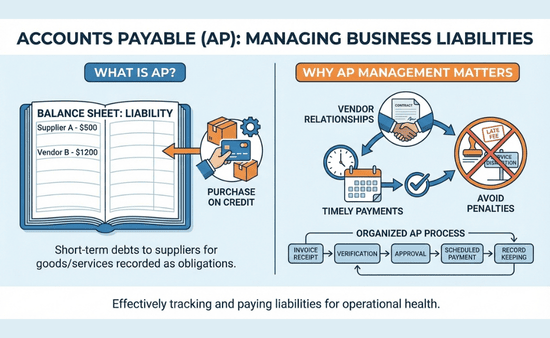
Accounts payable, often abbreviated as AP, refers to the short-term debts your business owes to its suppliers and creditors. When you purchase goods or services on credit, the amount you owe is recorded in your AP ledger. This is a liability on your company’s balance sheet, as it represents an obligation to pay cash in the near future.

Effectively managing your AP is crucial for maintaining good relationships with your vendors. Paying bills on time prevents late fees, service disruptions, and damage to your business’s reputation. A well-organized AP process ensures that all liabilities are tracked accurately and paid promptly.

Common Accounts Payable Processes

The AP cycle involves several steps, from receiving an invoice to making the final payment. A typical workflow includes:

  1. Receiving the Invoice: The process begins when you receive a bill from a vendor for goods or services rendered.
  2. Invoice Verification: Before payment, the invoice must be carefully checked. This involves matching it with the corresponding purchase order and receiving report to confirm that the goods were received as ordered and the pricing is correct. This is known as the three-way match.
  3. Approval: Once verified, the invoice needs to be approved for payment by the appropriate manager or department head.
  4. Payment Processing: After approval, the finance team schedules the payment. This could be via check, ACH transfer, wire transfer, or credit card, depending on the agreed-upon terms.
  5. Recording the Transaction: The payment is recorded in the general ledger, which reduces the accounts payable balance and the cash account.

Best Practices for Managing AP

Efficient AP management can save your business money and strengthen supplier relationships. Here are some best practices to follow:

  • Centralize AP Processes: Have a single, streamlined system for receiving and processing invoices. This reduces the risk of lost invoices and duplicate payments.
  • Negotiate Favorable Payment Terms: Work with your suppliers to establish payment terms that align with your cash flow cycle. You might be able to negotiate longer payment periods or secure discounts for early payments.
  • Automate Where Possible: AP automation software can handle tasks like data entry, invoice matching, and payment scheduling. This not only saves time but also reduces the likelihood of human error.
  • Maintain Clear Communication: Keep an open line of communication with your vendors. If you anticipate a delay in payment, inform them as soon as possible to maintain a good working relationship.

Understanding Accounts Receivable (AR)

Understanding Accounts Receivable (AR)

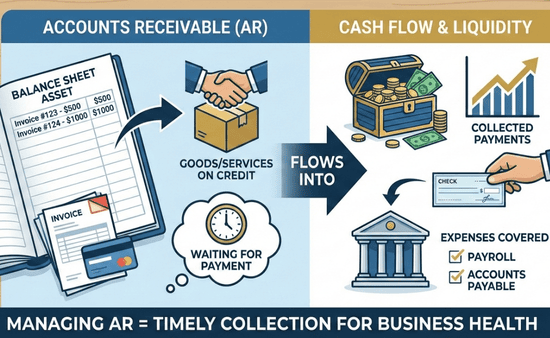
Accounts receivable (AR) is the opposite of accounts payable. It represents the money that customers owe your business for goods or services they have purchased on credit. When you issue an invoice to a customer, the amount due is recorded as an asset on your balance sheet because it’s expected to be converted into cash.

Managing AR effectively is vital for your company’s cash flow. A well-run AR process ensures that you collect payments from customers in a timely manner, providing the necessary liquidity to cover your own expenses, like payroll and accounts payable.

Common Accounts Receivable Processes

The AR cycle focuses on ensuring customers pay what they owe on time. The process typically looks like this:

  1. Creating and Sending Invoices: After delivering a product or service, you generate a detailed invoice and send it to the customer. The invoice should clearly state the amount due, payment terms, and due date.
  2. Tracking Payments: Monitor incoming payments and update customer accounts accordingly. This helps you keep track of who has paid and who has an outstanding balance.
  3. Following Up on Overdue Invoices: If a customer doesn’t pay by the due date, the collections process begins. This usually starts with friendly reminders via email or phone calls.
  4. Resolving Disputes: Sometimes, customers may dispute charges on an invoice. Your AR team needs to investigate these issues promptly and work with the customer to find a resolution.
  5. Recording Payments: Once payment is received, it’s recorded in your accounting system, which increases your cash balance and decreases your accounts receivable balance.

Best Practices for Managing AR

A proactive approach to AR can significantly improve your cash flow and reduce bad debt. Consider these best practices:

  • Establish a Clear Credit Policy: Before extending credit to customers, define your terms. This policy should outline credit limits, payment terms, and the consequences of late payments.
  • Invoice Promptly and Accurately: Send invoices as soon as the work is completed or the product is delivered. Ensure they are accurate and easy to understand to avoid payment delays.
  • Offer Multiple Payment Options: Make it easy for customers to pay you by accepting various payment methods, such as credit cards, bank transfers, and online payment gateways.
  • Be Proactive with Collections: Don’t wait until an invoice is long overdue. Send reminders as the due date approaches and follow up consistently on late payments.
  • Analyze AR Aging Reports: Regularly review your AR aging report, which categorizes outstanding invoices by how long they’ve been due. This helps you identify potential collection problems early on.

Key Differences Between AP and AR

While both AP and AR are critical to a company’s financial operations, they represent opposite sides of the cash flow coin.

Aspect Accounts Payable (AP) Accounts Receivable (AR)
Definition Money your business owes to suppliers. Money customers owe to your business.
Balance Sheet Recorded as a current liability. Recorded as a current asset.
Cash Flow Represents a cash outflow. Represents a potential cash inflow.
Goal To pay debts on time without disrupting cash flow. To collect debts quickly to improve cash flow.
Stakeholders Suppliers, vendors, creditors. Customers, clients.

The Role of Technology and Automation

Modern accounting software has revolutionized how businesses manage accounts payable and receivable. Automation tools can handle many of the repetitive, manual tasks involved in both processes, freeing up your team to focus on more strategic activities.

For AP, software can automate invoice data entry, three-way matching, and payment approvals. For AR, it can automate invoice creation, send payment reminders, and provide dashboards for tracking key metrics. Using technology can lead to faster processing times, fewer errors, and better visibility into your company’s financial status. For businesses that prefer a hands-off approach, outsourcing to professional bookkeeping services similar to those offered in Utah can provide expert management of both AP and AR functions.

Conclusion

Accounts payable (AP) and accounts receivable (AR) are essential for managing a business’s cash flow and financial stability. A disciplined approach to handling both ensures strong business relationships and long-term growth. Leveraging best practices and technology can help optimize AP and AR processes for a solid financial foundation.

More From Author

10 Reasons to Switch to Clean Energy Today

10 Reasons to Switch to Clean Energy Today

Investing in Public Spaces Benefits Us All

The Power of Parks: Why Investing in Public Spaces Benefits Us All

Building a Legacy: How Families Can Create Generational Wealth

The concept of generational wealth often feels elusive. It is not just about having money in the bank today. It is about creating a financial foundation that supports children, grandchildren, and future descendants. While accumulating assets is the first step, preserving them requires a completely different skillset. Families that succeed in this endeavor do so through deliberate planning, open communication, and strategic education.

Building a legacy is a marathon, not a sprint. It requires discipline and a willingness to look beyond immediate gratification. This guide outlines practical steps families can take to ensure their wealth endures and grows over time.

Establishing a Clear Financial Vision

Wealth preservation begins with a shared purpose. Without a clear vision, money can easily become a source of conflict rather than stability. Families should gather to discuss what their wealth means to them. Is it for education? Philanthropy? Entrepreneurial ventures? Defining these values early helps guide future decisions.

Creating a family mission statement is a powerful exercise. This document serves as a constitution for the family’s financial future. It outlines the principles that will govern how money is used, invested, and distributed. When everyone understands the “why” behind the wealth, they are more likely to act as responsible stewards of it.

The Importance of Financial Literacy

The Importance of Financial Literacy

One of the biggest threats to generational wealth is a lack of knowledge. Money is often lost when it passes to heirs who are unprepared to manage it. Financial education must start early. Children should learn the basics of saving, budgeting, and investing long before they inherit any assets.

This education should evolve as family members grow. Young children can learn about earning and saving through allowances. Teenagers can be introduced to the concepts of compound interest and stock markets. Adults should be involved in investment meetings and estate planning discussions. By empowering the next generation with knowledge, you equip them to grow the family fortune rather than deplete it.

Diversifying Assets for Long-Term Growth

Putting all your eggs in one basket is a risky strategy for wealth preservation. Successful families diversify their portfolios across various asset classes. This might include stocks, bonds, real estate, and private businesses. Diversification helps mitigate risk. If one sector underperforms, others may compensate for the loss.

Real estate is often a cornerstone of generational wealth. Properties can appreciate over time while generating consistent rental income. Stocks and bonds provide liquidity and growth potential. Some families also invest in private equity or start their own businesses. A balanced approach ensures that the family’s financial health remains robust regardless of market conditions.

Strategic Estate Planning

Estate planning is the technical framework that holds the legacy together. A simple will is rarely enough for complex assets. Trusts are essential tools for managing how and when wealth is transferred. They can protect assets from creditors, minimize taxes, and ensure that funds are used according to the family’s values.

Regularly reviewing estate plans is critical. Tax laws change, and family dynamics shift. An outdated plan can lead to unnecessary legal battles or tax burdens. Working with legal and financial professionals ensures that the structure of the estate remains sound and effective.

Governance and Professional Guidance

Governance and Professional Guidance

As wealth grows, managing it becomes a full-time job. Families often need structured governance systems to make decisions efficiently. This might involve creating a family council that meets regularly to review financial performance and address any internal conflicts.

For families with significant assets, professional management becomes necessary. This is where family office services can provide comprehensive support, handling everything from investment management to tax strategy and philanthropic giving. These professionals act as an extension of the family, ensuring that the day-to-day details align with the long-term vision.

Fostering Open Communication

Silence is the enemy of wealth preservation. Many families avoid talking about money because it feels uncomfortable or taboo. However, secrecy breeds mistrust and unprepared heirs. Transparency is vital.

Regular family meetings provide a platform to discuss financial health, upcoming changes, and individual responsibilities. These gatherings should be safe spaces where members can ask questions and voice concerns. Open dialogue builds trust and ensures that everyone is on the same page. It transforms wealth from a taboo subject into a collaborative family project.

Conclusion

Creating generational wealth is about more than just numbers. It is about instilling values, educating the next generation, and building a structure that supports long-term success. By establishing a clear vision, prioritizing financial literacy, and seeking professional guidance, families can build a legacy that stands the test of time. The goal is not just to leave money behind, but to leave a foundation upon which future generations can build.

More From Author

Prevention Made Simple Protecting Your Teeth and Gums

Prevention Made Simple: Protecting Your Teeth and Gums

Healthier Feet with Precision-Driven Treatments

Healthier Feet with Precision-Driven Treatments

6 Benefits Business Owners Gain from Professional Financial Planning Services

Professional financial guidance supports steady progress and confident leadership. A clear financial structure helps owners focus on opportunity, stability, and future goals. Sound planning also supports better coordination across financial priorities.

Providers who offer financial Solutions for Business Owners create clarity regarding budgets, priorities, and future direction. Expert support connects daily decisions with broader financial purpose. Owners gain confidence through informed structure and thoughtful guidance.

1. Clear Strategic Direction

Professional financial planning services help owners define measurable business objectives. Advisors review resources and align finances with core goals. This clarity supports decisive leadership across operations. Owners act with purpose and direction. As a result, decision-making becomes more consistent and grounded in long-term priorities.

Clear Strategic Direction

A clear strategy also strengthens internal alignment. Financial plans support budgets, investments, and timelines. This structure reduces uncertainty during periods of change. Owners maintain focus while pursuing growth. Teams benefit from shared expectations that reinforce accountability and execution.

2. Improved Cash Flow Management

Strong cash flow supports daily stability and future opportunity. Professional guidance offers structure and visibility.

  • Income Visibility: Advisors clarify revenue cycles and payment timelines. Owners gain a complete view of available funds.
  • Expense Control: Experts align spending with priorities and capacity. This balance supports consistent operations.
  • Reserve Planning: Structured reserves support readiness for opportunity. Owners feel secure during seasonal shifts.

3. Tax Efficiency and Compliance

Financial professionals help owners approach tax strategy with confidence. Advisors review structures and identify efficient options. This approach supports compliance and value creation. Owners benefit from clear insight.

Tax planning also supports future financial goals. Advisors coordinate timing and structure across several years. This coordination improves outcomes through clarity. Owners maintain confidence through expert support.

4. Risk Awareness and Protection

Every business faces financial exposure at different stages. Professional advisors assess potential risks across operations. This awareness supports proactive decisions. Owners feel prepared and informed. Clear insight into potential challenges helps leaders respond before issues escalate.

Risk Awareness and Protection

Financial advisors also recommend protection strategies suited to specific goals. These strategies support continuity and resilience. Owners protect assets and income paths. Confidence grows through preparation. Well-structured safeguards allow businesses to adapt without compromising stability.

5. Support for Growth and Expansion

Growth requires careful structure and financial readiness. Professional insight supports confident expansion choices.

  • Growth Evaluation: Advisors assess readiness for expansion paths. Owners select options with clarity.
  • Funding Structure: Experts outline funding approaches aligned with capacity. This structure supports stability.
  • Scalable Planning: Financial plans support growth without strain. Owners expand with control.

6. Long-Term Wealth Planning

Business success frequently connects with personal financial vision. Advisors align business value with owner wealth goals. This connection supports future clarity. Owners see progress beyond operations. Long-term planning helps ensure today’s efforts translate into personal financial security.

Professional guidance also supports succession plans. Advisors help outline smooth ownership transitions. These plans protect lasting value. Owners gain peace of mind. Clear succession strategies reduce disruption and preserve continuity for all stakeholders.

Professional guidance creates lasting value for enterprises of every size. Services that offer Financial Solutions for Business Owners support clarity, confidence, and strategic alignment. With expert support, owners build stability, protect value, and pursue growth with purpose. This approach strengthens business success and personal vision.

More From Author

What to Expect When Working With a Financial Advisor

What to Expect When Working With a Financial Advisor in Washington, DC

Regular Car Maintenance Can Extend Your Vehicle’s Lifespan

How Regular Car Maintenance Can Extend Your Vehicle’s Lifespan