



There is something undeniably magical about a home that feels larger than its four walls. For growing families, space is often at a premium. The living room gets cluttered with toys, the kitchen becomes a chaotic hub of homework and meal prep, and everyone starts to feel a little boxed in.
This is why the concept of “indoor-outdoor flow” has moved from a luxury architectural term to a practical necessity for modern family living. Creating a seamless transition between your interior living areas and your backyard doesn’t just make your house look bigger; it changes the way you live. It turns a cramped Sunday afternoon into an airy, expansive experience.
It allows parents to cook dinner while watching the kids play on the grass. It transforms a standard patio into an extension of the family room.
Achieving this harmony requires more than just unlocking the back door. It involves thoughtful design choices that trick the eye and guide the foot, making the boundary between “in” and “out” disappear. Here is how you can enhance that flow to create the ultimate family-friendly environment.
Create Visual Continuity
The most effective way to merge spaces is to ensure they look related. If your indoor aesthetics come to a screeching halt the moment you step outside, the psychological barrier remains strong. You want the eye to travel through the glass without interruption.
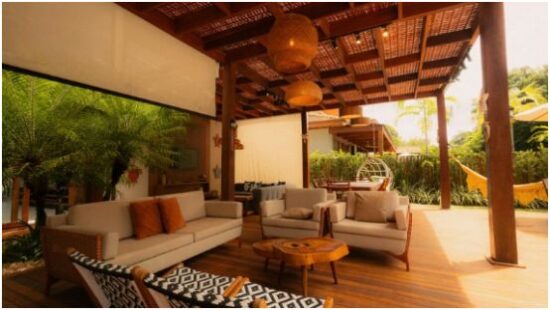
Start with your flooring. While you might not be able to use hardwood on an uncovered deck, you can match tones and textures. If you have light oak floors inside, choose a light-colored decking or stone paver outside. The goal is to create a continuous color palette.
Even simpler, use an outdoor rug on your patio that mimics the colors of your living room rug. This visual trickery suggests that the outdoor space is just another room in the house with modern archtectural techniques.
Color coordination extends to furniture and decor as well. If your interior design leans towards mid-century modern with pops of teal and mustard, don’t switch to rustic farmhouse decor outside.
Carry those same teal cushions and modern lines onto the deck. This stylistic repetition signals to the brain that the outdoor area is a comfortable, inhabited part of the home, not just a raw exterior space.
The Importance of the Threshold
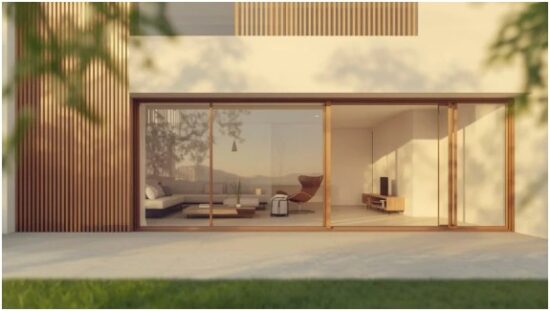
The physical barrier between your home and the garden is the most critical element of flow. Standard single doors often act as choke points, limiting both traffic and light. To truly open up a home, you need to widen that aperture.
Sliding glass doors, bifold doors, or French doors are the heroes of indoor-outdoor living. They frame the view and, when open, physically remove the wall between the two zones.
For families, this visibility is crucial. It allows for passive supervision of children playing outside while adults are inside, providing peace of mind and safety.
This upgrade is often one of the highest-impact renovations a homeowner can undertake. For example, installing expansive patio doors in Salt Lake City—where the stunning mountain backdrops serve as natural artwork—can dramatically transform a dark living room into a light-filled sanctuary that celebrates the local scenery.
Regardless of your location, choosing glass doors that offer unobstructed views invites the outdoors in, even when the weather forces you to keep them shut.
Leveling the Ground
One often overlooked aspect of flow is the physical transition underfoot. If you have to step down six inches to get to your patio, that step creates a mental and physical separation (and a potential tripping hazard for toddlers).
Ideally, you want a flush threshold where the indoor floor level meets the outdoor deck or patio level perfectly. This creates a true extension of the living space.
When the doors are flung open during a summer barbecue, guests and kids can wander in and out without navigating steps, making the house feel like one giant, cohesive party venue.
Functional Zoning for Families
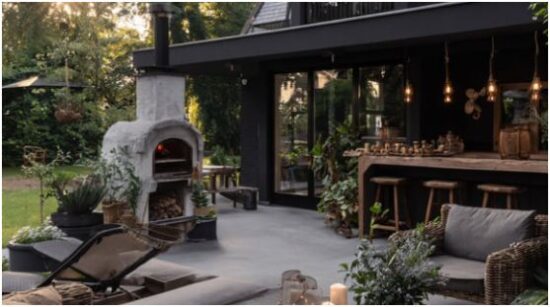
To make the outdoor space inviting, it needs to serve a purpose beyond just “being outside.” Treat your patio or deck with the same zoning logic you use for your interior.
Create distinct areas for distinct activities. If you have a dining table inside, place your outdoor dining set nearby on the patio to create an “al fresco” mirror image. Set up a lounge area with weather-resistant sofas that mirrors your indoor TV area.
For families, this is especially useful. You might create a “quiet zone” with a hammock for reading, while designating a “play zone” on the lawn with a sandbox or swing set.
By giving the outdoor space specific functions, you encourage family members to use it as part of their daily routine, rather than just on special occasions.
Lighting the Transition
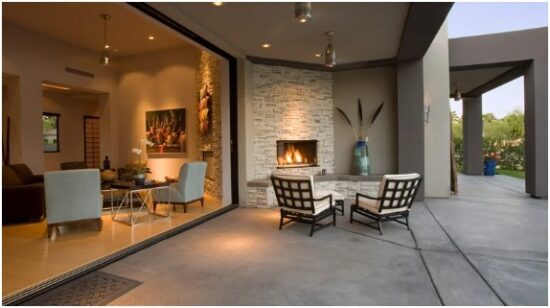
The flow shouldn’t end when the sun goes down. In fact, lighting is one of the best tools for connecting spaces at night. If your backyard is a black void after 8 PM, the glass doors turn into mirrors, reflecting the interior and closing off the world.
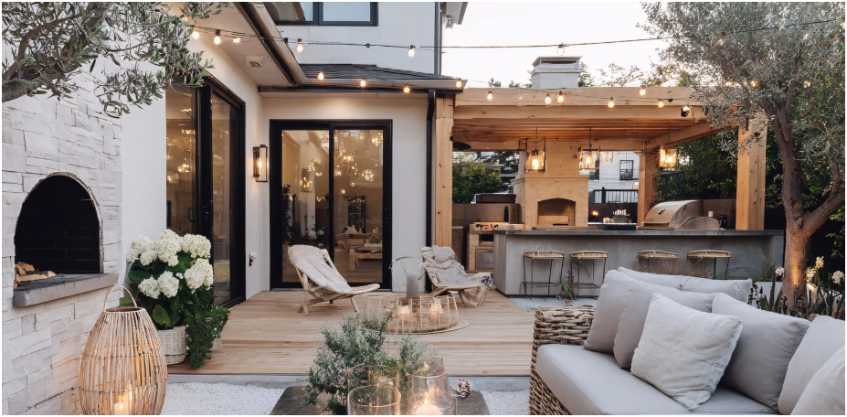
Layer your outdoor lighting to match the warmth of your indoor lighting. String lights (bistro lights) overhead create a ceiling effect, making the patio feel like a room.
Path lights draw the eye further into the yard, adding depth. By illuminating trees or fences at the perimeter of the yard, you visually expand the boundaries of your home at night, making the space feel expansive and safe for evening family time with smart architectural techniques.
Bring the Outdoors In
Finally, flow works both ways. While we often focus on taking our living style out, bringing nature in helps blur the lines from the other side.
Place large potted plants near the glass doors inside the house. This greenery connects visually with the garden outside, softening the architectural edges.
Use natural materials like wood, stone, and rattan in your interior decor to echo the textures found in your backyard. When the internal environment feels organic, the transition to the actual outdoors feels effortless.
Embracing the Open Air Lifestyle
Enhancing the indoor-outdoor flow of your home is about more than just aesthetics; it is about lifestyle. It is about creating a flexible environment that adapts to the chaos and joy of family life.
By removing visual barriers, leveling thresholds, and carrying comfort across the divide, you effectively double your living space. You create a home where the walls don’t confine you, but rather guide you toward fresh air, sunlight, and the freedom to roam.