



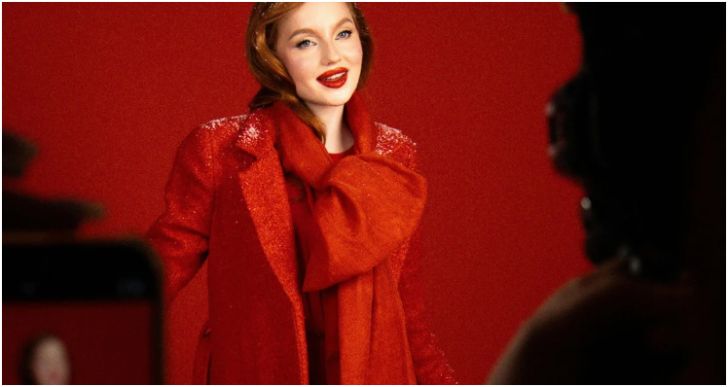
There is a pervasive misconception that being photogenic is an innate trait—something you are either born with or you aren’t. We look at glossy magazine spreads and assume the model simply woke up, stepped in front of a lens, and effortlessly radiated charisma. The reality is far more technical and practiced.
Photogenic confidence is a skill, akin to public speaking or dancing. It is the result of understanding light, knowing your body, and mastering the mental game required to project emotion through a static image.
For aspiring models and editorial subjects, the camera can feel like an interrogation tool. It captures micro-expressions of hesitation and magnifies self-doubt. However, by shifting your mindset and learning the mechanics of movement, you can transform that anxiety into a powerful presence that commands attention.
It Starts in the Mind
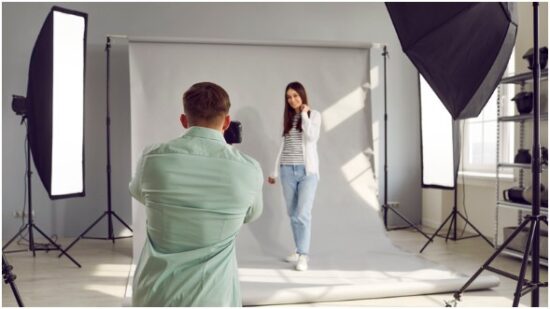
The lens captures energy before it captures features. If you are mentally apologizing for being there, or worrying that you look awkward, the camera will pick up on that tension. Your eyes will look guarded, and your shoulders will instinctively hunch.
Building editorial confidence begins with dissociation. When you step onto a set, you are no longer “you” with your daily insecurities and worries; you are a character in a narrative. High-fashion editorial work is rarely about looking “pretty” in the conventional sense.
It is about creating shapes, evoking moods, and telling a story. When you treat the shoot as an acting exercise, you free yourself from the pressure of vanity. You aren’t trying to look good; you are trying to look interesting.
Mastering Your Angles and Geometry
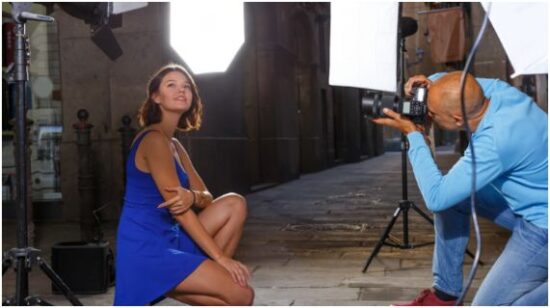
Confidence comes from competence. The more you understand how your body translates to a 2D image, the less you will worry about the outcome.
Create Triangles
The human eye loves geometry. Standing straight with your arms by your side is rarely engaging. Create triangles with your limbs. Place a hand on your hip, touch your hair with your elbow out, or separate your feet to create a wide base. These negative spaces add dynamism to the shot and guide the viewer’s eye.
The Turtle Technique
One of the most common issues in photos is the “double chin” effect, which happens even to the thinnest models when they pull their heads back. Editorial photographers often recommend “turtling”—pushing your face slightly forward toward the camera and then tipping your chin down. It feels unnatural in real life, but through the lens, it sharpens the jawline and elongates the neck.
Continuous Movement
Static posing kills energy. The best editorial shots often happen in the spaces between poses. Adopt a flow of continuous, slow-motion movement. Shift your weight from one leg to the other, turn your head slowly, or play with the fabric of your clothing. This keeps your muscles engaged and prevents the “deer in headlights” look.
The Power of the Smile and Facial Tension
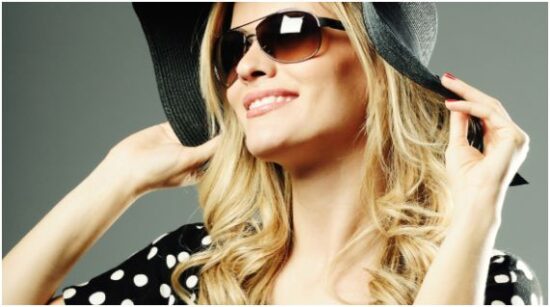
While high fashion often favors the stoic, “blank canvas” expression, commercial and lifestyle editorial work requires warmth and joy. This can be a major stumbling block for many. If you are self-conscious about your teeth, your smile will never reach your eyes. You will subconsciously guard your mouth, leading to a tight, insincere expression that ruins the shot.
True photogenic confidence requires you to be at peace with your physical features. For some, this means embracing a unique gap or a crooked tooth as a signature look. For others, dental insecurities and common dental issues are a genuine psychological barrier that inhibits their performance.
If structural dental issues are preventing you from fully expressing yourself, addressing them can be a career-changing move. It is difficult to project joy when you are hiding your mouth.
For those requiring significant restoration to regain their confidence, solutions like all-on-4 dental implants in Westminster CO can provide a permanent, aesthetic foundation. Once the physical insecurity is removed, the model is free to laugh, shout, and emote without that split-second of hesitation that the camera always catches.
The Eyes: The Anchor of the Image
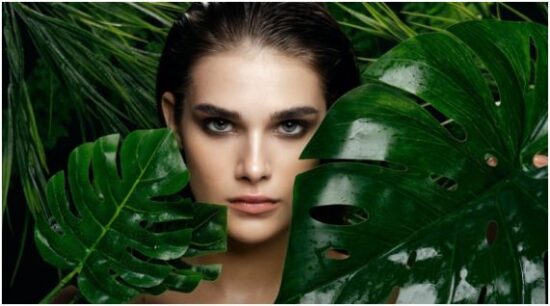
Tyra Banks famously coined the term “smizing” (smiling with your eyes), and it remains a cornerstone of editorial modeling. You can have the perfect pose and the perfect lighting, but if your eyes are dead, the photo fails.
To activate your eyes, you need to engage the lower eyelid. A wide-eyed stare looks fearful, while a completely relaxed eye looks bored. By slightly squinting the lower lid (a technique portrait photographer Peter Hurley calls the “squinch”), you convey intensity and confidence.
Furthermore, focus your gaze. Don’t just look “at” the camera lens; look through it. Imagine you are making eye contact with a specific person standing behind the photographer. This adds a layer of intent and connection that captivates the viewer.
Collaboration with the Photographer
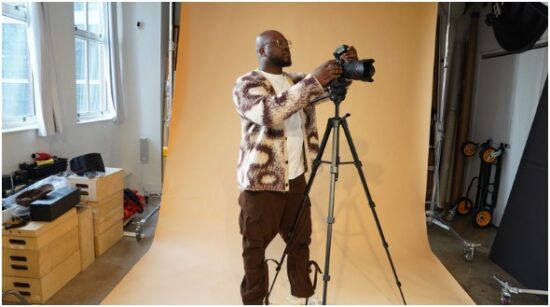
Finally, remember that you are not alone. An editorial shoot is a collaboration. The photographer wants you to succeed just as much as you do.
Communication is the antidote to insecurity. Ask for feedback. Ask to see a few raw shots on the monitor (tethering) to understand how the light is hitting your face. If you see that a certain angle isn’t working, adjust.
Viewing the work in real-time can be a massive confidence booster, as you can objectively see that the “awkward” feeling you had a moment ago actually translated into a stunning, avant-garde image.
Practice Makes Permanent
You don’t need a professional studio to build these skills. Set up a tripod and your phone at home. Practice your “turtling,” your triangles, and your eye intensity. Study the results. Analyze which angles flatter your face and which expressions feel most authentic.
Photogenic confidence is not about perfection. It is about ownership. It is the ability to stand in the harsh glare of studio lights and say, without words, “I am here.” By mastering the technical aspects of posing and addressing the internal or external factors that hold you back, you can walk onto any set ready to create art.