


We all know the feeling of opening a utility bill during the peak of summer or the dead of winter. That number at the bottom of the page can be a shock, prompting immediate promises to turn off lights more often or adjust the thermostat. While habits play a role in energy consumption, the physical structure of your home often matters much more.
A house is a system. If the components of that system are low-quality or degrading, your heating and cooling equipment has to work overtime to compensate. This is where the argument for premium building materials becomes undeniable.
While the upfront cost is higher, high-quality materials—from insulation to roofing—act as a fortress against the elements. They keep conditioned air inside where it belongs, drastically reducing waste and saving money over the lifespan of the home.
Here is how investing in superior building products translates directly to better energy efficiency.
The Power of the Building Envelope
Think of your home like a thermos. If you put hot coffee in a cheap plastic cup, it goes cold in minutes. Put it in a high-quality vacuum-insulated flask, and it stays hot for hours.
Your home’s “envelope”—the roof, walls, windows, and foundation—works the same way.
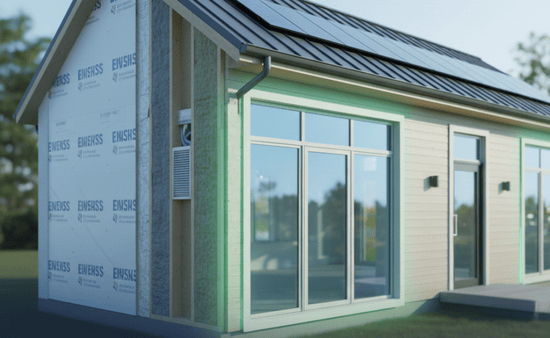
Premium materials tighten this envelope. They reduce air leakage, which is one of the primary sources of energy waste in residential buildings.
When you choose high-end house wraps, advanced framing techniques, and superior siding, you are essentially sealing the gaps that allow money to escape through your walls.
Insulation: Quality Over Quantity
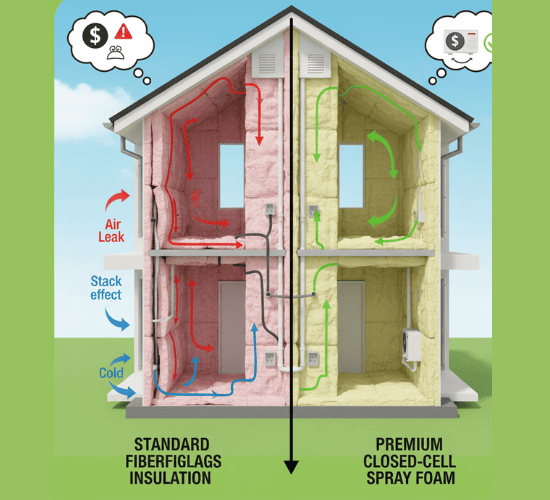
Not all insulation is created equal. Standard fiberglass batts are common, but they can sag over time or leave gaps around electrical boxes and piping.
Premium alternatives, such as closed-cell spray foam or rigid mineral wool boards, offer significantly higher R-values (the measure of thermal resistance) per inch.
High-quality spray foam, for example, does double duty. It insulates and seals air leaks simultaneously. This prevents the “stack effect,” where warm air rises and escapes through the attic, sucking cold air in from the basement.
By stabilizing the temperature within the walls, your HVAC system cycles on and off less frequently, extending its life and lowering your monthly spend.
Windows and Doors: The Weakest Links
In many older or builder-grade homes, windows and doors are essentially holes in the insulation. They allow heat to transfer easily. Premium windows have evolved into sophisticated energy-saving devices.
Top-tier windows feature triple-pane glass, argon or krypton gas fills, and Low-E (low-emissivity) coatings. These coatings reflect infrared light, keeping heat out during the summer and trapping it inside during the winter.
Furthermore, high-quality frames made from fiberglass or thermally broken aluminum prevent conduction, ensuring the frame itself doesn’t become a bridge for energy loss.
Roofing Matters More Than You Think
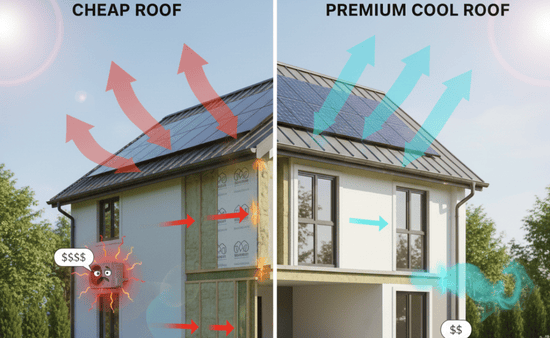
Your roof takes the brunt of nature’s abuse. It faces direct sunlight, rain, snow, and wind. The material you choose for your roof has a massive impact on your attic temperature, which directly influences how hard your air conditioner has to work.
Cheap asphalt shingles absorb a tremendous amount of heat, radiating it down into your living space. In contrast, premium materials often utilize “cool roof” technology or high thermal mass.
For example, slate, clay, or concrete tiles take a long time to heat up and release that heat slowly, regulating the home’s temperature.
If you are looking for long-lasting options, you might see listings for concrete roof tiles for sale that promise durability and thermal mass properties. These heavier, denser materials can help keep a home cooler in hot climates compared to standard thin shingles, reducing the cooling load significantly.
Durability is Sustainability
There is a secondary aspect to energy efficiency that often goes overlooked: the energy required to replace materials. A cheap vinyl siding or a budget asphalt roof might last 15 to 20 years.
When they fail, they end up in a landfill, and new materials must be manufactured and transported to your home.
Premium materials are built to last. A high-quality metal roof can last 50 years or more; brick and stone can last a century.
By choosing materials that don’t need to be replaced, you are reducing the embodied energy of your home—the total energy consumed by all the processes associated with the production of a building.
Building for the Future
Upgrading to premium materials is rarely the cheapest option on day one. However, the calculation changes when you look at the timeline of homeownership.
Lower utility bills every month for decades, combined with reduced maintenance and replacement costs, offer a substantial return on investment.
Beyond the financials, there is the value of comfort. A well-insulated, tightly sealed home with high-quality windows is quieter, less drafty, and maintains a consistent temperature room-to-room.
When you build or renovate with energy efficiency in mind, you aren’t just saving money; you are creating a higher quality of life.