


Most people walk out of a dental appointment having spent anywhere from $90 to several hundred dollars and have no idea whether they got a fair deal. That’s not because dental care is inherently confusing. It’s because nobody teaches you how to be a smart dental consumer. The good news? A few simple shifts in how you prepare for, show up to, and follow up after appointments can meaningfully change what you pay and what you get.
Why Dental Costs Catch So Many People Off Guard
The numbers are sobering. Approximately 72 million U.S. adults, roughly 1 in 5, have no dental insurance at all. And insurance doesn’t fully solve the problem even for those who have it. Annual plan maximums typically run between $1,000 and $2,000, far below the cost of implants or multiple crowns, and deductibles plus coinsurance obligations further reduce the real value of coverage.
So what do people actually pay when they show up uninsured? National average dental costs without insurance land around $200 for a filling, $1,300 for a crown, $1,250 for a molar root canal, and $4,500 for a single implant. Those aren’t edge cases. Those are routine procedures millions of Americans need every year.
And skipping care doesn’t make it cheaper. Dental ER visits cost roughly $750 to $1,500 per visit for problems a dentist visit could have addressed for far less. Avoidance is, financially speaking, almost always the wrong move.
The Real Cost Gap Depends Heavily on Where You Live
Here’s something most people don’t realize: the same procedure can cost dramatically different amounts depending on your state. According to 2025 Stateline data, residents of Illinois, Mississippi, and Utah are paying some of the highest out-of-pocket prices for dental treatments, while Alabama, Hawaii, and Colorado enjoy some of the lowest.
The spread is wild. Average full-mouth deep cleanings range between $600 and $860 in the lower-cost states, compared to over $1,400 in the most expensive ones. That’s a gap of $800 or more for the exact same procedure. Geography matters, and so does knowing what the going rate is in your area before you agree to a treatment plan.
| Procedure | National Avg (No Insurance) | Low-Cost State Range | High-Cost State Range
|
|---|---|---|---|
| Routine Cleaning & Exam | $100 to $250 | $80 to $150 | $200 to $350 |
| Composite Filling | ~$200 | $120 to $175 | $250 to $350 |
| Full-Mouth Deep Cleaning | ~$1,000 | $600 to $860 | $1,400+ |
| Dental Crown | ~$1,300 | $800 to $1,100 | $1,500 to $2,000 |
| Single Implant | ~$4,500 | $3,000 to $3,800 | $5,000 to $6,500 |
Sources: Dental Savings Guide 2026; North American Community Hub State Cost Comparison 2025. Ranges are approximate and vary by provider.
Six Ways to Get More for Every Dollar You Spend at the Dentist
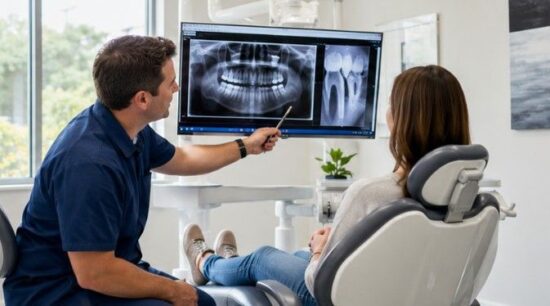
1. Know Your Baseline Before You Walk In
Your first job before any appointment is knowing what fair market pricing looks like in your zip code. Sites like FAIR Health Consumer let you look up estimated costs by procedure and location for free. Pull those numbers before agreeing to any treatment plan. You’re not being difficult. You’re being a customer.
Bring a written list of your concerns and any changes you’ve noticed since your last visit. Dentists work faster and more accurately when you give them a clear starting point. Vague complaints lead to broader, pricier workups.
2. Ask About In-Office Membership Plans
If you’re uninsured, this one move can save you more than any coupon or discount code. Many private practices now offer annual membership plans that bundle cleanings, X-rays, and a discount on restorative work for a flat yearly fee, often $150 to $400 per person. A dental savings plan in the $99 to $150 per year range typically applies 20 to 60 percent discounts with no waiting periods and no annual maximum.
Ask your dentist’s front desk specifically about a “membership” or “care club” plan. Not every office advertises these publicly, but plenty offer them when you ask directly.
3. Match the Practice to Your Actual Needs
Not every dental office is built for every patient. A solo practitioner in a small town may charge less for routine work, while a multi-specialty group offers same-day crowns and orthodontics under one roof. Your job is to match the complexity of your needs to the right type of practice.
If you need a single checkup and cleaning, a small community practice or a family dentist like the Rolla Dentist at Wedgewood Dental is often a better fit than a corporate chain, because personalized practices tend to build longer-term relationships that actually help catch problems early. If you need orthodontic work and restorative procedures done in the same year, a multi-specialty office saves you referral fees and travel time.
4. Time Your Appointments Strategically
Two cleanings per year spaced roughly six months apart costs far less than one appointment per year where a dentist finds twice the buildup and recommends additional procedures. Consistent, preventive scheduling is the single most reliable way to keep your total annual dental spend low.
Schedule your second appointment before you leave the office after your first one. You’re far less likely to let time slip by and turn a minor cleaning into a filling situation. Look for dental practices in Rolla MO for families.
5. Explore Dental School Clinics
This one sounds intimidating and shouldn’t. Dental residents aren’t students. They’ve graduated from dental school and are fully licensed to practice dentistry. They simply work under supervision, which means you get fully credentialed care at a significantly reduced rate.
One of the best ways to find affordable care is to seek out an accredited dental school closest to you. Most have clinics where faculty and supervised students provide care at reduced cost, typically on a sliding income scale, or for free. The American Dental Association’s school search tool lets you filter by state and type of treatment.
6. Request an Itemized Estimate Before Any Major Work
Before you agree to a crown, a deep cleaning, dental scanning or anything more complex than a filling, ask for a written, itemized treatment plan with the CDT procedure codes listed. Then call your insurance company (or compare against the FAIR Health tool if you’re uninsured) to verify what each code typically reimburses. You’re entitled to this information. A trustworthy practice will hand it over without hesitation.
If a practice makes you feel uncomfortable for asking, that’s useful data about whether you want to be a patient there.
What to Do When You Have Insurance but Still Face Big Bills
Coverage doesn’t mean covered. Roughly 40 percent of total dental expenditures are paid directly by patients, reflecting the limited scope of insurance coverage in many cases. Even people with solid employer-sponsored plans routinely face significant out-of-pocket costs for anything beyond preventive care.

A few tactics that genuinely help:
- Ask your dentist to split multi-phase treatments across two calendar years so you can use two separate annual benefit periods. A dentist who does a crown prep in December and seats the crown in January can sometimes save you $600 or more.
- Verify that your provider is in-network before every appointment, not just when you first sign up. Networks change, and out-of-network visits can double your cost.
- Request a predetermination of benefits for any procedure over $300. Your insurer evaluates the claim in advance and tells you exactly what they’ll pay. No surprises at checkout.
- Use a Flexible Spending Account (FSA) or Health Savings Account (HSA) to pay for dental work with pre-tax dollars. On a $1,000 crown, that can knock $200 or more off your effective cost depending on your tax bracket.
“Dental care is the medical expense Americans skip most often, not because they don’t need it, but because they can’t afford it.” — Dental Savings Guide, reviewed June 2026
That quote stings a little, and it should. About 21 percent of adults delayed or skipped dental care in 2023 because of cost, a higher rate than for any other type of healthcare. The goal of every tactic in this article is to close that gap so cost is no longer the deciding factor.
A Quick Pre-Appointment Checklist
Use this before every visit to make sure you’re walking in prepared:
- Look up fair-market procedure costs for your zip code at FAIR Health Consumer.
- Confirm your dentist is still in-network with your current insurance plan.
- Write down every concern or symptom you want to mention, no matter how minor.
- Ask the front desk about in-office membership or payment plans if you’re uninsured or underinsured.
- Request a predetermination for any recommended procedure costing more than $300.
- Schedule your next appointment before you leave, not three months later when you finally remember.
- If major work is recommended, ask for the itemized treatment plan with CDT codes before agreeing to anything.
Choosing the Right Practice Changes Everything
All the preparation in the world matters less if you’re sitting in a chair at a practice that doesn’t communicate costs clearly, rushes through appointments, or pressures you into treatments you didn’t ask about. The relationship you build with a dentist over years is genuinely one of the better health-care investments you can make. Consistent providers catch changes over time, like understanding how cavities start tooth decay that a one-time visit never would.
Look for practices that accept multiple payment methods, offer transparent fee schedules, work with your insurance, and have staff who actually answer your questions without making you feel like a burden. Those qualities tend to cluster together. A practice that’s upfront about costs is usually upfront about everything else, too.
Smart dental consumers spend less, catch problems earlier, and go into every appointment knowing what to expect. That’s not a complicated standard to reach. It just takes a bit of homework upfront and the willingness to ask questions that most people assume they shouldn’t ask.