



analytics = 833.322.6760, 8448520347, 800 notes, 7168738800, 8005113030, 8662783536, 9525620902, 8333163276, 9133123280, 8558425860, 8777640833, 2567447500, 18669852273, 8559977348, 8775895169, 6123010199, 8777458562, 8447297641, 8556792141, 5018218349, 6468760617, 8559712260, 8557390856, 8339310230, 3106677534, 8339842440, 9547875035, 6163306276, 18004441676, 8558348495, 7864225581, 9094067513, 8602739995, 18339793337, 8553020376, 9513245248, 5164226400, 2675259887, 8339060641, 8139469478, 2486022768, 2064395787, 5595330138, 5127649161, 8163354148, 5165660135, 9723750568, 2085144125, 18559694636, 5028227768, 5104709740, 2107644963, 9513947262, 8772865954, 6266570594, 8442891118, 8008280146, 7714445409, 8664368150, 18006951063, 8779140059, 8017425882, 2245434298, 4234820546, 8442712583, 9547434255, 8445073876, 18662058022, 18004367961, 8445369495, 8448747445, 9513895348, 8017835887, 9136778319, 5095810139, 18005271339, 6178265171, 8338428100, 4699988648, 8337030945, 5132830807, 8669072272, 7027650554, 18003959733, 8882288896, 8007017918, 8882961958, 9164315240, 3134238040, 8333859445, 8885090457, 8008399369, 9183984181, 6125681561, 8555737348, 7035746171, 9804026136, 3392036535, 8014388165, 8339124265, 2484556960, 8652940491, 6788532772, 18002319631, 4432611224, 5174402172, 5166448345, 8574156189, 9208318998, 2814084487, 3237827205, 9035937800, 6147636366, 8886375121, 18667153526, 6156855230, 9133120992, 6027675274, 8326849631, 6363626977, 8014388261, 6163306271, 5128465056, 6164252258, 8008994047, 6506189519, 5133970850, 8006601779, 8668010144, 8555894252, 6163177933, 4079466140, 8655460256, 18884209943, 3464268887, 8442449538, 7043866623, 8444211229, 8102759257, 4345281742, 9493175442, 4123879299, 8382211532, 3309133963, 5109849896, 8556482575, 7072899821, 2014658491, 6032157860, 7628001252, 2082327328, 3522492899, 972-476-8208, +1 (800) 555-0433, 7753840563, 4694890551, 8327349150, 2702971125, 8008545695, 6106006953, 2146516900, 9037651217, 7047058890, 8668219635, 8033391481, 9592307317, 8595594907, 8332685291, 8555710330, 8778334675, 2102440850, 18008778623, 9513387286, 4029339118, 6103444430, 8662222197, 7273618338, 6159840902, 8555154190, 8668418679, 8338780449, 5417666200, 9185121419, 3237160444, 3606338450, 6198259510, 8888570668, 8083399481, 18668404246, 9032130471, 18007457354, 8662900505, 9512277184, 14075830183, 877-613-7414, 8669145806, 8884135452, 8339870385, 5412621272, 4085397900, 4049960554, 9043278492, 8008109337, 3148962604, 2625778200, 2533722173, 7702240355, 2602796153, 8442568097, 4045674598, 8778135595, 6627789116, 8666148679, 432.535.3346, 8552199473, 18008784733, 8656696225, 4172640211, 2694480187, 8004800186, 8728107133, 8554290124, 8445417310, 8088094977, 3854774827, 6149229865, 8558318013, 8886227328, 8669289240, 2162086661, 8449263585, 8656868483, 9126165004, 4342647097, 4698902115, 9738424694, 8009249033, 8662962852, 8004836205, 7637606200, 9549534317, 9085288998, 8665592621, 9097290670, 8885365114, 6282074108, 9515725134, 9725268500, 18886918661, 4028589809, 5135840000, 9542026998, 3606338409, 3392120655, 9375304801, 4699825009, 7158365720, 7133540191, 5176576800, 7015400761, 8007620276, 7314100312, 8133644313, 4014142386, 8556829141, 18003473764, 5163279500, 2177711746, 8338394140, 8008442881, 8442356275, 9737509291, 8053218829, 5138030600, 866.266.1445, 18667066894, 18448302149, 9592998000, 8668518500, 3618257777, 8132108253, 9134285296, 18667331800, 6182062806, 6196931509, 5052530598, 2692313137, 8322632311, 4089635659, 3122340781, 8665270007, 8884315114, 8327010295, 8886230286, 18337632033, 7276978680, 8662847625, 7046297142, 5709082790, 6176829138, 18663243120, 18888447979, 833-793-2634, 3146280822, 2817169800, 8003966861, 2092152027, 8772379648, 8779100501, 6304497394, 6613686626, 7864325077, 8667061341, 8443168434, 18007793351, 2816679193, 6182213001, 8165459795, 800-660-1779, 3865648082, 4057539884, 6304757000, 8665212613, 8339014153, 4018686200, 7177263148, 8446717272, 6026889985, 6122950822, 18775007697, 8727025274, 877-870-8046, 4107533411, 8594902586, 3175548779, 4023164651, 8442409757, 6155909241, 4692706636, 8447089406, 2183167675, 9367097999, 18003239865, 5107750767, 8336411330, 8666136856, 8776137414, 5048420550, 8174924769, 409-761-7631, 8772810415, 6175170000, 6176447300, 516-644-8345, 8014388150, 8014363101, 8446600349, 8445720731, 8446012486, 9529772019, 8004160599, 2105867691, 8174761844, 8777665220, 3606338365, 2159873706, 8126413070, 7578520784, 2155830758, 2133442341, 8014388461, 8556302480, 9013702057, 6467622601, 7083655202, 1-877-870-8046, 2505814253, 8152877145, 2173264646, 7654422019, 8442677109, 844-306-7833, 8775787552, 8624140848, 8555422416, 9544406856, 8009410164, 2193102036, 3237460973, 8332178326, 8133207059, 18003105587, 8178548532, 8772595779, 8044452446, 8336852203, 5136555021, 8042933450, 713-332-2838, 8556769075, 8447100373, 8446180908, 6512551000, 6144058912, 8332891205, 8336370667, 8124350998, 7133537813, 312-653-2073, 7083919045, 5403084012, 9529790948, 2177491008, 4079466142, 8333880562, 6183319022, 8776363716, 8012367598, 2816916103, 5165029686, 6087759139, 9045699303, 5614348400, 9085056898, 9297441323, 18002201614, 844-391-1092, 3364387172, 4708878685, 9803167472, 2093324588, 4052173481, 3055038807, 9044785041, 7137309500, 9513707315, 18002378990, 6232238196, 5026653794, 4057240741, 9543793034, 8884700655, 9512521067, 5703752113, 9299952002, 2565103546, 8134486919, 6266390332, 4049650560, 5303227024, 5106464099, 4075457432, 18663524737, 8887278618, 8084899138, 5082518001, 3183544193, 8037168112, 4807508966, 8586578575, 2095506110, 18008898740, 5416448102, 8666687301, 919.214.5402, 5864987122, 6302429143, 9547459648, 4844836206, 7145099696, 8665838119, 8004439164, 8007082736, 8779949115, 8003280355, 4085982269, 424.385.0597, 4054483292, 4694096508, 18884534330, 4844522185, 3606338412, 7133322838, 8007430511, 4703975724, 8082130841, 18662916365, 8664482002, 5707403282, 4072037536, 8332665655, 8557074599, 18555013051, 8668446972, 5128425148, 8337932634, 8329751010, 6156759252, 7173219013, 5165660134, 6152482618, 888-785-2471, 8553395442, 7204563710, +1 (312) 653-2073, 8339833264, 8555159372, 8448348551, 8665207789, 4072357388, 8883237625, 8014388316, 5622422106, 412-405-6064, 7657513244, 4089773512, 4176225719, 866.376.4584, 8166310333, 4122148544, 5702803018, 8667677603, 5407317304, 8054296716, 9712734028, 5102572527, 18776898870, 2075485013, 8559590200, 9545058434, 9089558128, +1 (320) 207-5189, 8447553258, 8662261020, 7135568949, 6303879597, 4149558701, 7209152170, 8008298374, 8558078675, 8666136857, 8669972488, 2014623980, 8013365041, 7083164009, 6622553743, 4158519136, 8339721292, 18008994047, 201-462-3963, 8887852471, 7702823288, 18007450572, 2672232367, 8333425412, 8008423225, 6516034340, 9044210685, 3032423254, 8777708065, 8043123644, 5138600470, 4073030519, 18009359935, 9152453436, 3308355902, 4125577457, 5183636075, 3362525901, 18663902348, 8143590227, 18009145582, 8172104278, +1 (866) 593-3926, 2105201454, 8332316512, 866.914.5806, 866-613-6857, 7819276501, 8332819623, +1 (866) 613-6857, 5135696117, 6506819470, 6147320721, 866-702-4725, 6266577222, 4055638384, +1 (614) 890-1025, 9036860067, 2816701587, 2487855500, 8442006330, +1 (623) 462-7106, 8666746861, 7158988041, 877 770 8125, 7343485117, 9727530822, 8776380175, +1 (866) 914-5806, 6126721631, 18003653234, 9512237966, 5702771040, 5025155312, 7172515048, 18005303790, 214-226-9139, 8889764904, 4025595100, 8448439155, 8016192557, 6083255121, 2403122052, 8335841371, 4044133261, 8324583317, 6233529406, 5208663325, 8776421554, 8014075254, 877 613 7414, 18005284800, 5135723375, 5034614545, 206-453-2329, 801-413-7200, +1 (855) 283-3957, 8004351415, 18888002527, 8776236765, 5094747159, 6036681119, 4086921193, +1 (877) 647-8551, 8087680000, 8337002510, 7174070772, maxwell and bryant group, 8668594380, 7177896033, 7208481788, 866-914-5806, 18009220204, +1 (888) 994-2320, 18003683110, 8666484519, 2107829213, 8882795504, 662-255-3743, 5052779866, 7172968088, 7756877101, 800-276-3744, 18004321000, 8883731969, +1 (800) 530-3790, 6157471813, 6788062977, 402-220-1248, 9525630843, 8662855312, 8776918086, 877-417-4551, 877-770-8125, 8884640727, 8435820002, 8884141045, 5202263623, 8339901915, 8559731040, 4043853637, 888-991-5696, +1 (877) 770-8125, 6158007010, 888-250-7027, 8889346489, +1 (888) 993-2902, 8003318859, 2252143974, 8442449425, 7144490377, 8014137200, 8333725815, +1 (800) 435-1415, 6097982556, 8155179338, 3158495499, 4014446877, 9472221080, 18009454701, +1 (888) 611-6904, 8553308653, 855-581-1994, 4243459294, 866-716-9062, 6468882001, 866-680-8628, +1 (978) 938-4194, 201-462-3980, 855-419-7365, +1 (847) 426-9203, 7033320600, +1 (800) 988-8019, 8888922253, 888 266 2278, 8003973342, 8884864722, 8009220204, 7205366300, 7136965500, 866-593-3926, 9514254239, 2069220880, 5732452104, +1 (800) 654-8818, 7632743899, 916-545-8389, 888 934 6489, 5627253046, 7175316640, 877-556-9255, +1 (540) 546-0824, 978 444 5700, 8888023080, 4014303033, 8008757159, 206 453 2329, 855-330-8653, 3462149844, 8659469900, 1-800-388-5512, +1 (206) 922-0880, 4433979200, 8667620558, +1 (866) 348-6231, 5712932365, 6786662731, 1-800-432-1000, 5043842543, 8434384166, +1 (888) 899-6650, 8777284206, 6152130831, 8002760901, 8663486231, 2128459525, 8009520270, 8885130708, 18004365657, 888-899-6650, 8005550433, 8338950323, 8559422422, 8009552292, 4845263150, 8595929161, 3602199415, 402 935 7733, 8558998232, 8888426328, 18009398164, 18002818274, 4122676767, 4179900203, +1 (800) 528-4800, 18886166411, 8004517269, 5705590121, 5157353419, 921 area code, +1 (888) 373-1969, 8015260950, 4077322416, 6788532430, 513-831-2600, 888-373-1969, 18003801196, 8442437370, +1 (404) 806-4811, 8886890122, area code 531, +1 (800) 946-0332, 707, 888 373 1969, 6178788190, 8558369705, 248-434-5508, 844 area code, 8552073383, 1111111111, 2257653120, 6189446426, 6292588750, 800-922-0204, 18009346489, 407-732-2416, 5136961920, 18669544405, 9199147004, 8442069035, 480, 18335421564, 6148901025, +1 (800) 608-2581, 800 922 0204, +1 (888) 486-4722, po box 247001, 9043807465, 612-815-5000, 6105462466, 18336421007, 18009228228, 235 area code, 18002823214, +1 (877) 647-8552, 8777335189, 3333, 8009200482, 8552780432, 8332076202, 365 area code, 639 area code, 18666201302, 18003472275, 763-274-3899, 8558590047, 18003047265, 8886116904, 7139369494, 18008887243, 6126722492, 3139607914, 8665160115, area code 639, +1 (800) 955-6600, 8009888019, 18005237020, 8669288598, 3372695110, 18448238902, 8666808628, 8336977328, 8774220763, 5107474557, 9133863627, 8008420588, 8556148530, 8009420854, 8663287946, 8888399638, 18005567677, 2069267485, 1-800-745-7354, 5405460589, 8654706200, 8664683371, 18003973342, 3202075189, 8009200477, 800-528-4800, area code 825, +1 (800) 943-2189, 5095528142, 438, 984, 18662525777, 18002965598, 18003151907, 18887291404, 8005284800, 8003371809, 8008870224, 8779020006, 844-206-9035, 8655237183, 7342320000, 9999999999, 888-611-6904, 18009001361, 18007771681, 8002149506, 999-999-9999, 8009556500, 5039458199, callerescort, 2815176333, 18667465501, 18006347404, 6233529402, 8552296544, 8889942320, 18009556600, 8008693557, 8664548855, 5405460824, 8665933926, 8554197365, 8448268400, area code 204, 8667679323, 8665728798, 8008456167, 6303837266, 9512432271, 866 area code, 8664084070, 8002799032, 888-802-3080, 781-694-9000, 18005328082, 888-934-6489, 8666740156, 8056377243, 1223, 2163489700, 8339342639, 18887106818, 8004633339, 2064532329, 8004321000, 18003145524, 18002045785, 7817966000, 8339140595, 8668586729, 18002763214, 8889417233, 8557077328, 226 area code, 8009460332, 805-637-7243, 866-712-7753, 781-566-8000, 204 area code, 18882662278, 800-845-6167, 8008600644, 877.714.1509, 18003182596, 201, 8776478552, 8008520411, 8009666546, 7816569000, 800-463-3339, 9784445700, 800 955 6600, 1-800-865-9408, 800-966-6546, 8664300311, 844-466-5519, 800-655-2265, 5138312600, 1-800-522-5633, 8556248963, 8665359492, 8882662278, 800-227-4825, 1-800-227-4825, 8882804331, 1-833-275-3287, 800-955-6600, 3343963000, 855-707-7328, 866-858-6729, 8662581104, 18007332767, 3123804033, 800-288-2020, 8337351894, 7815668000, 6174885400, 410-965-1234, 1-800-925-6278, portfoliorecov, 8009432189, 8667127753, 833-267-6094, 888-266-2278, 8883347978, 866-258-1104, 8009505114, 8884694520, 800-292-7508, 877-242-7372, 813 area code, 8662387212, 1-800-955-6600, 8553376884, 609 area code, 8008413000, *86, 1-800-937-8997, 5278, 8009556600, 888-469-4520, 312-380-4033, 8009557070, 470 area code, 800-279-9032, 18003280355, 844-227-5237, 1-800-841-3000, 8167127753, 1-800-528-4800, 1-800-463-3339, 1-800-935-9935, 71924449671, 8882211161, 18007241633, 8008232318, 1-800-837-4966, 402-935-7733, 18002241591, 800-823-2318, 21038516219, 1-877-825-3242, 800-925-6278, 1-833-873-8237

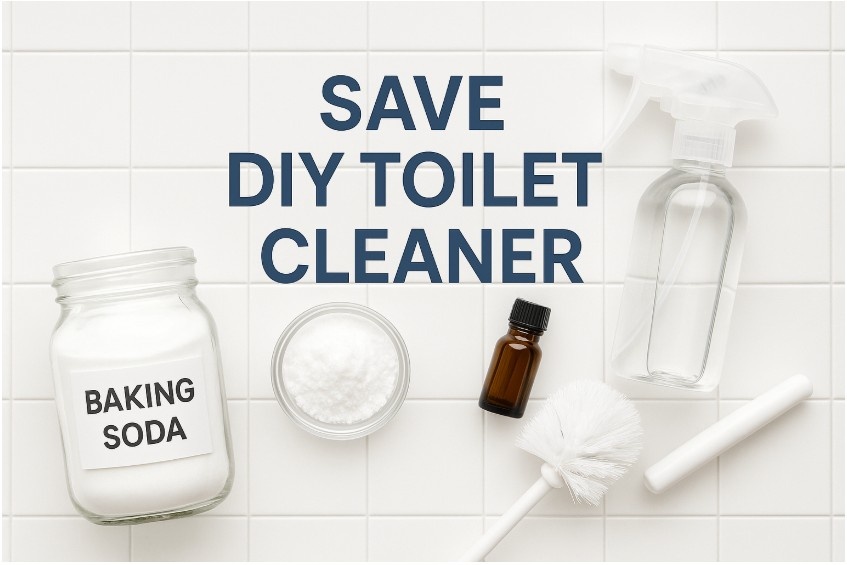
Save DIY Toilet Cleaner: Recipes, Safety Tips, and Cost-Saving Tricks That Actually Work

If you’re searching for ways to save DIY toilet cleaner costs without sacrificing results, you’re in the right place. Below, I’ve pulled what top-performing cleaning guides get right—simple ingredients, clear safety warnings, and realistic expectations—then distilled it into one practical, fact-checked playbook you can trust.

Why DIY Toilet Cleaner Works (and When It Doesn’t)

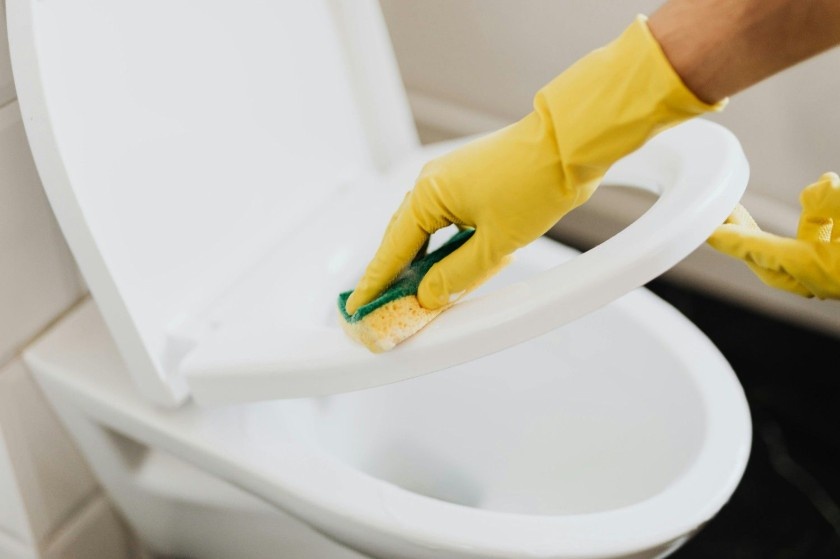
Most popular guides lean on pantry staples like baking soda, white vinegar, citric acid, and hydrogen peroxide because they deodorize, lift light soils, and are budget-friendly. That said, don’t expect heavy-duty descaling (thick limescale rings) without some scrubbing or a specialty product. Plumbers and cleaning pros commonly point to vinegar for routine tank/bowl mineral buildup and baking soda for gentle abrasion and odor control—both safe for toilets and septic systems when used sensibly. 
Why DIY Toilet Cleaner Works (and When It Doesn’t)

Safety First: The Rules You Must Follow

The biggest mistake in viral “cleaning hacks” is mixing the wrong chemicals. Never mix bleach with vinegar (chlorine gas) or with ammonia (chloramines). Also avoid pairing hydrogen peroxide with vinegar in the same container (it forms peracetic acid). These combos can produce dangerous fumes—especially risky in small bathrooms. If you ever accidentally mix them and notice a pungent, irritating odor, get fresh air immediately and seek medical advice if you have symptoms.

Pro tip: If you prefer store-bought, look for EPA Safer Choice–certified toilet products; they’re screened against strict human and environmental criteria.

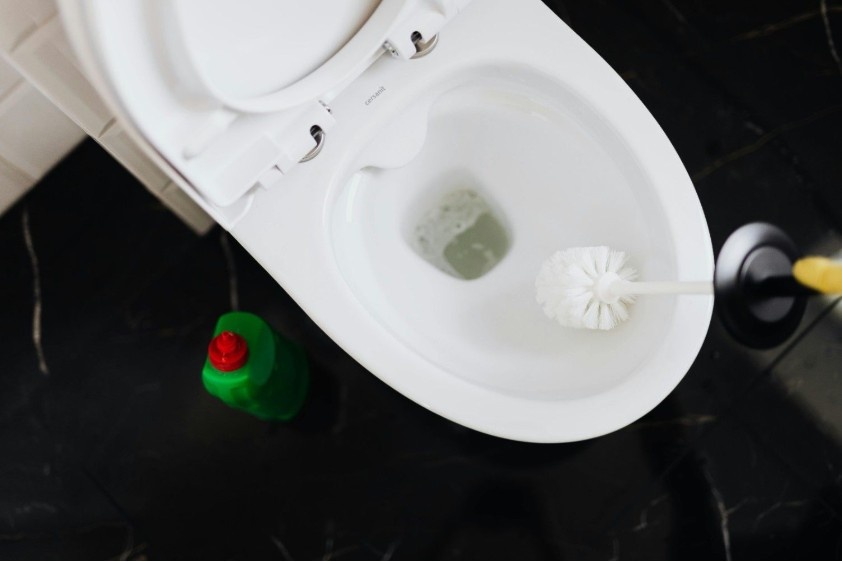
Homemade Formulas That Balance Cost, Safety, and Performance
Homemade Toilet Cleaners That Balance Cost, Safety, and Performance

1) Everyday Fizzy Bowl Clean (Citric + Soda)

This mirrors what many high-ranking tutorials recommend for “maintenance cleans” between deep scrubs.

  • 1 cup baking soda

  • ¼ cup citric acid

  • Optional: 15–20 drops essential oil for scent

How to use: Sprinkle the dry mix into the bowl, then pour in ~½ cup white vinegar around the rim. Let it fizz 5–10 minutes and scrub. The fizz helps lift light soil; citric acid targets mineral deposits. (Avoid mixing in sealed bottles; let the reaction happen in-bowl.)

Expectation check: Baking soda + vinegar neutralize each other, so don’t rely on the foam alone to “disinfect.” The action helps loosen grime; your brush still does the heavy lifting. 

2) Hydrogen Peroxide Boost (Bleach Alternative Feel)

  • 1 cup baking soda

  • ½ cup 3% hydrogen peroxide

  • 1 tablespoon liquid castile soap

How to use: Stir into a spreadable paste. Apply to bowl sides and under rim. Wait 10 minutes, scrub, flush. Hydrogen peroxide adds mild sanitizing power without chlorine bleach (still, don’t combine it with vinegar in the same bottle).

3) No-Splash Spray for Seats & Exterior

  • 1 cup distilled water

  • 1 cup white vinegar

  • 1 teaspoon mild dish soap

How to use: Spray on the seat, lid, and exterior porcelain; wipe with a clean cloth. Keep this mix away from bleach (for example, don’t spray on a surface that still has bleach residue). 

Tank Talk: What to Do (and What to Avoid)

Some blogs suggest adding vinegar to the tank to fight mineral buildup. Many pros do recommend vinegar for tank cleaning because it’s inexpensive and non-corrosive to internal parts when used properly (soak/rinse—not perpetual immersion). However, continual use of strong acids or dropping random chemical blocks in the tank can degrade rubber gaskets and seals over time, causing leaks. Clean the tank periodically and rinse thoroughly. 

How Often Should You Clean?

  • High-use bathrooms: quick maintenance 2–3× weekly; deeper scrub weekly

  • Low-use bathrooms/guest baths: weekly or biweekly is fine

  • Hard water homes: add a citric-acid maintenance clean weekly to stay ahead of scale

Keyword-Focused Guide: Save DIY Toilet Cleaner Costs in Minutes

Yes, you can save DIY toilet cleaner spend by batching mixes. Blend the dry fizz mix (baking soda + citric acid) in a sealed jar and portion a few tablespoons per clean. Buy ingredients in bulk (warehouse clubs or online), and you’ll cut your per-clean cost dramatically versus single-use commercial tabs. For sanitizing needs, keep a small bottle of 3% hydrogen peroxide on hand and use it separately (never premix with vinegar). 

Frequently Asked Questions

1. Is baking soda safe for toilets and septic systems?

Yes. Baking soda is safe for bowls and septic systems and can help with odor control. It’s a gentle abrasive for regular maintenance. 

2. Can I mix bleach with my DIY cleaner for extra power?

No. Never mix bleach with vinegar, ammonia, or many other cleaners; it can release toxic gases like chlorine or chloramines. If you’ve used bleach recently, rinse thoroughly and let surfaces dry before applying anything acidic.

3. Do vinegar-and-baking-soda “bombs” disinfect?

They’re great for deodorizing and loosening grime, but the fizzing reaction isn’t a hospital-grade disinfectant. Scrubbing still matters. For a non-chlorine boost, use 3% hydrogen peroxide separately—don’t bottle it with vinegar. 

4. Is it okay to clean the toilet tank with vinegar?

Periodic vinegar soaks are commonly recommended by pros for mineral buildup, but avoid leaving strong chemicals in the tank long-term. Prolonged exposure to harsh agents can degrade rubber parts and cause leaks. Rinse thoroughly after soaking. 

A Quick, No-Drama Routine That Works

  1. Sprinkle the dry fizz mix (baking soda + citric acid).

  2. Pour vinegar around the rim; let it fizz 5–10 minutes.

  3. Scrub under the rim and the waterline; flush.

  4. Spot-sanitize by spraying hydrogen peroxide on the bowl sides and exterior, wait a few minutes, then wipe (keep peroxide and vinegar separate).

Smarter, Safer Suds: Your Bottom-Line Takeaway

To truly save DIY toilet cleaner spend, keep it simple: a dry fizz mix for routine cleans, peroxide (used separately) when you want a little extra hygiene, and a soft brush for elbow grease. Skip risky mixtures, respect contact times, and clean regularly so buildup never gets the upper hand. If you ever need a store-bought backup, reach for an EPA Safer Choice–certified bowl cleaner and keep your routine consistent. 

That balance—evidence-based safety, realistic expectations, and repeatable steps—is exactly what the best-ranking cleaning guides share, and it’s what will keep your bathroom fresh without draining your wallet. 

More From Author

Target Only $1.30 for Mars Fun Size Candy (Snickers, Twix, Milky Way or 3 Musketeers)

Target Only $1.30 for Mars Fun Size Candy (Snickers, Twix, Milky Way or 3 Musketeers): Can You Still Score It?

What Are apeoplesmap.org services

What Are apeoplesmap.org services? A Clear Guide for Curious Users

How Dallas Businesses Ensure Safe and Professional Commercial Furniture Shipping

For businesses in Dallas, TX, the process of shipping commercial furniture isn’t just about moving objects from one place to another—it’s about safeguarding investments, minimizing disruption, and ensuring a seamless transition. From office relocations to hospitality upgrades and complex design installations, the stakes are high when valuable or delicate furniture is involved. That’s why many local companies turn to specialized providers who offer more than just transportation—they deliver peace of mind with expert packing, custom logistics, and white glove handling.

The Critical Role of Professional Furniture Shipping in Dallas

The Critical Role of Professional Furniture Shipping in Dallas

Dallas is home to a vibrant mix of corporate headquarters, fast-growing startups, luxury hotels, and innovative design firms. Each sector faces unique challenges when it comes to commercial furniture shipping. Whether it’s transporting executive desks, custom conference tables, or high-end FF&E for hospitality projects, the need for precision, protection, and reliability is universal. Professional shippers bring deep expertise in handling oversized, fragile, or high-value pieces, ensuring that every item arrives safely and on time.

What Makes White Glove Furniture Shipping Stand Out?

When standard shipping won’t suffice, white glove service is the preferred choice for Dallas businesses. This premium approach covers every detail, from specialized packing and custom crating to careful placement and debris removal at the destination. The benefits extend beyond simple convenience—they include minimized risk of damage, flexible scheduling, and tailored insurance options. Such attention to detail is invaluable for projects like:

  • Corporate office relocations
  • Large-scale hotel or restaurant FF&E rollouts
  • Gallery and showroom installations
  • Multi-phase design and architecture projects

With white glove solutions, businesses can focus on their core operations while logistics professionals handle the complexities of the move.

Choosing the Right Partner for Commercial Furniture Shipping

Entrusting your assets to an experienced shipping provider is essential. The right partner will offer:

  • Hands-on expertise in packing and transporting high-value items
  • Custom crating and bracing for maximum protection
  • Comprehensive project management from pickup to final placement
  • Regional reach to serve Dallas, Austin, Round Rock, and beyond

One company that stands out in this space is Navis Pack & Ship of Dallas. Their team is known for delivering tailored solutions that address the specific needs of commercial clients, whether it’s a single executive suite or a multi-site rollout.

Choosing the Right Partner for Commercial Furniture Shipping

Learn More About Commercial Furniture Shipping Solutions in Dallas

If you’re looking for a reliable, stress-free way to manage your next big move or installation, it’s worth exploring how specialized providers can make a difference. For a deeper dive into best practices, white glove options, and the expertise that sets industry leaders apart, check out this comprehensive guide on commercial furniture shipping services in Dallas. Their insights cover everything from custom packing to end-to-end project management, helping Dallas businesses protect their investments every step of the way.

More From Author

Costco Everyday Prices List

Costco Everyday Prices List: What You Need to Know Before You Shop

Target Only $1.30 for Mars Fun Size Candy (Snickers, Twix, Milky Way or 3 Musketeers)

Target Only $1.30 for Mars Fun Size Candy (Snickers, Twix, Milky Way or 3 Musketeers): Can You Still Score It?

Spring Cleaning Bathroom: How to Deep Clean and Refresh Your Space This Season

I’ll admit something: spring cleaning the bathroom used to feel like a daunting weekend project. Between the built-up soap scum on the tub, the dusty light fixtures I’d ignored all winter, and the mystery spots behind the toilet, I never knew where to start. But once I learned how to tackle it step by step, it transformed from an overwhelming chore into one of the most satisfying resets of the season.

If you’re getting ready for a spring cleaning bathroom overhaul, this guide walks you through the process from start to finish — decluttering, deep cleaning, sanitizing, and restocking — all while keeping your space sparkling and healthy.

Why Deep Cleaning Your Bathroom in Spring Matters

Bathrooms are one of the most frequently used spaces in any home, and unfortunately, they’re also hotspots for germs, mold, and buildup. Over time, moisture creates ideal conditions for mildew, soap scum clings to tiles, and dust collects in vents and corners.

Spring cleaning isn’t just about making the bathroom look nice — it’s about stripping away layers of grime and bacteria, improving air quality, and setting the tone for a healthier home. Plus, nothing beats the feeling of stepping into a space that looks and smells as fresh as a spa.

Why Deep Cleaning Your Bathroom in Spring Matters

Step 1: Prep the Space and Declutter First

A truly effective spring cleaning bathroom session starts long before you grab a sponge. It begins with clearing the clutter and setting up your space for success.

Air it out: Open a window and switch on the exhaust fan to improve ventilation. Good airflow helps prevent mildew and keeps cleaning fumes from lingering.

Remove everything: Take all items off counters, out of the shower, and from inside cabinets. As you go, sort your products into three categories — keep, toss, and replace. Throw out anything expired or unused, and set aside empty bottles to recycle.

Gather your supplies: Stock up on what you’ll need before diving in — all-purpose and glass cleaners, a toilet bowl cleaner, microfiber cloths, rubber gloves, scrub brushes, and a grout brush. Having everything ready keeps the process smooth and efficient.

Step 2: Work From the Top Down

Cleaning from the highest surfaces first and working downward is a pro move. It ensures that dust and debris don’t fall onto freshly cleaned areas later.

Tackle vents and light fixtures: Start by dusting ceiling corners, vents, and light fixtures with a microfiber cloth or vacuum brush attachment. Removing dust buildup improves air circulation and prevents future grime from sticking.

Wash shower curtains and liners: If you have a fabric curtain, toss it in the washing machine with mild detergent and a cup of white vinegar. For plastic liners, wipe them thoroughly or replace them if you notice mold.

Descale the showerhead: Fill a small plastic bag with equal parts white vinegar and water. Secure it around the showerhead with a rubber band and let it soak for a few hours. This dissolves mineral deposits and improves water flow.

Step 3: Deep Clean Shower, Tub, and Walls

With the prep work out of the way, it’s time to focus on the biggest cleaning jobs — the ones that make the most noticeable difference.

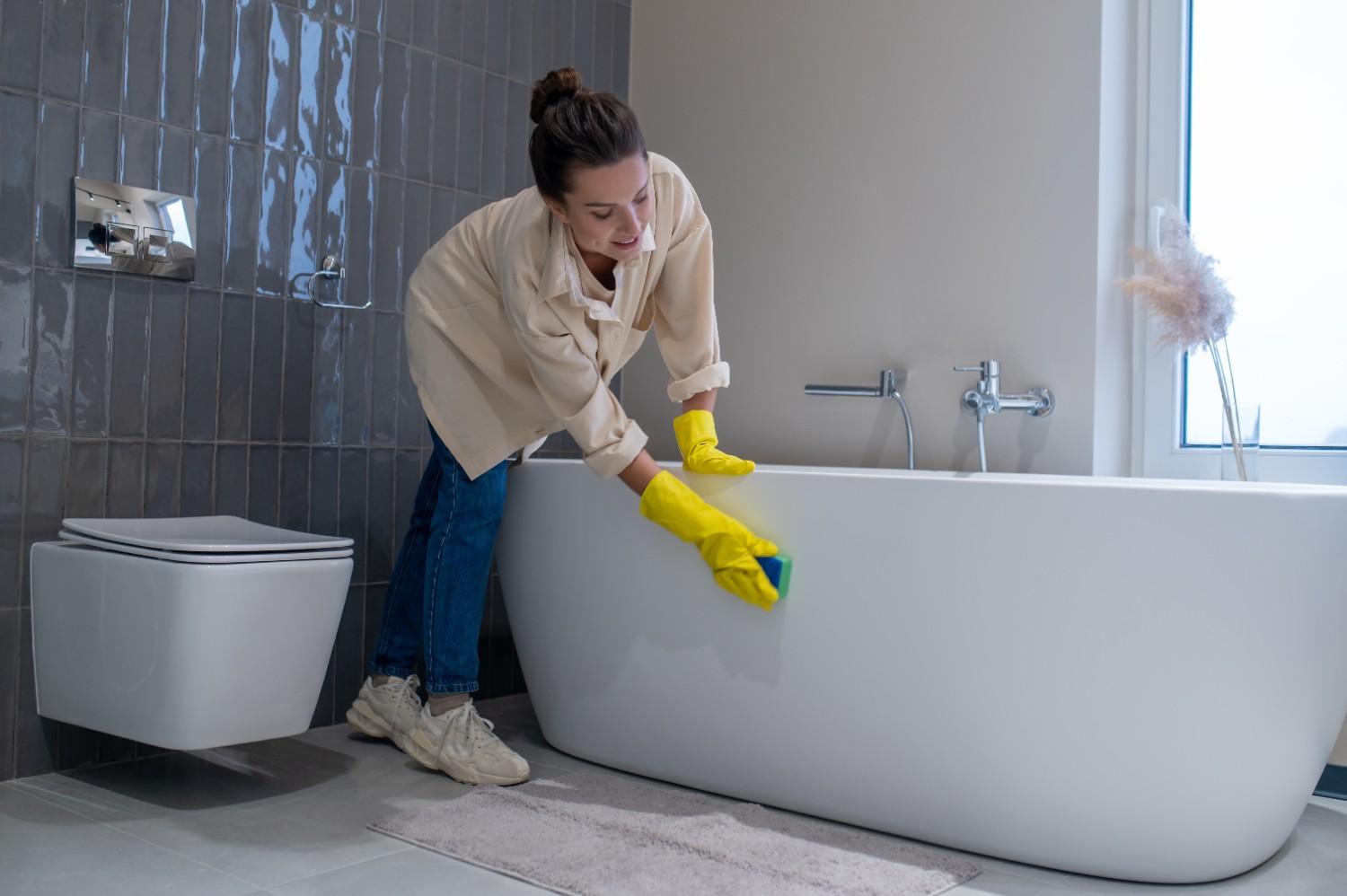
Scrub the shower and tub: Spray walls, doors, and fixtures with a bathroom cleaner and let it sit for 5–10 minutes to loosen grime. For stubborn soap scum, make a paste of baking soda and water, apply it to trouble spots, and scrub with a non-abrasive sponge. Always rinse thoroughly to prevent residue.

Polish faucets and fixtures: Mineral deposits can dull metal finishes. Rubbing a half-lemon sprinkled with salt directly on fixtures helps break down buildup and restore shine naturally.

Clean tiles and grout: Mix baking soda and hydrogen peroxide into a thick paste and scrub grout lines with a stiff brush. For an eco-friendly deep clean, consider using a steam cleaner. It loosens grime without chemicals and helps brighten the grout.

Step 4: Sanitize Sinks, Toilets, and Surfaces

Now it’s time to tackle the most high-touch and bacteria-prone areas.

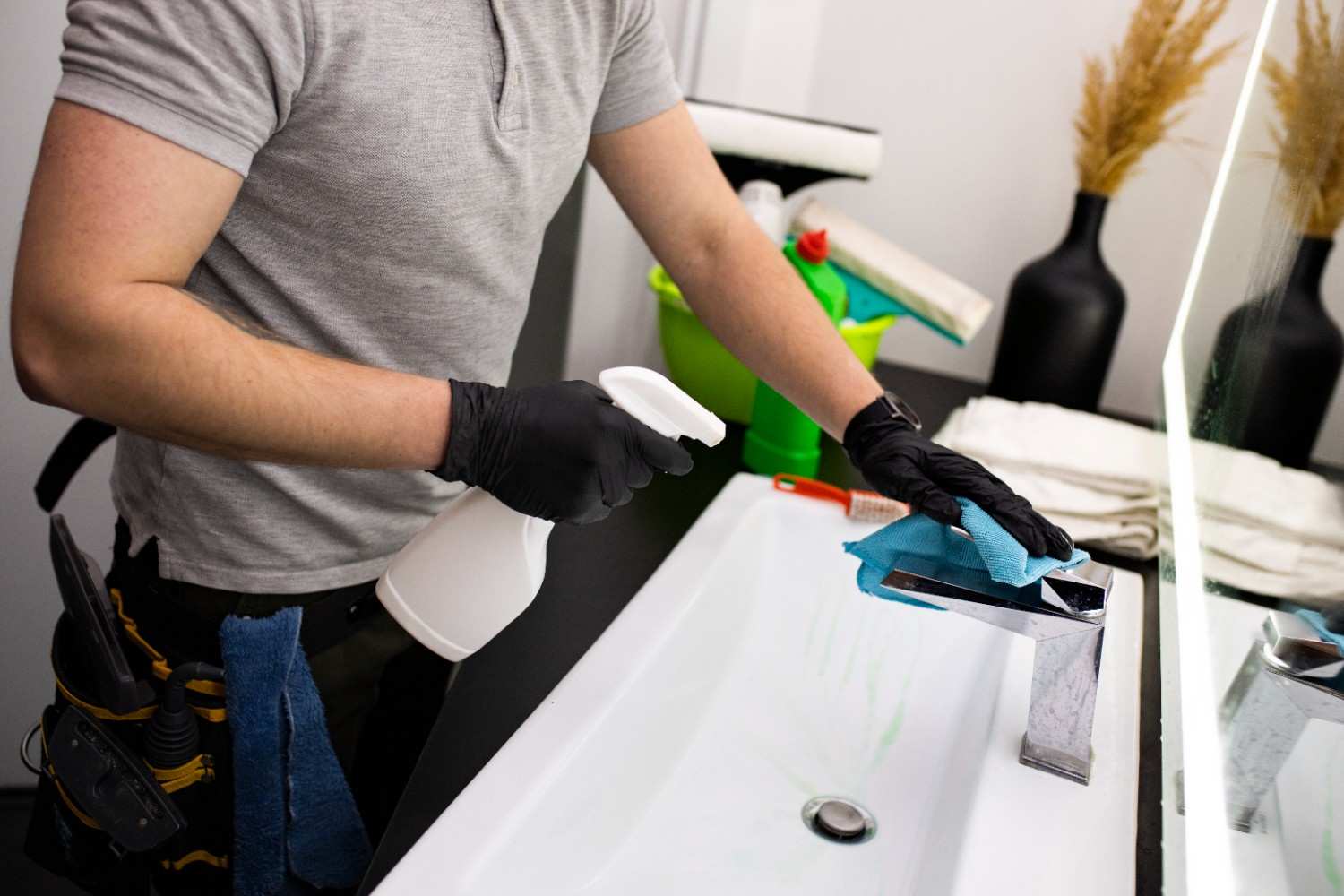
Sink and vanity: Spray all surfaces with an all-purpose cleaner, including countertops, faucets, and the basin. Use an old toothbrush to scrub around drains and faucet handles. Wipe dry with a microfiber cloth to prevent water spots.

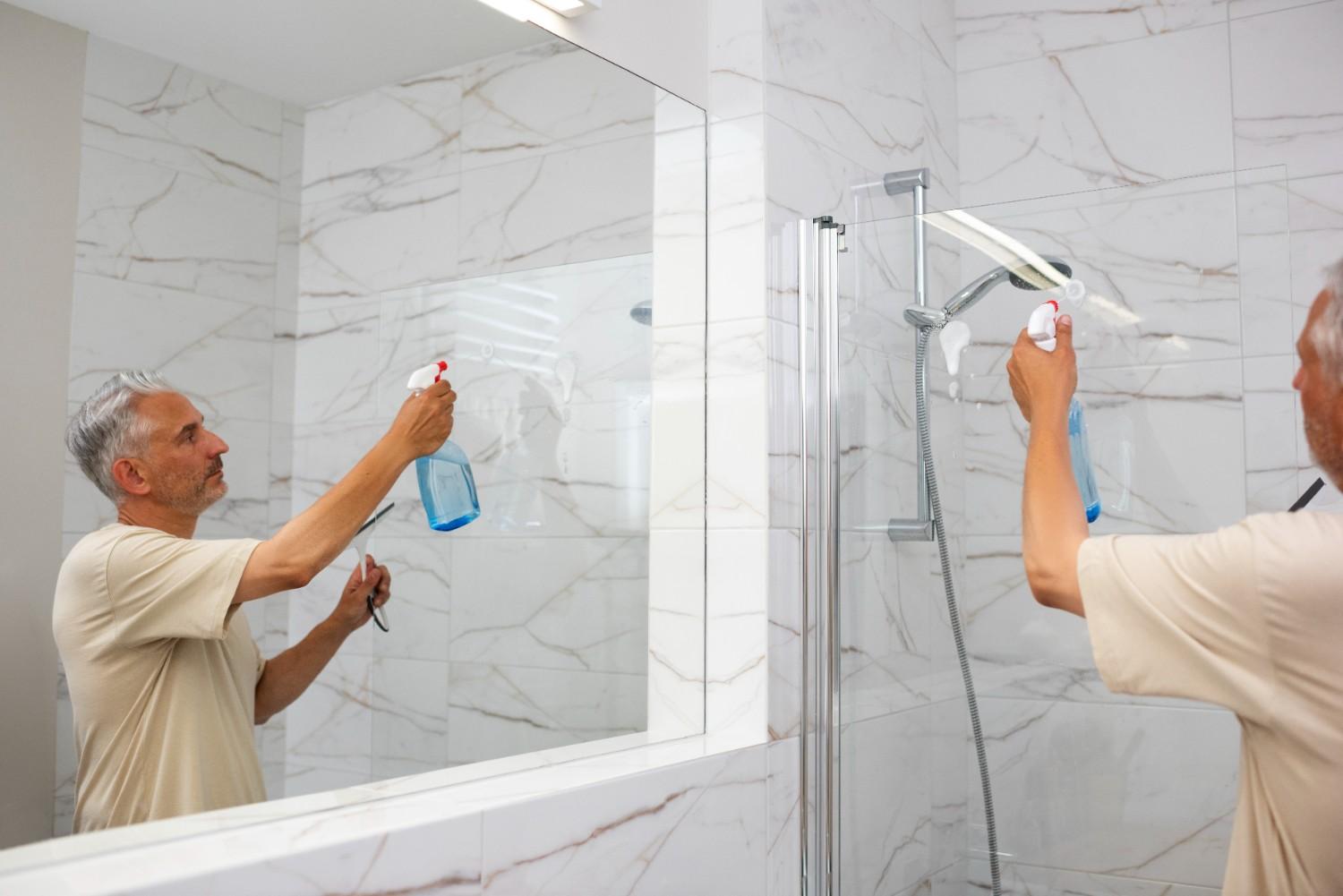
Mirrors: A 50/50 mix of vinegar and water works wonders for streak-free glass. Wipe in an “S” motion with a microfiber cloth for best results.

Toilet: Apply toilet bowl cleaner under the rim and let it sit while you clean the rest of the bathroom. Wipe down the seat, lid, tank, and base with a disinfectant. Then scrub the bowl thoroughly with a toilet brush and flush to finish.

Sanitize Sinks, Toilets, and Surfaces

Step 5: Finish Strong – Floors, Accessories, and Textiles

This is the final stretch of your spring cleaning bathroom routine — and it’s what brings the whole space together.

Floors: Start by sweeping or vacuuming up dust and hair. Then mop the floor with warm water and a mild cleaning solution, working from the farthest corner toward the door so you don’t track dirt onto wet surfaces.

Accessories and small items: Wipe down soap dishes, toothbrush holders, and cabinet handles. Bath toys? Toss them in the dishwasher for a thorough sanitize.

Textiles: Wash bath mats and towels in hot water to kill bacteria and refresh fibers. Don’t forget to replace them neatly once dry.

Trash can: Empty it, scrub the interior and exterior with disinfectant, and replace the liner.

Restock and organize: Finally, return your essentials to their proper spots. Store products you don’t use daily inside cabinets to keep surfaces clutter-free.

Pro Tips to Keep Your Bathroom Fresher for Longer

  • Use a daily shower spray to prevent soap scum buildup.

  • Run the exhaust fan for at least 20 minutes after showers to reduce moisture and mildew.

  • Wipe down surfaces weekly to maintain your deep-clean results.

  • Swap out bath mats and towels regularly for freshness and hygiene.

Pro Tips to Keep Your Bathroom Fresher for Longer

FAQs About Spring Cleaning the Bathroom

1. How often should I deep clean my bathroom?

Aim for a full deep clean every three to four months. Spring is the ideal time to do it, but if your bathroom sees heavy use, a lighter monthly clean can help prevent buildup and keep things fresh.

2. What’s the best way to clean stubborn grout stains?

A paste made from baking soda and hydrogen peroxide works well for most grout stains. Apply it, let it sit for about 10 minutes, then scrub with a grout brush. For very tough stains, steam cleaning is a safe and chemical-free alternative.

3. Can I use natural cleaners for the whole bathroom?

Absolutely. White vinegar, baking soda, and lemon juice are all effective for many surfaces and leave fewer chemical residues. Just check your fixtures and tiles first to ensure they’re safe for natural cleaning solutions.

4. How do I keep my showerhead from clogging with mineral deposits?

Regular descaling is key. Soak your showerhead in a vinegar and water mixture every few months to dissolve mineral buildup. If your water is very hard, consider installing a water softener to reduce future deposits.

The Freshest Reset Starts Here

Spring cleaning the bathroom doesn’t have to be overwhelming. By breaking the process into steps — decluttering, cleaning from top to bottom, scrubbing every surface, and finishing with thoughtful touches — you’ll end up with a space that feels brand new. This deep-cleaning approach removes hidden grime, bacteria, and buildup, giving you a healthier home and a more enjoyable daily routine.

Once you’re done, you might just find yourself lingering in your freshly cleaned bathroom a little longer — because nothing beats the feeling of starting and ending your day in a space that truly sparkles.

More From Author

Homemade Nachos with Leftover Roast Beef Recipe

Homemade Nachos with Leftover Roast Beef Recipe

New Red Baron Pizza Printable Coupon for Only $2.83 at Walmart

Is There a New Red Baron Pizza Printable Coupon for Only $2.83 at Walmart?

Safe DIY Toilet Cleaner: Guide to a Cleaner Bathroom 

I’ll be honest — I stopped buying commercial toilet cleaners years ago, and I haven’t looked back since. What started as a small experiment with baking soda and citric acid has now become one of the most effective cleaning routines in my home. If you’re tired of spending money on harsh chemical products or just want a safer, greener alternative, this guide to safe DIY toilet cleaner will show you everything you need to know.

From simple recipes and storage tips to a side-by-side comparison with store-bought options, this article covers it all. By the end, you’ll not only know how to make powerful fizzing tablets for pennies, but you’ll also understand why they work so well — and how to make them last.

Why Choose a DIY Toilet Cleaner?

There’s a lot to love about store-bought toilet cleaners — they’re quick, convenient, and readily available. But they also come with downsides: many contain harsh chemicals, strong synthetic fragrances, and can cost quite a bit over time.

That’s where safe DIY toilet cleaner solutions come in. With just a few pantry staples and minimal effort, you can make toilet-cleaning tablets that are:

  • Affordable: A single batch costs less than a cup of coffee.
  • Safe: No toxic fumes or harsh chemicals.
  • Eco-Friendly: Reduce plastic waste and chemical runoff.
  • Customizable: Add scents and essential oils you actually like.

Plus, there’s something incredibly satisfying about cleaning your home with something you made yourself.

The Science Behind DIY Toilet Cleaners

The Science Behind DIY Toilet Cleaners

Before we jump into the recipe, it helps to understand why these simple ingredients work so well:

  • Baking Soda (Sodium Bicarbonate): Acts as a gentle abrasive and natural deodorizer. It loosens grime and neutralizes odors.
  • Citric Acid: Reacts with water to create fizzing bubbles that help lift stains and mineral deposits.
  • Water or Vinegar: Activates the fizzing reaction and dissolves grime.
  • Essential Oils (Optional): Add antimicrobial properties and a pleasant scent.

When combined, baking soda and citric acid create a chemical reaction that mimics the scrubbing power of commercial cleaners — without the chemicals.

How to Make Safe DIY Toilet Cleaner Tablets

You don’t need fancy tools or rare ingredients for this project. Everything you need is probably already in your kitchen.

Ingredients:

  • 1 cup baking soda
  • 1/4 cup citric acid
  • Water in a spray bottle (or about 2 tablespoons of vinegar)
  • 15–20 drops essential oil (optional)
  • Silicone mold or ice cube tray

Step-by-Step Instructions:

1. Mix the Dry Ingredients

Start by combining the baking soda and citric acid in a glass or ceramic bowl. Avoid plastic or metal, as essential oils can corrode or stain them.

2. Add Essential Oils (Optional)

If you want a scented cleaner, now’s the time to add essential oils. Lemon and tea tree oils are both excellent choices because they smell fresh and offer natural antibacterial properties.

3. Slowly Add Water

Here’s where patience pays off. Lightly mist the dry mixture with water (or vinegar) using a spray bottle. Add a few sprays at a time and stir after each one. The goal is a crumbly texture that holds together when squeezed — not a wet paste.

4. Mold the Tablets

Scoop the mixture into your silicone mold or ice cube tray. Press it down firmly so the tablets hold their shape.

5. Let Them Harden

Leave the tablets to dry overnight. They’ll harden as they dry and become ready for use.

How to Use Your DIY Toilet Cleaner

How to Use Your DIY Toilet Cleaner

Using your new cleaning tablets couldn’t be easier:

  1. Drop one tablet into the toilet bowl.
  2. Wait for the fizzing reaction to finish (about 5–10 minutes).
  3. Scrub the bowl with a toilet brush.
  4. Flush and enjoy the fresh, clean results.

You’ll be amazed at how well these tablets handle tough stains, limescale, and odors — all without bleach or ammonia.

Quick Comparison: DIY vs. Store-Bought Toilet Cleaners

Here’s how a safe DIY toilet cleaner stacks up against commercial products:

Feature DIY Toilet Cleaner Store-Bought Cleaner
Cost per use $0.05 – $0.10 $0.50 – $1.00
Ingredients Baking soda, citric acid, water, essential oils Chemicals, bleach, synthetic fragrances
Safety Non-toxic, safe for kids and pets Can be harsh and irritating
Environmental impact Minimal waste, eco-friendly Plastic packaging, chemical runoff
Customization Fully customizable scents and strength Limited or none
Shelf Life 3–4 months (airtight storage) 6–12 months

As you can see, DIY cleaners win in nearly every category except shelf life — and even that’s easy to manage with proper storage.

Storage Tips for Maximum Freshness

One of the most common mistakes people make with DIY cleaners is improper storage. Here’s how to make your tablets last:

  • Use airtight containers: Moisture will activate the fizz prematurely, so keep them sealed.
  • Store in a cool, dry place: A bathroom cabinet is fine if it’s not too humid.
  • Label your jar: Note the date you made them — most tablets stay fresh for about 3–4 months.

If you live in a humid climate, consider adding a small silica gel packet to your storage container to absorb moisture.

Pro Tips to Make Your Cleaner Even Better

Here are a few expert tips I’ve learned after years of making my own cleaners:

  • Experiment with essential oils: Try lavender for a calming scent or eucalyptus for extra antibacterial power.
  • Add a bit of dish soap: A teaspoon of mild dish soap can boost cleaning power for stubborn stains.
  • Use vinegar for extra fizz: If your water is hard, vinegar helps dissolve mineral deposits more effectively.
  • Scale the recipe: Double or triple the recipe to make a large batch and safe time.

Common Mistakes to Avoid

Common Mistakes to Avoid

Even though this process is simple, a few missteps can lead to wasted ingredients:

  • Adding too much water: This can trigger fizzing too early, leaving your tablets weak.
  • Not pressing the tablets firmly: Loose tablets can crumble instead of holding their shape.
  • Skipping the drying time: Premature use can reduce their effectiveness.
  • Using plastic bowls: Essential oils can damage or stain them — always use glass or ceramic.

Also Read: Natural kitchen cleaners

FAQs About Safe DIY Toilet Cleaner

1. How long do DIY toilet cleaner tablets last?

If stored properly in an airtight container, they usually last 3–4 months. Over time, their fizzing power may decrease, but they’ll still clean effectively.

2. Can I use these tablets in other drains or sinks?

Yes, but with caution. They work well in bathroom drains, but avoid using them in garbage disposals or narrow pipes where the fizz could trap debris.

3. Are DIY toilet cleaners safe for septic systems?

Absolutely. Since they’re free of harsh chemicals, they’re safe for septic tanks and won’t disrupt the natural bacterial balance.

4. Can I substitute citric acid with lemon juice?

Technically yes, but it’s not as effective. Lemon juice is less concentrated and adds moisture, which can cause premature fizzing.

The Smart Way to Clean: DIY Wins Every Time

In the end, switching to a safe DIY toilet cleaner isn’t just about saving a few dollars — it’s about taking control of what goes into your home, reducing environmental impact, and creating something that’s both powerful and safe.

Once you try these fizzing tablets, you might never go back to store-bought products again. They’re easy to make, inexpensive, and surprisingly effective. Plus, they’re a satisfying reminder that sometimes, the simplest solutions are the best.

So grab your baking soda and citric acid, roll up your sleeves, and give it a try. Your bathroom — and your wallet — will thank you.

More From Author

Canning Your Own Food Is It Worth It

Canning Your Own Food: Is It Worth It? Here’s the Honest Truth

Homemade Pumpkin Spiced Iced Coffee

Homemade Pumpkin Spiced Iced Coffee (The Cozy Fall Treat You Can Make at Home)

Natural Kitchen Cleaners: Guide to a Safer, Healthier Home

For years, I stocked my kitchen cabinet with brightly colored bottles promising to kill 99.9% of germs. But over time, I started questioning what was actually in those products — and whether the chemical residue left on my countertops was really something I wanted near my food. That curiosity led me down a new path: discovering natural kitchen cleaners that are just as effective, far safer, and often much cheaper.

If you’ve been thinking about switching to natural solutions, this guide breaks down everything you need to know — from the science behind why they work to the best DIY recipes and store-bought options that deliver sparkling results without the toxins.

Why Choose Natural Kitchen Cleaners?

The kitchen is the heart of the home — and also one of the dirtiest. It’s where bacteria thrive on countertops, grease coats, stovetops, and stains build up on sinks. While conventional cleaning sprays get the job done, many contain harsh chemicals like ammonia, bleach, and synthetic fragrances that can irritate skin, trigger asthma, and linger on food prep surfaces.

Switching to natural kitchen cleaners offers multiple benefits:

  • Healthier environment: Natural ingredients like vinegar, baking soda, and lemon don’t release toxic fumes or leave harmful residues.
  • Better air quality: Without synthetic fragrances and VOCs, indoor air stays cleaner.
  • Eco-friendly: Most natural cleaners are biodegradable and reduce water pollution.
  • Cost-effective: Many DIY solutions use pantry staples you already own.
  • Safe around kids and pets: No need to worry about accidental contact or ingestion.

The Science Behind Natural Cleaning Power

The Science Behind Natural Cleaning Power

Natural doesn’t mean less effective. In fact, many natural ingredients have strong antimicrobial, degreasing, and deodorizing properties:

  • White vinegar contains acetic acid, which kills bacteria and dissolves mineral deposits.
  • Baking soda is mildly abrasive and neutralizes odors.
  • Lemon juice has citric acid that cuts through grease and leaves a fresh scent.
  • Castile soap lifts away dirt and grime without harmful chemicals.
  • Essential oils like tea tree and lavender offer natural antibacterial and antifungal properties.

By combining these ingredients strategically, you can create powerful cleaning solutions that rival — and often outperform — commercial products.

DIY Natural Kitchen Cleaners You Can Make at Home

Here are a few tried-and-true recipes I use regularly in my kitchen:

1. All-Purpose Surface Cleaner

Best for: Countertops, cabinets, and appliances

  • 1 cup distilled white vinegar
  • 1 cup water
  • 10 drops lemon essential oil

Mix in a spray bottle and shake well. Spray on surfaces and wipe with a clean cloth. (Avoid granite or marble, as vinegar can etch stone.)

2. Degreasing Spray

Best for: Stovetops, range hoods, and backsplash

  • 2 cups warm water
  • 1 tablespoon Castile soap
  • 1 tablespoon baking soda

Spray on greasy surfaces, let it sit for 5 minutes, then wipe clean. For stubborn buildup, repeat and scrub gently with a sponge.

Degreasing Spray

3. Natural Sink Scrub

Best for: Stainless steel sinks and tough stains

  • ½ cup baking soda
  • 10 drops tea tree oil
  • Water (enough to form a paste)

Apply the paste with a sponge, scrub, and rinse thoroughly. It removes grime and disinfects without scratching the surface.

4. Citrus Disinfectant Spray

Best for: Cutting boards and high-touch areas

  • Peel of 2 oranges or lemons
  • 2 cups white vinegar

Soak the peels in vinegar for 2 weeks, then strain and pour into a spray bottle. The result is a powerful, naturally scented disinfectant.

Store-Bought Natural Kitchen Cleaners Worth Trying

Not everyone has time to DIY — and that’s okay. Thankfully, many brands now offer natural kitchen cleaners with transparent ingredient lists and eco-friendly formulations. Look for products labeled “biodegradable,” “plant-based,” or “non-toxic.”

Some top-rated options include:

  • Seventh Generation Disinfecting Multi-Surface Cleaner – Kills 99.99% of bacteria using thyme oil.
  • ECOS All-Purpose Cleaner – A plant-based formula ideal for daily cleaning.
  • Method Antibacterial Kitchen Cleaner – Cuts grease and disinfects without harsh chemicals.
  • Mrs. Meyer’s Clean Day Multi-Surface Spray – Uses essential oils for effective cleaning and a pleasant scent.

Quick Comparison: DIY vs. Store-Bought Natural Kitchen Cleaners

DIY vs. Store-Bought Natural Kitchen Cleaners

Feature DIY Natural Cleaners Store-Bought Natural Cleaners
Cost Very low (pennies per use) Moderate to high
Customization Fully customizable (scents, strength) Limited
Convenience Requires prep and mixing Ready to use
Ingredients 100% transparent Usually transparent, but check labels
Effectiveness Excellent for daily cleaning Excellent for heavy-duty cleaning too
Shelf Life Short (1–2 weeks) Long (6–12 months)

This table makes it clear: if you love a hands-on approach and total control, DIY is the way to go. But if convenience tops your list, a high-quality store-bought cleaner will still give you all the benefits of going natural.

How to Use Natural Kitchen Cleaners Effectively

Simply switching products isn’t enough — proper technique matters too. Here are a few best practices to get the most from your natural kitchen cleaners:

  • Pre-clean surfaces: Wipe away crumbs and debris before spraying.
  • Let it sit: Give the cleaner 3–5 minutes to break down grease and kill germs.
  • Use microfiber cloths: They trap dirt more effectively than paper towels.
  • Clean from top to bottom: Start with cabinets and work down to countertops and floors.
  • Label your DIY solutions: Include ingredients and expiration dates to ensure freshness and safety.

Areas of the Kitchen to Target With Natural Cleaners

Areas of the Kitchen to Target With Natural Cleaners

Certain spots in your kitchen deserve extra attention due to frequent contact and higher contamination risks:

Countertops

Daily cleaning is essential, especially after handling raw meat or unpacking groceries. Vinegar-based sprays work well here.

Sink and Faucet

These can harbor more bacteria than a toilet seat. A baking soda scrub and vinegar rinse keep them fresh and sanitized.

Cutting Boards

Wooden boards benefit from lemon and salt scrubs, while plastic ones can be disinfected with vinegar sprays.

Appliances

Microwaves, ovens, and fridges collect grime fast. A mix of vinegar and water cuts through stuck-on residue and deodorizes.

Tips for Making Natural Kitchen Cleaners Last Longer

Because DIY cleaners lack preservatives, they have a shorter shelf life. A few smart steps can help:

  • Store in dark glass spray bottles to protect essential oils from light.
  • Keep solutions in a cool, dry place away from direct sunlight.
  • Make smaller batches you can use within 1–2 weeks.
  • Shake bottles gently before each use to redistribute ingredients.

Also Read: Valentine blondies

FAQs About Natural Kitchen Cleaners

1. Are natural kitchen cleaners safe for all surfaces?

Most are safe for common surfaces like stainless steel, ceramic, and laminate. However, avoid vinegar on natural stone (like granite or marble) because it can cause etching. Always test a small area first.

2. Can natural kitchen cleaners kill germs as effectively as chemical cleaners?

Yes. Ingredients like vinegar, tea tree oil, and thyme oil have proven antimicrobial properties. While they may not claim to kill every pathogen, they’re highly effective against most household bacteria.

3. How often should I clean my kitchen with natural products?

For best results, wipe down countertops daily, disinfect sinks and cutting boards a few times a week, and deep clean appliances monthly.

4. Do natural kitchen cleaners leave a scent?

Yes, but the scent is typically light and pleasant, often coming from essential oils or citrus. Unlike chemical sprays, they don’t leave behind synthetic fragrances or harsh chemical odors.

A Cleaner, Greener Kitchen Starts Here

Switching to natural kitchen cleaners is more than a trend — it’s a simple, impactful way to protect your health, your family, and the planet. Whether you prefer DIY recipes using pantry staples or ready-to-use products from trusted brands, these solutions prove that you don’t need harsh chemicals to keep your kitchen spotless.

Once I made the change, I noticed more than just cleaner surfaces — the air felt fresher, my hands were less irritated, and I had peace of mind knowing I wasn’t coating my cooking space in synthetic chemicals. If you’re ready for a safer, healthier home, natural cleaners are the easiest place to start.

More From Author

Valentine Blondies The Chewy, Buttery Bars

Valentine Blondies: The Chewy, Buttery Bars That Steal Hearts Every February

Super Easy Roasted Pork Tenderloin

Super Easy Roasted Pork Tenderloin: A Juicy 30-Minute Dinner Hero

Spring Cleaning Action Plan: My Step-by-Step System That Actually Works

Every year, I used to feel overwhelmed when it came to cleaning my home. I would start strong, lose track halfway, and end up with unfinished tasks everywhere.

That changed when I created a simple spring cleaning action plan that I follow every year. Instead of guessing what to clean next, I now follow a clear system that saves time, energy, and stress.

If you’re tired of messy, unstructured cleaning routines, this guide will help you build a plan that actually works.

Key Takeaways

  • A spring cleaning action plan helps you stay organized and avoid burnout
  • Breaking tasks into smaller sections makes cleaning manageable
  • Planning ahead saves time and improves efficiency
  • Following a checklist ensures nothing gets missed

Why You Need a Spring Cleaning Action Plan

Here’s the truth. Cleaning without a plan wastes time and drains energy.

A structured plan:

  • Keeps you focused
  • Prevents skipping important areas
  • Helps you finish faster

According to CDC home cleaning guidelines, regular deep cleaning reduces allergens and improves indoor air quality, which makes spring cleaning even more important.

How to Create a Spring Cleaning Action Plan Step by Step

How to Create a Spring Cleaning Action Plan Step by Step

Here is the system I personally follow.

Step 1: Divide Your Home into Zones

Break your home into sections:

  • Kitchen
  • Living room
  • Bedrooms
  • Bathrooms

This prevents overwhelm and helps you focus on one area at a time.

Step 2: Set Realistic Goals

Don’t try to clean everything in one day.

Instead:

  • Assign one room per day
  • Keep sessions under 2–3 hours

This makes your spring cleaning action plan sustainable.

Step 3: Gather Your Cleaning Supplies

Before starting, make sure you have:

  • Microfiber cloths
  • Cleaning sprays
  • Vacuum and mop
  • Trash bags

Following EPA cleaning product safety tips ensures you use safe and effective products.

Step 4: Declutter First

Always declutter before cleaning.

Remove:

  • Unused items
  • Old clothes
  • Broken items

This step alone can reduce cleaning time significantly.

Step 5: Deep Clean Each Area

Focus on:

  • Dusting surfaces
  • Cleaning floors
  • Wiping hidden areas

Take your time and do it properly.

Room-by-Room Spring Cleaning Checklist

Kitchen

  • Clean cabinets and drawers
  • Wipe appliances
  • Deep clean sink and counters

Living Room

  • Dust furniture and electronics
  • Vacuum carpets
  • Clean windows

Bedrooms

  • Wash bedding
  • Organize closets
  • Dust surfaces

Bathrooms

  • Scrub tiles and grout
  • Clean mirrors
  • Disinfect surfaces

Common Mistakes to Avoid in Your Spring Cleaning Action Plan

Common Mistakes to Avoid in Your Spring Cleaning Action Plan

I’ve made these mistakes before, and they slow everything down.

Trying to clean everything in one day
Skipping decluttering
Not using a checklist
Using the wrong cleaning products

Avoiding these mistakes will make your plan much more effective.

How to Stay Consistent with Your Cleaning Routine

Consistency matters more than intensity.

Here’s what works for me:

  • Set a fixed cleaning schedule
  • Use reminders
  • Track progress

If you enjoy structured routines, you can combine this with a spring cleaning action plan approach to keep your home organized year-round.

Tools That Make Spring Cleaning Easier

Using the right tools saves time and effort.

  • Vacuum cleaners
  • Steam mops
  • Storage organizers
  • Multi-surface cleaners

According to Good Housekeeping cleaning tips, using proper tools can reduce cleaning time by up to 30%.

My Simple 7-Day Spring Cleaning Action Plan

To keep things manageable, I follow this structured 7-day system:

Day 1: Declutter Entire Home

I go room by room and remove items I no longer use, including clothes, papers, and broken things. This step clears space and makes the rest of the cleaning much faster and easier.

Day 2: Deep Clean Kitchen

I clean cabinets, wipe appliances, and organize the pantry. I also deep clean the sink and counters to remove grease and buildup that accumulates over time.

Day 3: Clean Living Room

I dust furniture, vacuum carpets, and clean windows. I also organize clutter like books, remotes, and decor to refresh the space completely.

Day 4: Refresh Bedrooms

I wash bedding, organize wardrobes, and dust all surfaces. This step helps create a clean, relaxing environment for better rest.

Day 5: Clean Bathrooms

I scrub tiles, clean mirrors, and disinfect sinks and toilets. I also replace old or empty products to keep everything hygienic and organized.

Day 6: Floors and Hidden Areas

I mop floors, clean under furniture, and wipe baseboards. These often-missed areas make a big difference in overall cleanliness.

Day 7: Final Touch-Ups and Organize

I take out trash, organize remaining items, and restock cleaning supplies. I also set a simple weekly routine to maintain the results.

Why This Works

Breaking tasks into daily steps helps me stay consistent, avoid burnout, and actually finish everything without feeling overwhelmed.

How This Plan Saves Time and Money

How This Plan Saves Time and Money

This is something most blogs don’t talk about.

A proper spring cleaning action plan:

  • Prevents damage to furniture and appliances
  • Reduces replacement costs
  • Improves efficiency

Just like cooking efficiently with leftovers in homemade sloppy joes with leftover roast beef recipe, planning helps you use resources better.

FAQs 

1. What is a spring cleaning action plan?

A spring cleaning action plan is a structured checklist that helps you clean your home efficiently by organizing tasks room by room.

2. How long should spring cleaning take?

It depends on your home size, but most plans take 1–2 weeks when done properly.

3. What is the best order for spring cleaning?

Start with decluttering, then clean from top to bottom and room by room.

4. How do I stay motivated while cleaning?

Break tasks into smaller steps and reward yourself after completing each section.

5. Can I customize my cleaning plan?

Yes, you should adjust your plan based on your home size, schedule, and priorities.

Why This Spring Cleaning Action Plan Actually Works

This spring cleaning action plan works because it focuses on simplicity and consistency.

Instead of overwhelming yourself, you follow a clear system that:

  • Breaks tasks into manageable steps
  • Keeps you organized
  • Helps you finish what you start

From my experience, having a plan is the difference between a clean home and a half-finished mess.

If you stick to this approach, you’ll not only clean your home—you’ll maintain it better throughout the year.

More From Author

Bacon Pepper Jack Chicken Recipe Easy, Juicy & Flavor-Packed Dinner

Bacon Pepper Jack Chicken Recipe: Easy, Juicy & Flavor-Packed Dinner

Snowman Cupcakes Easy Christmas Recipe I Use Every Year

Snowman Cupcakes: Easy Christmas Recipe I Use Every Year